NIA closes in on ISI recruiter Shahzad Bhatti, trail leads to Brazil
Synopsis
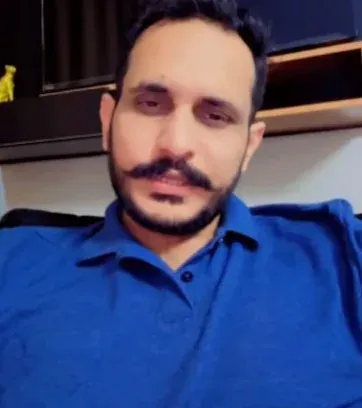
Shahzad Bhatti — the ISI-paid recruiter who built one of the most expansive terror recruitment networks targeting Indian youth — has reportedly been spirited away to Brazil as Indian agencies close in. With a non-bailable warrant from a Mohali special court and an Interpol Red Corner Notice in the works, the NIA is racing against the clock before the ISI moves him again.
Key Takeaways
Shahzad Bhatti , an alleged ISI -paid terror recruiter, is reportedly now based in Brazil after being moved from Pakistan under mounting pressure.
The NIA is coordinating with the CBI to secure an Interpol Red Corner Notice (RCN) against Bhatti, to be followed by a formal extradition request.
A Special Court in Mohali has issued an open-ended non-bailable warrant against Bhatti, remaining in force until his arrest.
India and Brazil signed a bilateral extradition treaty in 2008 , in effect since 2012 , which the MEA lists as an active agreement.
Officials warn the ISI may continue relocating Bhatti across countries, driving the NIA's urgency to act before he is moved again.
Bhatti's alleged network spans multiple modules across India, targeting youth via social media for terror recruitment and surveillance activities.
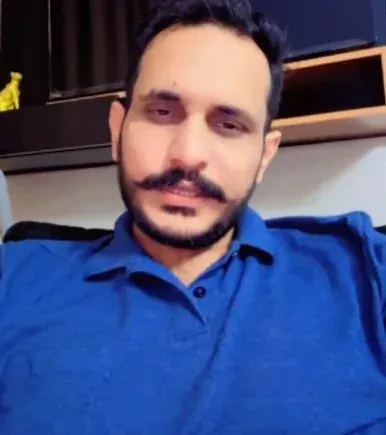
The National Investigation Agency (NIA) is intensifying its pursuit of Shahzad Bhatti, a social media influencer-turned terror recruiter allegedly on the payroll of Pakistan's Inter-Services Intelligence (ISI), with the latest intelligence inputs suggesting he may have been relocated to Brazil. Bhatti, who was previously operating from Dubai before being briefly moved to Pakistan to coordinate with ISI handlers, is accused of building an extensive recruitment network aimed at radicalising Indian youth and deploying them for terror-related activities.
Hunt Widens as Bhatti Reportedly Surfaces in Brazil
According to an Intelligence Bureau (IB) official, the most recent inputs indicate that Bhatti was shifted to Brazil and instructed to lie low until scrutiny around him subsides. 'Verification of his exact whereabouts is underway. Once his location is confirmed, the NIA will coordinate with the Central Bureau of Investigation (CBI) to secure an Interpol Red Corner Notice (RCN) against Shahzad Bhatti,' the official said.
A separate official confirmed that efforts to obtain the RCN are already in motion. 'This will eventually be followed by a formal extradition request,' the official added. Notably, India and Brazil signed a bilateral extradition treaty in 2008, which came into force in 2012, and the Ministry of External Affairs (MEA) has listed it as an active agreement — a legal pathway that investigators say could significantly expedite Bhatti's return.
Non-Bailable Warrant and Legal Framework
The NIA's case received a critical boost when a Special Court in Mohali issued a non-bailable warrant (NBW) against Bhatti. The open-ended warrant remains in force until his arrest, giving the agency sustained legal authority to pursue him across jurisdictions. Officials describe this as a key instrument in the broader extradition strategy.
If Bhatti's presence in Brazil is confirmed, officials say extradition would not pose a significant legal obstacle given the standing bilateral treaty. The urgency stems from concerns that the ISI may continue relocating him across countries to evade capture — a pattern that investigators say has been applied to other operatives as well.
Scale of Recruitment Modules Alarms Agencies
When the first modules linked to Bhatti were dismantled, the full scale of his operation was not immediately apparent. Officials now say the number of modules he is alleged to have established across India is what makes this case particularly significant — not just the individual recruit counts within each cell. He is said to have continued operating these networks even as agencies closed in, making his arrest an urgent priority.
His alleged network targeted Indian youth through social media channels, leveraging his prior influencer profile to establish trust before drawing recruits into ISI-directed activities including surveillance and facilitating attacks, according to officials.
Pakistan's FATF Pressure Shapes ISI Strategy
Officials draw a direct link between Pakistan's international standing and the decision to move Bhatti out of the country. 'This follows a familiar pattern in Pakistan's operations. When pressure mounts on an individual, and there is a likelihood of international scrutiny, such assets are moved out of the country,' an official said.
Pakistan, officials argue, cannot risk adverse action by the Financial Action Task Force (FATF) at a time when its economy remains under severe strain. Any perceived association with terror operatives would further weaken its position with international financial bodies. Officials added that this approach has also been applied to organisations such as Lashkar-e-Taiba (LeT), with Pakistan increasingly attempting to draw such groups into the political mainstream to deflect international scrutiny.
What Bhatti's Arrest Would Mean for India
Security officials emphasise that apprehending Bhatti would be a landmark success — enabling the shutdown of multiple active recruitment modules and disrupting future attempts to recruit Indian youth for terror or surveillance operations. The NIA is expected to move swiftly once his location is formally verified, with an extradition request to follow the Interpol notice.
Point of View
The handler has already been repositioned by the ISI. Pakistan's FATF calculus — moving operatives out rather than acting against them — is not new, but the Brazil angle signals a deliberate shift toward geographies where Indian intelligence reach is thin. The India-Brazil extradition treaty is an underused instrument; whether it can be activated fast enough before Bhatti is moved again will define how seriously this legal framework is stress-tested. More broadly, the scale of modules Bhatti allegedly built through social media should prompt a harder look at platform-level counter-radicalisation enforcement, which remains largely reactive in India.
NationPress
30 Jul 2026
Frequently Asked Questions
Who is Shahzad Bhatti and what is he accused of?
Shahzad Bhatti is a social media influencer who is allegedly a paid recruiter for Pakistan's Inter-Services Intelligence (ISI). He is accused of building multiple recruitment modules across India to lure Indian youth into terror-related activities including surveillance and facilitating attacks.
Why is Shahzad Bhatti believed to be in Brazil?
According to Intelligence Bureau officials, the ISI moved Bhatti to Brazil after pressure from Indian security agencies dismantling his modules made it untenable for him to remain in Pakistan. He was reportedly instructed to stay there until scrutiny subsides.
Can India extradite Shahzad Bhatti from Brazil?
Yes, India and Brazil signed a bilateral extradition treaty in 2008 that came into effect in 2012. The Ministry of External Affairs lists it as an active agreement, and officials say extradition would not be a significant legal obstacle once Bhatti's location in Brazil is formally confirmed.
What legal steps has the NIA taken against Bhatti?
A Special Court in Mohali has issued an open-ended non-bailable warrant against Bhatti that remains in force until his arrest. The NIA is also coordinating with the CBI to obtain an Interpol Red Corner Notice, which would be followed by a formal extradition request.
Why is the NIA treating Bhatti's arrest as an urgent priority?
Officials say Bhatti continues to operate his recruitment networks even while evading capture, and the ISI is likely to keep relocating him to frustrate extradition efforts. His arrest is seen as critical to shutting down multiple active modules and preventing further recruitment of Indian youth for terror activities.