Is Afghanistan Facing a Goods Shortage as Kabul Explores New Trade Routes?
Click to start listening
Synopsis
As the border closures between Afghanistan and Pakistan affect trade, Kabul is adapting by exploring alternative routes, ensuring a steady supply of goods. Learn how local economies are coping amidst these challenges.
Key Takeaways
- Afghanistan has sought alternative trade routes due to border closures with Pakistan.
- Imports continue through different channels, ensuring goods remain available.
- Some prices have risen in Afghan markets, but the situation is manageable.
- Protests demand the reopening of the vital Torkham border crossing.
- Economic impacts of the border closure have led to increased poverty for many families.
Kabul, Jan 7 (NationPress) The ongoing border crossing closures between Afghanistan and Pakistan have resulted in significant economic repercussions for Pakistan, as reported by local media quoting an official from Afghanistan's chamber of commerce.
Khan Jan Alokozay, a board member of the Afghanistan Chamber of Commerce and Investment (ACCI), indicated that Afghanistan previously engaged in monthly trade worth USD 200 million with Pakistan, primarily importing goods from Islamabad. However, trade has been interrupted due to the closure of border crossings.
In an interview with Amu TV, Alokozay stated, "After a month of closure, Afghanistan has sought alternative trade routes. Imports are still flowing through different channels, and there is no significant shortage of goods."
He noted that Afghanistan's fresh fruit export season has concluded, and mineral exports are now being routed through alternatives, including Central Asian countries. While some prices in the Afghan markets have risen, products are still available, and the overall situation is manageable.
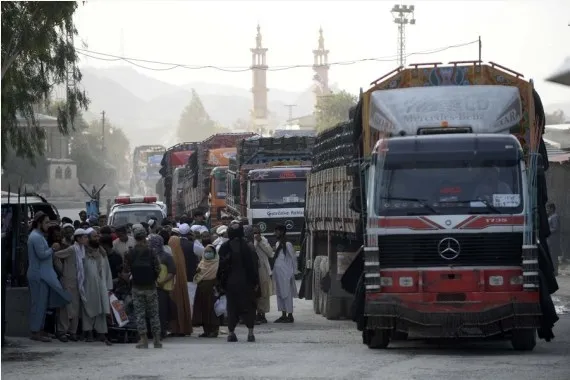
The border crossings between Afghanistan and Pakistan have been shut for nearly three months, halting any bilateral trade. These closures followed clashes between Pakistani forces and the Taliban that lasted eight days. Despite several rounds of discussions aimed at reducing tensions, the crossings remain closed.
On January 4, protests erupted in the Landi Kotal area of Pakistan's Khyber Pakhtunkhwa, where individuals demanded the immediate reopening of the Torkham border. The protest, organized under the banner of the All Borders Coordinators Council, included traders, transporters, tribal leaders, laborers, political activists, and civil society members.
Representatives from various impacted organizations participated in the protest, as reported by Pakistan's leading daily, Dawn. During the event, speakers lamented that the border closure has led to the economic suffering of thousands, particularly tribesmen reliant on cross-border trade.
They emphasized the importance of the Torkham border as a vital trading route to Central Asia and highlighted its role as an economic hub for many families dependent on it. According to them, all commercial activities in the area have ground to a halt due to the closure.
Speakers voiced concerns over extreme poverty and economic distress faced by hundreds of families due to the border shutdown, with many resorting to loans for survival. They urged both Afghanistan and Pakistan to separate bilateral trade from political and security matters and to facilitate easier movement across the border.
"We also urge that influential tribal leaders and trade representatives be included in future Pak-Afghan peace and trade discussions, as they have historically played a crucial role in resolving issues between the two nations," they stated.
Point of View
It is crucial to recognize the ongoing economic challenges faced by both Afghanistan and Pakistan due to border closures. The resilience displayed by Afghan traders in seeking alternative routes highlights the need for both nations to prioritize economic collaboration over political tensions. This shift could foster stability and prosperity for the communities relying on cross-border trade.
NationPress
08/01/2026
Frequently Asked Questions
How has the border closure affected trade between Afghanistan and Pakistan?
The border closure has halted trade, which previously amounted to USD 200 million monthly, primarily impacting Afghan imports from Pakistan.
What alternative routes is Afghanistan using for trade?
Afghanistan has turned to alternative trade routes, including those through Central Asian countries, to continue its import activities.
Are there shortages of goods in Afghanistan?
Despite some price increases, there is no significant shortage of goods in Afghanistan, thanks to the utilization of alternative trade channels.
What are the consequences of the border closure for local economies?
The closure has caused economic hardship for many families, particularly tribesmen reliant on cross-border trade, leading to increased poverty and financial distress.
What do protestors demand regarding the Torkham border?
Protestors are calling for the immediate reopening of the Torkham border and for political issues to be separated from trade activities.