North Korea's Jo Yong-won meets Vietnam FM Trung in Pyongyang talks
Synopsis
North Korea's second most influential official, Jo Yong-won, sat down with Vietnam's Foreign Minister in Pyongyang — a meeting that, combined with a cultural exhibition and prior talks with the North's top diplomat, reveals a structured bilateral push that goes well beyond protocol. The October summit between Kim and To Lam is now producing tangible diplomatic momentum.
Key Takeaways
Jo Yong-won , chairman of North Korea's Supreme People's Assembly standing committee and close aide to Kim Jong-un , met Vietnamese FM Le Hoai Trung in Pyongyang on Friday .
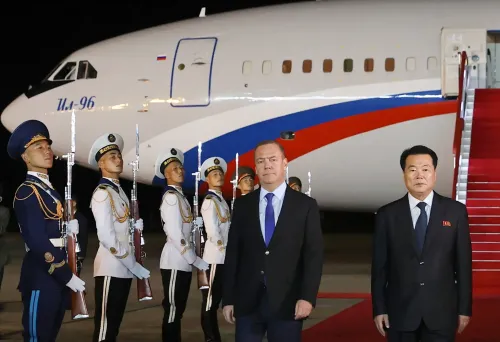
Trung was visiting as the special envoy of Vietnamese President To Lam ; he arrived in Pyongyang on Tuesday .
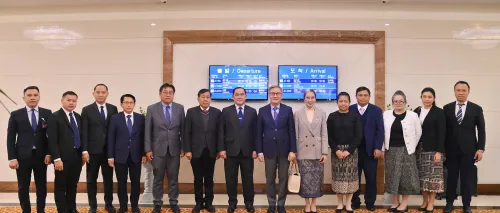
Talks also included North Korean Vice FM Pak Sang-gil and Vietnamese Ambassador Le Ba Vinh ; KCNA described the atmosphere as 'friendly' .
Trung separately met North Korean FM Choe Son-hui on Wednesday .
The visit follows a Kim-To Lam summit in October — the first by a top Vietnamese leader to Pyongyang in 18 years .
A photography exhibition marking both countries' recent party congresses was held at Taedonggang Diplomatic Club on Thursday .
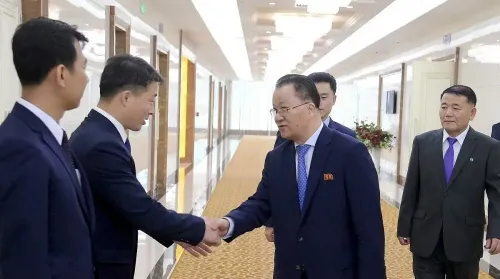
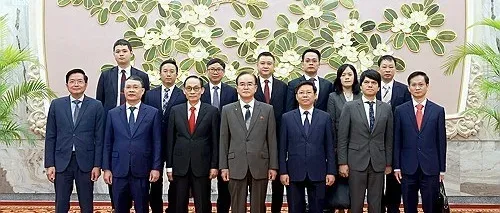
Jo Yong-won, chairman of the standing committee of North Korea's Supreme People's Assembly, met Vietnamese Foreign Minister Le Hoai Trung in Pyongyang on Friday for diplomatic talks, according to the Korean Central News Agency (KCNA). Trung was visiting as the special envoy of Vietnamese President To Lam, marking a significant diplomatic engagement between the two countries.
Key Developments
The meeting, which also included North Korean Vice Foreign Minister Pak Sang-gil and Vietnamese Ambassador to North Korea Le Ba Vinh, was described by KCNA as taking place in a 'friendly atmosphere'. The state agency did not disclose the specific agenda or outcomes of the talks.
Jo Yong-won is widely regarded as one of the most influential figures in Pyongyang and a close aide to North Korean leader Kim Jong-un, according to reports citing KCNA. His direct participation signals the significance Pyongyang attaches to the bilateral relationship.
Trung's Pyongyang Visit
Trung arrived in Pyongyang on Tuesday and held a separate meeting with North Korean Foreign Minister Choe Son-hui the following day. His multi-day schedule underscores the breadth of engagement Vietnam is pursuing with the North.
Notably, his visit came on the heels of warming bilateral ties following a summit between President To Lam and Kim Jong-un in Pyongyang in October — the first visit by a top Vietnamese leader to North Korea in 18 years.
Cultural Diplomacy and Party Congresses
On the sidelines of the diplomatic visit, the Vietnamese Embassy in Pyongyang hosted a photography exhibition at the Taedonggang Diplomatic Club on Thursday. The event featured videos, photographs, and archival materials celebrating the historical friendship and cooperation between the two nations' leaderships.
The exhibition was attended by Pak Sang-gil, Le Hoai Trung, and Le Ba Vinh, among others. It was held to mark the recent party congresses of both countries — North Korea's ninth congress of the Workers' Party of Korea in February and Vietnam's 14th national congress of the Communist Party in January.
Broader Context
The flurry of diplomatic activity reflects a deliberate effort by both Hanoi and Pyongyang to deepen ties that had been relatively dormant. This is the second high-level Vietnamese visit to North Korea within months, suggesting a structured diplomatic outreach rather than a one-off engagement. Both countries share a history rooted in socialist governance and have periodically sought to reinforce party-to-party and state-to-state links.
With international scrutiny on North Korea's external relationships intensifying, Pyongyang's willingness to receive senior Vietnamese envoys at multiple levels of government is a notable signal of where it sees value in its limited diplomatic portfolio.
Point of View
Then with Jo Yong-won, one of Pyongyang's most powerful insiders — suggest this is not a courtesy visit but a structured diplomatic reset. Pyongyang rarely grants such multi-level access to visiting envoys, which makes the sequence notable. For Vietnam, deepening ties with North Korea carries a careful diplomatic calculus: Hanoi must balance its expanding relationships with the US, Japan, and South Korea against its historical solidarity with socialist states. The October Kim-Lam summit was the opening move; this envoy visit looks like the follow-through. What neither side has disclosed is the substance — and in North Korea's case, that silence is often where the real story lives.
NationPress
20 Sept 2026
Frequently Asked Questions
Who is Jo Yong-won and why does his meeting with Vietnam's FM matter?
Jo Yong-won is the chairman of the standing committee of North Korea's Supreme People's Assembly and is considered one of the most influential officials in Pyongyang, widely regarded as a close aide to leader Kim Jong-un. His direct participation in talks with Vietnamese FM Le Hoai Trung signals the high priority Pyongyang places on the bilateral relationship.
Why is Vietnamese FM Le Hoai Trung visiting North Korea?
Le Hoai Trung travelled to Pyongyang as the special envoy of Vietnamese President To Lam. His visit, which began on Tuesday, follows a summit between President To Lam and Kim Jong-un in Pyongyang in October — the first such top-level Vietnamese visit to North Korea in 18 years.
What was discussed during the Pyongyang talks?
KCNA did not disclose the specific agenda or outcomes of the talks. The agency noted only that the meeting took place in a 'friendly atmosphere' and was attended by North Korean Vice FM Pak Sang-gil and Vietnamese Ambassador Le Ba Vinh, in addition to Jo Yong-won and Le Hoai Trung.
What is the significance of the Vietnam-North Korea relationship right now?
Bilateral ties have been warming notably since the October summit between Kim Jong-un and Vietnamese President To Lam. The current envoy visit — involving multiple high-level meetings and a cultural exhibition — suggests both sides are moving from symbolic gestures toward a more structured diplomatic engagement.
What were the recent party congresses referenced in the visit?
North Korea held its ninth congress of the ruling Workers' Party of Korea in February, while Vietnam convened the 14th national congress of the Communist Party in January. A photography exhibition at the Taedonggang Diplomatic Club in Pyongyang was held to celebrate both events and the broader friendship between the two countries.