North Korea tests new combat weapon system in Kim Jong-un's presence
Synopsis
North Korea has confirmed a weekend test of a new, undisclosed combat weapon system witnessed by Kim Jong-un — on the same day Pyongyang rejected a UN-linked sanctions report alleging 100,000 overseas workers and involvement in Russian drone manufacturing. The twin disclosures signal a calculated escalation: military provocation paired with diplomatic defiance, and a deepening Pyongyang–Moscow defence axis.
Key Takeaways
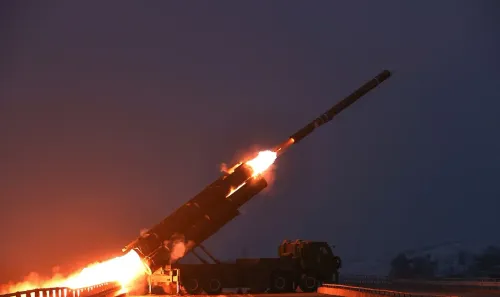
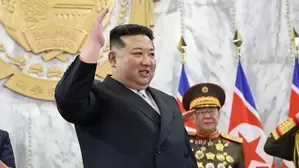
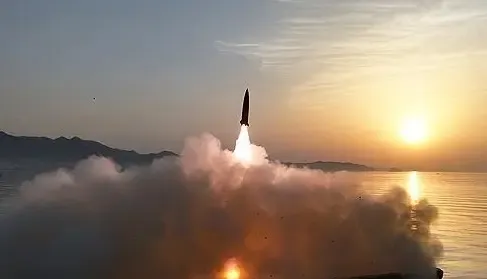
North Korea confirmed on 22 September 2026 it tested a new combat weapon system on Sunday in the presence of leader Kim Jong-un .
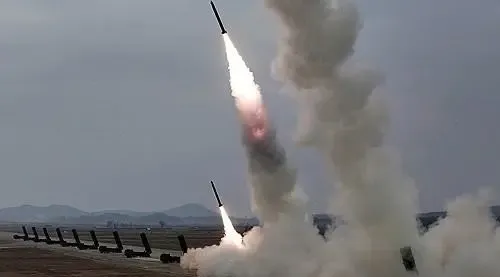
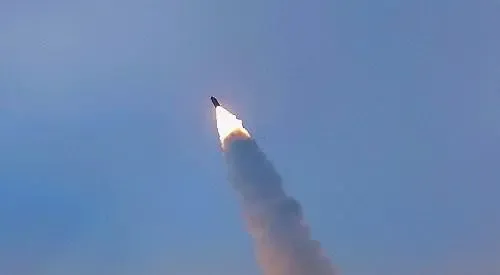
South Korea's Joint Chiefs of Staff had earlier reported two short-range ballistic missiles fired toward the East Sea from the Wonsan area.
Kim Jong-un called the test 'an unquestionable demonstration of advanced defence technology' and a 'clear renewal in the modernisation of the armed forces.' The Multilateral Sanctions Monitoring Team (MSMT) alleged North Korea has around 100,000 workers in at least 17 countries , some reportedly involved in manufacturing military drones in Russia .
Pyongyang rejected the MSMT report, calling it the work of 'a plot-breeding organisation' and defending its overseas labour programme as legitimate.
North Korea on Tuesday, 22 September confirmed it had conducted a test of a new combat weapon system over the weekend, describing the trial as a landmark demonstration of the country's advancing weapons technology. The announcement, carried by the state-run Korean Central News Agency (KCNA), came two days after South Korea's Joint Chiefs of Staff (JCS) reported that Pyongyang had fired two short-range ballistic missiles toward the East Sea from the Wonsan area on Sunday.
What Pyongyang Claimed
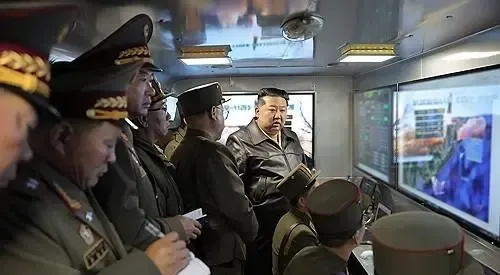
The North Korean missile bureau stated it had 'successfully conducted a test of a new weapon' in the presence of leader Kim Jong-un, according to KCNA. North Korea did not specify the exact nature of the weapon system but stressed the test was 'of significant importance for advancing weapons system technology.'
Kim described the exercise as 'an unquestionable demonstration of advanced defence technology' and 'a clear renewal in the modernisation of the armed forces,' according to the state agency. He also warned that Pyongyang's adversaries would come to understand the significance of the technological leap from a military perspective, calling its development 'a very harsh and unavoidable' ordeal for them.
Context and Regional Security Implications
The missile launch adds to a pattern of accelerating weapons tests by Pyongyang, which has conducted multiple ballistic missile and weapons system evaluations over the past two years. The East Sea has been a recurring theatre for such demonstrations, with North Korea routinely using launches to signal resolve amid diplomatic stalemates. Notably, this is the latest in a series of provocative military activities that have kept the Korean peninsula on edge in 2026.
South Korea's JCS had flagged the initial launches on Sunday, alerting regional allies including the United States and Japan, both of which have standing security arrangements tied to the peninsula's stability.
North Korea Rejects UN Sanctions Report
In a separate but related development, North Korea on Monday sharply denounced a report by the US-led Multilateral Sanctions Monitoring Team (MSMT), calling it 'a plot-breeding organisation' that distorts legitimate activities as illicit ones.
The MSMT report, released last week, alleged that Pyongyang continues to deploy workers overseas in violation of UN sanctions, with approximately 100,000 workers in at least 17 countries — predominantly in China and Russia. The report further claimed that some North Korean workers were involved in manufacturing military drones at Russian factories, a charge that directly links Pyongyang to Moscow's war effort.
A North Korean foreign ministry spokesperson, in a statement carried by KCNA, rejected these findings outright, insisting that its overseas labour programme constitutes 'legitimate economic ties with other countries.'
What the Dual Announcements Signal
The back-to-back disclosures — a weapons test followed by a repudiation of sanctions oversight — reflect a broader North Korean strategy of simultaneous military posturing and diplomatic defiance. The involvement of North Korean labour in Russian drone production, if confirmed, would mark a significant escalation in the Pyongyang–Moscow defence axis, drawing fresh scrutiny from Western governments and regional allies alike.
Regional security analysts will be watching closely to see whether the unidentified weapon system proves to be a new delivery platform or an upgraded variant of existing short-range ballistic missile technology, a distinction with significant implications for the defence calculus of South Korea, Japan, and US forces in the region.
Point of View
Days after allegations of North Korean labour involvement in Russian drone production. If those drone-manufacturing claims are substantiated, the Pyongyang–Moscow axis shifts from economic convenience to active co-production of war materiel — a redline that Western governments have so far struggled to address with meaningful consequences. The MSMT's own limitations, as a monitoring body without enforcement authority, expose the growing gap between what the sanctions architecture can observe and what it can actually deter.
NationPress
22 Sept 2026
Frequently Asked Questions
What new weapon did North Korea test this week?
North Korea confirmed testing a 'new combat weapon system' on Sunday in the presence of leader Kim Jong-un, but did not specify what the weapon was. South Korea's Joint Chiefs of Staff had reported two short-range ballistic missile launches toward the East Sea from the Wonsan area.
Why is the North Korea weapon test significant?
Kim Jong-un described the test as 'an unquestionable demonstration of advanced defence technology,' signalling continued advancement in Pyongyang's military capabilities. The test adds to a pattern of accelerating weapons evaluations that have raised alarm among South Korea, Japan, and the United States.
What did the UN sanctions report say about North Korea?
The Multilateral Sanctions Monitoring Team (MSMT) reported last week that North Korea continues to deploy around 100,000 workers in at least 17 countries in violation of UN sanctions, mostly in China and Russia. The report also alleged that some North Korean workers are involved in manufacturing military drones at Russian factories.
How did North Korea respond to the sanctions report?
North Korea's foreign ministry rejected the MSMT report outright, calling the monitoring body 'a plot-breeding organisation' that brands legal activities as illegal. Pyongyang insisted its overseas labour programme represents legitimate economic ties with partner countries.
What does North Korea's weapons test mean for regional security?
The test sustains pressure on the Korean peninsula and signals Pyongyang's intent to advance its arsenal regardless of diplomatic isolation. Combined with the sanctions-violation allegations and reported links to Russian drone production, the development deepens security concerns for South Korea, Japan, and US forces stationed in the region.