Kim Jong-un demands 'most destructive' artillery as North Korea fires missiles
Synopsis
Kim Jong-un's factory tour and missile salvo on the same day are not a coincidence — they are a coordinated message. By personally inspecting 600mm rocket launcher and drone production lines and demanding AI-enhanced artillery, Pyongyang is signalling that its next-generation strike capability is no longer aspirational. The 100% accuracy claim from the 14 September drill, whether verified or not, is aimed squarely at Seoul, Washington, and Tokyo.
Key Takeaways
Kim Jong-un visited North Korean munitions factories from Wednesday to Friday , calling for the “most concentrated and destructive” artillery capability.
He outlined directives including integrating artificial intelligence into weapons and upgrading armour and automation of artillery systems.
Kim reportedly inspected facilities producing 600 mm and 240 mm multiple rocket launchers and drones.
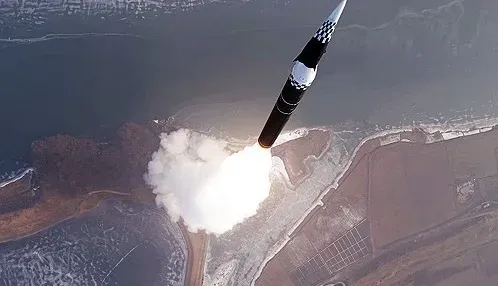
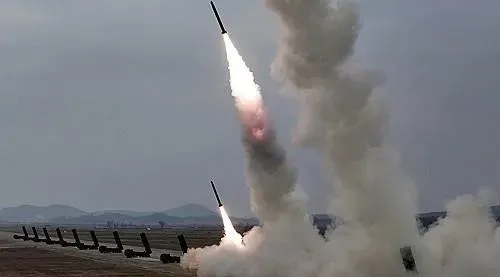
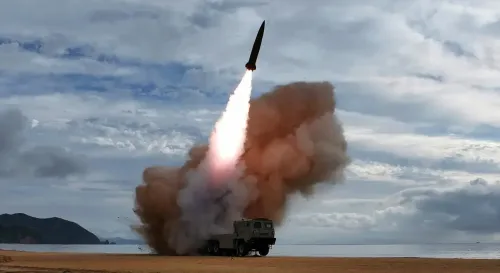
South Korea's JCS detected multiple short-range ballistic missiles launched from Wonsan toward the East Sea on 19 September .
A prior drill on 14 September featured attack drones, cruise missiles, and ballistic missiles — Pyongyang claimed 100% target accuracy.
The escalation follows a trilateral military exercise by South Korea , the US , and Japan .
North Korean leader Kim Jong-un has ordered his country's artillery forces to develop the “most concentrated and destructive” offensive capabilities, state media reported on Saturday, 19 September 2026, following a multi-day inspection tour of major munitions factories. The directive came on the same day South Korea's Joint Chiefs of Staff (JCS) detected multiple short-range ballistic missiles launched from the North.
Factory Inspections and Key Directives
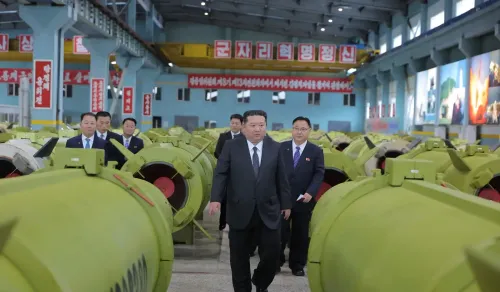
Kim conducted inspections of munitions enterprises from Wednesday to Friday, accompanied by senior officials including Pak Jong-chon, vice chairman of the Central Military Commission of the ruling Workers' Party. The visits were reported by the Korean Central News Agency (KCNA).
“Our artillery should have the most concentrated and destructive, massive and versatile offensive capability and responsibly perform the two missions of deterring and fighting war,” KCNA quoted Kim as saying.
Kim also instructed the munitions industry to take a bigger role in building what he called the “most powerful army,” outlining specific policy tasks including enhancing artificial intelligence in offensive and defensive weapons, upgrading armour and automation of artillery systems, and improving factory production conditions.
Weapons Systems Under Review
According to Shin Jong-woo, secretary-general of the Seoul-based Korea Defence and Security Forum, Kim appears to have visited facilities manufacturing 600-millimetre and 240 mm multiple rocket launchers, as well as drone production units. These systems have drawn particular concern from regional defence analysts given their range and payload capacity.
Missile Launches Detected Saturday
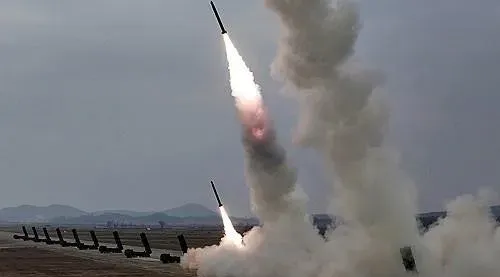
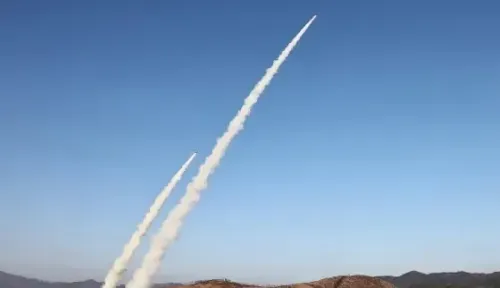
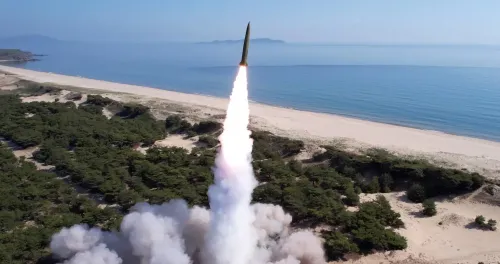
South Korea's JCS detected multiple short-range ballistic missiles launched from North Korea's Wonsan area toward the East Sea on Saturday. This latest provocation follows a firepower strike drill conducted by North Korea on 14 September, itself a direct response to a trilateral military exercise involving South Korea, the United States, and Japan.
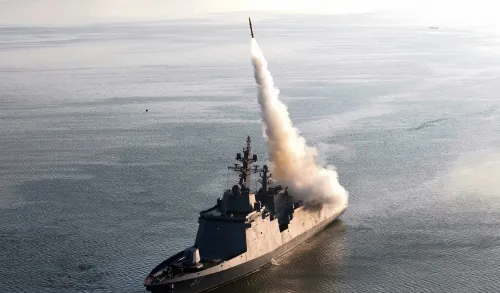
That earlier drill involved subunits drawn from five artillery and missile joint units, featuring attack drones, tactical cruise missiles, large-calibre thermal-pressure multiple rocket launchers, and tactical ballistic missiles. Pyongyang claimed all strike systems achieved 100 per cent target accuracy, describing the exercise as showcasing the “unity and simultaneity of firepower attack.”
Regional Security Context
This comes amid an escalating cycle of military signalling on the Korean Peninsula. North Korea's accelerating weapons development — particularly its focus on AI-integrated systems and large-calibre rocket artillery — mirrors patterns seen ahead of previous periods of heightened inter-Korean and US-North Korea tension. Notably, the inspection of drone and rocket production lines signals Pyongyang's intent to diversify its strike options well beyond traditional ballistic missiles. Analysts warn the combination of tactical precision and mass-fire artillery poses compounded deterrence challenges for Seoul and its allies.
With trilateral exercises between South Korea, the US, and Japan expected to continue, Pyongyang's latest moves suggest further provocations remain likely in the near term.
Point of View
Reinforcing a now-familiar escalation loop. What is underreported is the drone-production angle: Pyongyang's investment in attack drones, if scaled, could change the cost calculus of any conflict on the peninsula far more than another ballistic missile test.
NationPress
19 Sept 2026
Frequently Asked Questions
What did Kim Jong-un demand during his munitions factory visits?
Kim Jong-un called for North Korea's artillery forces to possess the ‘most concentrated and destructive, massive and versatile offensive capability’ during factory inspections held from Wednesday to Friday, 17–19 September 2026. He also directed the munitions industry to enhance AI integration in weapons and upgrade armour and automation in artillery systems.
What missiles did North Korea fire on 19 September 2026?
South Korea's Joint Chiefs of Staff detected multiple short-range ballistic missiles launched from North Korea's Wonsan area toward the East Sea on 19 September 2026. The launches came on the same day state media reported Kim's munitions factory inspection tour.
What weapons did North Korea test in its 14 September drill?
The 14 September firepower drill involved attack drones, tactical cruise missiles, large-calibre thermal-pressure multiple rocket launchers, and tactical ballistic missiles. North Korea claimed all strike systems achieved 100 per cent accuracy, calling it a demonstration of the ‘unity and simultaneity of firepower attack.’
Why did North Korea conduct these drills and inspections?
The drills were conducted in direct response to a trilateral military exercise by South Korea, the United States, and Japan, according to the sequencing reported by state media. Kim's factory visits followed, signalling Pyongyang's intent to accelerate its weapons production as a deterrence measure.
What types of weapons is North Korea reportedly producing?
According to the Korea Defence and Security Forum's secretary-general Shin Jong-woo, Kim appears to have inspected facilities manufacturing 600 mm and 240 mm multiple rocket launchers and drones, alongside other munitions enterprises focused on AI-enhanced offensive and defensive systems.