North Korea fires 11th missile of 2025 ahead of US-South Korea Ulchi Freedom Shield drills
Synopsis
North Korea's 11th missile launch of 2025 — fired just days before the US-South Korea Ulchi Freedom Shield exercise — may be a repeat of a suspected failed test from the previous week, analysts say. The silence from Pyongyang's state media on both launches has raised fresh questions about whether a new or upgraded system, possibly the Hwasong-11 tactical nuclear-capable missile, is being tested under cover of the drills.
Key Takeaways
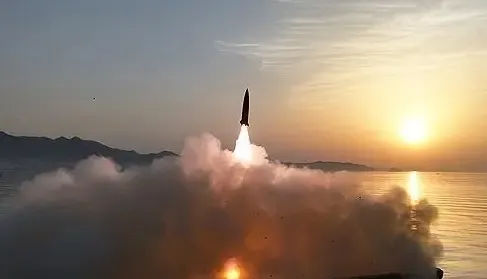
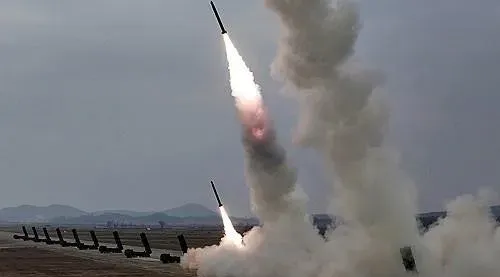
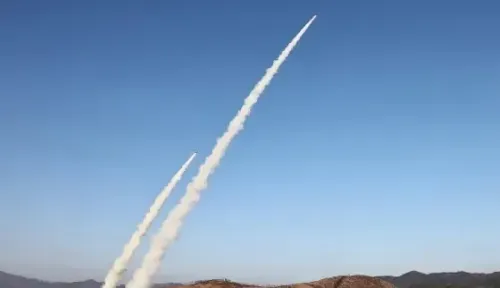
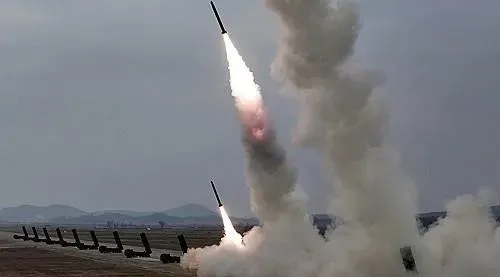
North Korea launched a ballistic missile toward the East Sea on 12 August , its 11th missile test of 2025 .
The missile was fired from the Wonsan area and flew more than 700 km , consistent with a short-range ballistic missile .
The launch came six days after a previous missile test for which Pyongyang has published no state media coverage — raising questions of a failed launch or new system test.
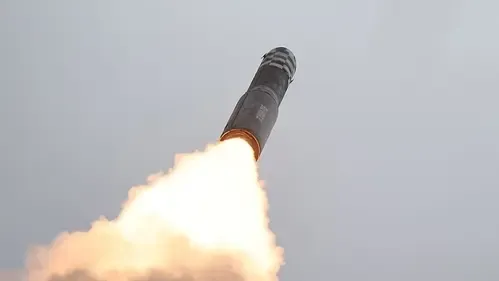
Analysts suggest the test may be linked to upgrading the Hwasong-11 , designed to carry tactical nuclear warheads .
The launches coincide with the upcoming Ulchi Freedom Shield combined exercise between South Korea and the United States .
US Pacific Command assessed the launch as posing no immediate threat to US territory or allies.
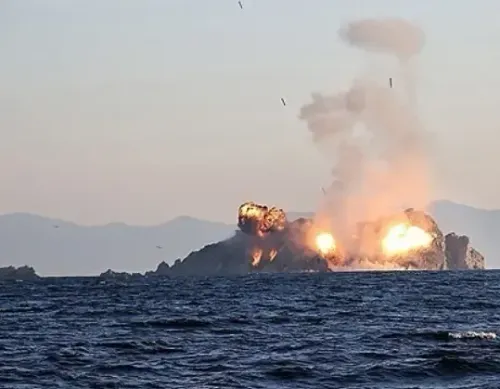
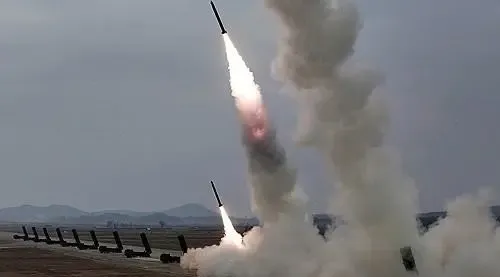
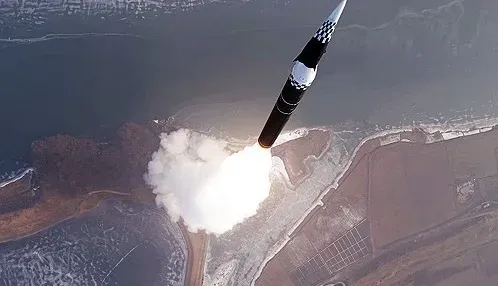
North Korea launched a ballistic missile toward the East Sea on Wednesday, 12 August, marking its second such launch in under a week and its 11th missile test of the year, according to South Korea's Joint Chiefs of Staff (JCS). The launch is widely seen as a protest against the upcoming Ulchi Freedom Shield combined military exercise between South Korea and the United States, set to begin next week.
Launch Details and Flight Path
The JCS said the missile was detected lifting off from the Wonsan area on North Korea's east coast at approximately 6 a.m. local time. It flew more than 700 kilometres before coming down, with South Korean and US authorities conducting a detailed technical analysis of its specifications.
While the military had not formally identified the missile type, the 700-km range is consistent with a short-range ballistic missile, defined as one travelling between 300 and 1,000 km. Analysts noted that North Korea's KN-23 — often described as Pyongyang's variant of Russia's Iskander — has a maximum range of 700 to 800 km, making it a likely candidate. The launch was also visually observed from Goseong county in Gangwon Province, South Korea, located approximately 130 km from Wonsan.
Context: Pattern of Protest Launches
The latest test came six days after North Korea fired what South Korea's military identified as a short-range ballistic missile toward the East Sea on the previous Thursday. Notably, Pyongyang has not published any state media reports on that earlier launch — an unusual departure from its standard practice of announcing tests the following day.
That silence has fuelled speculation. Analysts say the prior launch may have failed, involved a new and undisclosed missile type, or could have been a longer-range missile deliberately fired at a reduced trajectory. Yang Moo-jin, a senior professor at the University of North Korean Studies, said Wednesday's launch 'could be a repeat of last week's launch following its suspected failure and is believed to be a test-firing aimed at improving its missile capabilities.'
Yang also raised a second possibility: 'Given the intensifying war in Ukraine, it could also be a test to upgrade the Hwasong-11 missiles, which are designed to carry tactical nuclear warheads,' he said.
Ulchi Freedom Shield and Pyongyang's Response
North Korea has consistently denounced the South Korea-US annual military drills as 'war rehearsals,' and has historically timed weapons tests around the training period as a show of defiance. The Ulchi Freedom Shield exercise, scheduled to begin next week, is one of the largest such combined drills on the Korean Peninsula.
This pattern of protest launches is not new — Pyongyang has conducted missile tests ahead of or during nearly every major allied exercise in recent years, using the drills as political justification for what it frames as defensive capability demonstrations.
Allied Response and Security Posture
South Korean and US intelligence authorities tracked the missile from its early stage and shared information with Japan, maintaining what the JCS described as 'a full readiness posture.' The JCS stated: 'Under the staunch South Korea-US combined defence posture, our military is closely monitoring various North Korean activities and maintaining the capability and readiness to respond overwhelmingly to any provocation.'
South Korea's National Security Office (NSO) convened an emergency meeting with defence and military officials shortly after the launch to assess its impact on regional security and directed necessary response measures. The NSO urged Pyongyang to halt such provocations, calling them violations of UN Security Council resolutions.
The US Pacific Command assessed the launch as not posing an immediate threat to US territory or its allies.
What Comes Next
With the Ulchi Freedom Shield exercise still to begin, further North Korean provocations cannot be ruled out. Analysts will watch closely whether Pyongyang publishes state media coverage of Wednesday's launch — a signal that would clarify whether it was a success and what system was tested. The broader trajectory of North Korea's missile programme in 2025 — now at 11 launches — suggests an accelerating pace of testing ahead of what could be a diplomatically significant period on the peninsula.
Point of View
The timing — against the backdrop of the Ukraine war and Russia's battlefield use of Iskander-type systems — suggests North Korea may be field-testing systems with direct export or operational relevance, not merely signalling displeasure at allied drills. The 11-launch pace in 2025 also warrants scrutiny: at this rate, it would be among the most active testing years on record, pointing to a programme in active development rather than one in a holding pattern.
NationPress
26 Sept 2026
Frequently Asked Questions
Why did North Korea fire a missile on 12 August 2025?
North Korea launched a ballistic missile toward the East Sea on 12 August in what analysts describe as a protest against the upcoming Ulchi Freedom Shield combined military exercise between South Korea and the United States, set to begin the following week. Pyongyang has historically timed weapons tests around allied drills, framing them as defensive responses to what it calls 'war rehearsals.'
What type of missile did North Korea launch?
South Korea's Joint Chiefs of Staff had not formally identified the missile type as of the launch, but the reported flight distance of over 700 km is consistent with a short-range ballistic missile. Analysts pointed to the KN-23 — North Korea's variant of Russia's Iskander, with a maximum range of 700 to 800 km — as a likely candidate, while others raised the possibility of the Hwasong-11, designed to carry tactical nuclear warheads.
What is the Ulchi Freedom Shield exercise?
Ulchi Freedom Shield is an annual combined military exercise conducted by South Korea and the United States, designed to test and strengthen their joint defence capabilities on the Korean Peninsula. North Korea consistently denounces the drills as rehearsals for invasion and has timed missile tests around them in recent years.
Why has North Korea not reported on its recent missile launches in state media?
Pyongyang typically announces missile tests through state media within a day of a launch, but it published no reports on the previous week's test — an unusual omission. Analysts say this could indicate the launch failed, involved a new undisclosed missile type, or was a longer-range missile fired at a reduced trajectory to conceal its true capabilities.
How many missiles has North Korea launched in 2025?
Wednesday's launch was North Korea's 11th ballistic missile test of 2025, according to South Korea's Joint Chiefs of Staff. The pace suggests one of the more active testing years in recent memory, indicating the programme is in active development.