South Korea FM Cho Hyun meets US senators in New York on alliance, peninsula issues
Synopsis
South Korean Foreign Minister Cho Hyun used the sidelines of the UN General Assembly in New York to press US senators for congressional backing on a landmark $350 billion investment pact — covering shipbuilding, nuclear energy, and nuclear-powered submarines — that sits at the heart of the Lee-Trump summit agenda. Both senators reaffirmed bipartisan support, signalling that the deal retains cross-party traction on Capitol Hill.
Key Takeaways
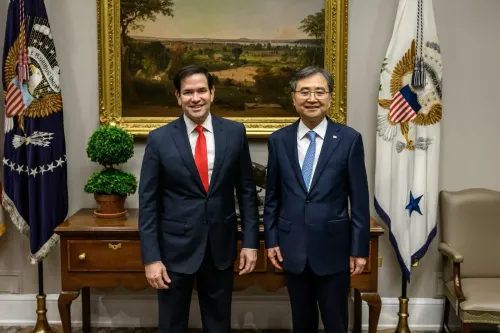
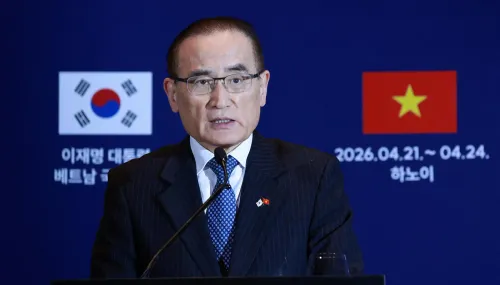
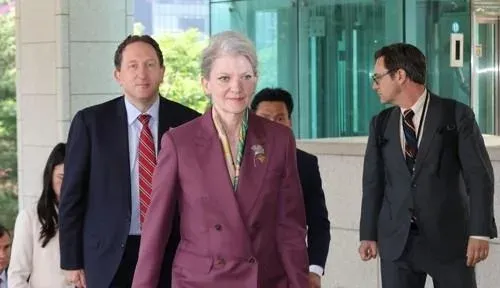
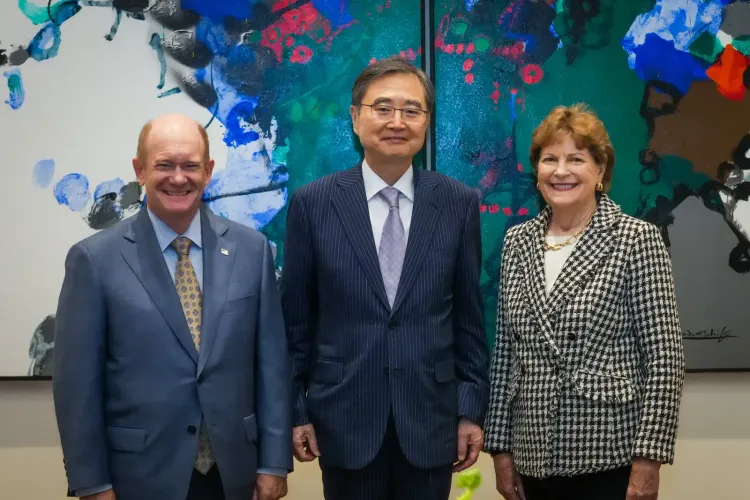
Foreign Minister Cho Hyun met senators Jeanne Shaheen and Chris Coons in New York on the sidelines of the UN General Assembly .
Cho called for active US congressional support for cooperation in shipbuilding and nuclear energy .
The joint fact sheet from the Lee-Trump summit commits Seoul to invest US$350 billion in the US, including $150 billion for shipbuilding, in exchange for lower tariff rates.
Security provisions include Seoul's push for nuclear-powered submarines and uranium enrichment rights.
Both senators reaffirmed bipartisan congressional support for the alliance and welcomed Seoul's US investments.
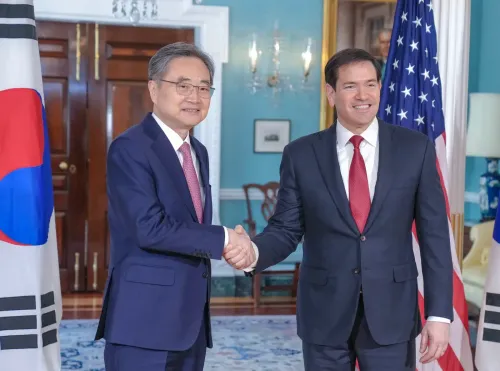
South Korean Foreign Minister Cho Hyun met with US senators in New York on Monday, 22 September 2025, to discuss the South Korea-US alliance, developments on the Korean Peninsula, and broader regional affairs, the South Korean foreign ministry confirmed on Tuesday. The meetings took place on the sidelines of the UN General Assembly's high-level week.
Who Was in the Room
Minister Cho held talks with Democratic senators Jeanne Shaheen (New Hampshire) and Chris Coons (Delaware) in a joint meeting. The discussions covered the full spectrum of bilateral priorities, from security architecture to landmark economic cooperation agreements.
Alliance Commitments in Focus
Cho highlighted that he and US Secretary of State Marco Rubio had agreed during bilateral talks in Washington the previous week to maintain close communication to ensure the faithful implementation of key summit agreements between their leaders, as outlined in a joint fact sheet, according to reports. He called for active congressional support to advance strategic cooperation in priority areas, specifically shipbuilding and nuclear energy.
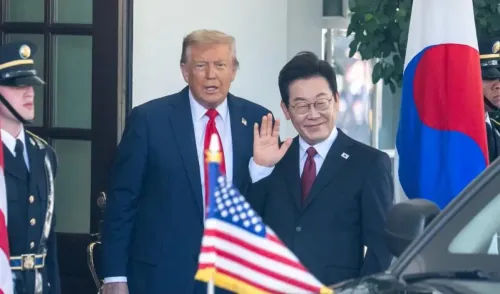
The joint fact sheet — issued in November following the summit between South Korean President Lee Jae Myung and US President Donald Trump the previous month — calls for Seoul to invest US$350 billion in the United States. Of that, $150 billion is earmarked for shipbuilding cooperation, in exchange for lower US tariff rates. The document also covers security-related arrangements, including Seoul's push to develop nuclear-powered submarines and secure rights to enrich uranium and reprocess spent nuclear fuel.
Korean Peninsula Denuclearisation
Minister Cho also briefed the senators on his assessment of the current situation on the Korean Peninsula, explaining Seoul's ongoing diplomatic efforts to achieve denuclearisation and preserve peace and stability in the region. The briefing reflects growing concern in allied capitals over Pyongyang's continued weapons development.
Bipartisan Congressional Backing
Senators Shaheen and Coons reaffirmed strong bipartisan support in the US Congress for the alliance, welcoming Seoul's investments as contributors to job creation and the rebuilding of the American manufacturing sector. Both senators pledged continued congressional attention and active cooperation in ensuring the smooth implementation of summit agreements and in promoting stability on the Korean Peninsula, the ministry said.
The New York engagements underscore the intensifying diplomatic push by Seoul to lock in US legislative backing for a bilateral economic and security compact that carries implications well beyond the Korean Peninsula — touching on Indo-Pacific defence architecture, nuclear non-proliferation norms, and global shipbuilding supply chains.
Point of View
But shipbuilding cooperation and uranium enrichment rights are the provisions that will face the hardest scrutiny — from non-proliferation advocates and domestic US industry alike. The bipartisan reaffirmation from Shaheen and Coons is useful optics, but neither senator chairs a committee with direct jurisdiction over the deal's most contentious elements. The real test will come when the agreement moves from fact sheets to appropriations and treaty-adjacent processes that demand far broader congressional consensus.
NationPress
22 Sept 2026
Frequently Asked Questions
Why did South Korea's Foreign Minister meet US senators in New York?
Foreign Minister Cho Hyun met senators Jeanne Shaheen and Chris Coons in New York on the sidelines of the UN General Assembly's high-level week to secure active congressional support for the South Korea-US alliance and the implementation of key summit agreements, including a $350 billion investment pact covering shipbuilding and nuclear energy.
What is the South Korea-US joint fact sheet and what does it contain?
The joint fact sheet was issued in November following the summit between South Korean President Lee Jae Myung and US President Donald Trump the previous month. It commits Seoul to invest US$350 billion in the United States — including $150 billion for shipbuilding cooperation — in exchange for lower US tariff rates, and covers security arrangements such as nuclear-powered submarines and uranium enrichment rights.
What did US senators Shaheen and Coons say about the alliance?
Senators Shaheen and Coons reaffirmed strong bipartisan congressional support for the South Korea-US alliance, welcomed Seoul's US investments as contributors to American job creation and manufacturing, and pledged continued support for the smooth implementation of summit agreements and peace on the Korean Peninsula.
What is Seoul's position on Korean Peninsula denuclearisation?
Minister Cho briefed the senators on Seoul's ongoing diplomatic efforts to achieve denuclearisation and maintain peace and stability on the Korean Peninsula. No new developments or breakthroughs were announced; the briefing reflected Seoul's standard position of dialogue combined with pressure on Pyongyang.
What areas of strategic cooperation did South Korea request congressional support for?
Minister Cho specifically called for US congressional support in two priority areas: shipbuilding cooperation, which accounts for $150 billion of the $350 billion investment commitment, and nuclear energy. The broader agreement also includes provisions for nuclear-powered submarines and uranium enrichment rights for South Korea.