South Korea, US launch nuclear submarine, uranium talks in Seoul
Synopsis
Seoul and Washington have quietly opened the door to one of the biggest shifts in their alliance in decades — nuclear-powered submarines for South Korea, expanded uranium enrichment, and a possible wartime operational control transfer. Tied to a USD 350 billion investment pledge, these talks could redraw the non-proliferation rulebook between the two allies.
Key Takeaways
NSA Wi Sung-lac met US Under Secretary Allison Hooker in Seoul on Tuesday .
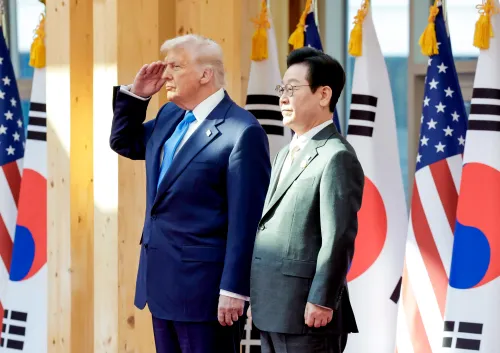
Talks follow the October agreement between President Lee Jae Myung and President Donald Trump .
Agenda covers nuclear-powered submarines , uranium enrichment, and spent fuel reprocessing.
Wartime operational control transfer and shipbuilding cooperation also on the table.
Seoul has pledged USD 350 billion in US investment in exchange for a reduced tariff rate.
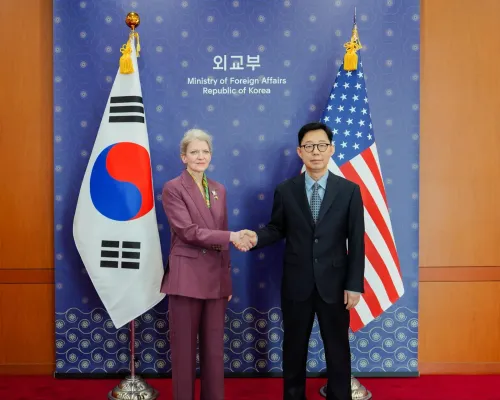
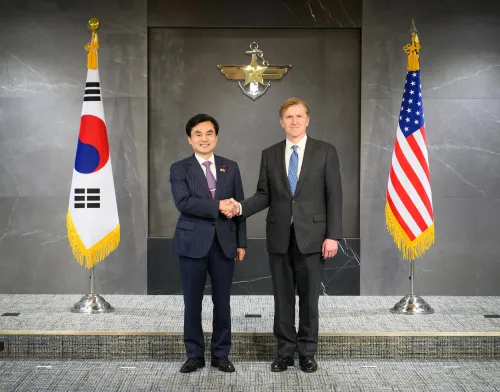
South Korea's National Security Advisor Wi Sung-lac on Tuesday met visiting US Under Secretary of State for Political Affairs Allison Hooker in Seoul, welcoming the launch of follow-up negotiations on a security agreement struck by the two countries' leaders last year. The talks mark the first high-level consultations on Seoul's push to build nuclear-powered submarines, expand uranium enrichment rights, and reprocess spent nuclear fuel.
What the Blue House said
'We hope that two days of productive talks will help accelerate progress on the matter,' Cheong Wa Dae said in a press release. It added that 'both sides reaffirmed the ROK-US alliance as a central pillar of peace and prosperity on the Korean Peninsula and in the Indo-Pacific, and pledged to maintain close dialogue and cooperation on regional developments, including on the Korean Peninsula and in the Middle East.'
Key items on the agenda
The two sides are believed to have discussed Seoul's push to secure greater authority to enrich uranium, reprocess spent nuclear fuel for peaceful uses, and acquire nuclear-powered submarines. The discussions could also cover the allies' plan to transfer wartime operational control of South Korean troops from Washington to Seoul.
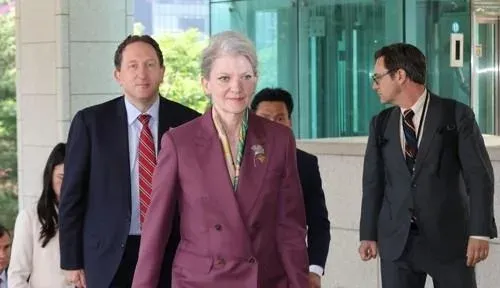
Hooker arrived in South Korea on Monday leading a US delegation, as the allies began follow-up talks on an agreement reached by President Lee Jae Myung and US President Donald Trump in October. Uranium reprocessing is expected to dominate the Wednesday session.
Why the talks matter
'The meeting carries significance in that long-delayed security consultations have finally begun and are back on track,' foreign ministry spokesperson Park Il said at a press briefing. 'Cooperation and partnership between South Korea and the US in the nuclear sector will help deepen and broaden the bilateral alliance,' he added, stressing Seoul's commitment to fully implementing the agreed-upon issues.
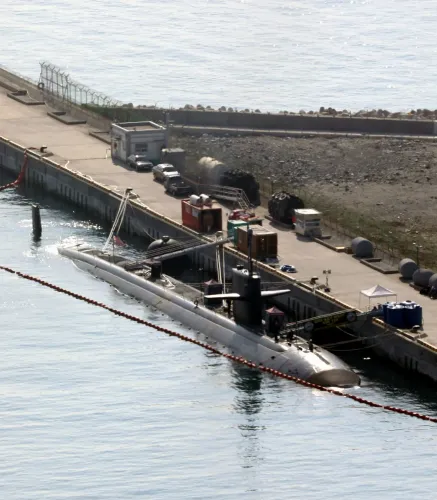
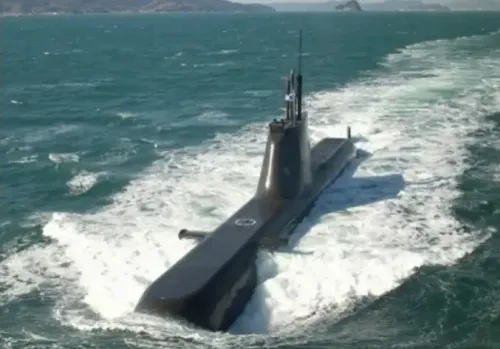
Building nuclear-powered submarines has long been prohibited under the bilateral nuclear pact between Seoul and Washington, making any breakthrough a structural shift in the alliance. Wednesday's session is expected to focus on uranium enrichment and spent fuel reprocessing — capabilities Seoul says are essential to fuel its envisioned submarine fleet.
The wider package
Other agenda items include expanding shipbuilding cooperation between the two countries. The joint fact sheet, published in November, outlines commitments across the nuclear sector and other security tracks, alongside Seoul's pledge to invest USD 350 billion in the US in exchange for a reduced US tariff rate.
Who is at the table
First Vice Foreign Minister Park Yoon-joo led the South Korean delegation, which included officials from the presidential office and the defence, science and industry ministries. The US delegation, led by Hooker, included Ivan Kanapathy, senior director for Asia at the National Security Council, and Matthew Napoli, deputy administrator for defence nuclear nonproliferation at the National Nuclear Security Administration, along with officials from the Department of Energy and related agencies.
What's next
The two-day inaugural format is expected to set the cadence for further rounds. With nuclear propulsion, enrichment rights, and operational control all on the table, the next phase will test how far Washington is willing to rewrite a decades-old non-proliferation framework with a treaty ally.
Point of View
And it is happening with remarkably little fanfare. A nuclear-propelled submarine fleet for Seoul would mark a quiet rewrite of a non-proliferation framework Washington has guarded for decades. The USD 350 billion investment pledge is the unspoken collateral — Trump's transactional alliance model translated into kilotons and shipyards. The real question is whether Congress and the IAEA framework can absorb what the executives have already agreed in principle.
NationPress
16 Oct 2026
Frequently Asked Questions
What did South Korea's NSA and the US Under Secretary discuss?
Wi Sung-lac and Allison Hooker discussed follow-up negotiations on the October 2024 agreement between Presidents Lee Jae Myung and Donald Trump. The agenda included nuclear-powered submarines, uranium enrichment, spent fuel reprocessing, and wartime operational control transfer.
Why are nuclear-powered submarines a sensitive issue?
Building nuclear-powered submarines has been prohibited under the bilateral nuclear pact between Seoul and Washington. Any approval would represent a structural change to long-standing non-proliferation arrangements between the two allies.
What is the USD 350 billion pledge linked to these talks?
Under the joint fact sheet published in November, Seoul committed to invest USD 350 billion in the United States in exchange for a reduced US tariff rate. The pledge is part of the broader package that also covers nuclear and security cooperation.
Who led the two delegations?
First Vice Foreign Minister Park Yoon-joo led the South Korean side, joined by officials from the presidential office and the defence, science and industry ministries. The US side was led by Under Secretary Allison Hooker with officials from the NSC, NNSA, and Department of Energy.
What will Wednesday's session focus on?
The second day is expected to focus on uranium enrichment and spent nuclear fuel reprocessing — capabilities Seoul says are essential to power its envisioned nuclear-propelled submarine fleet.