South Korea-US Push Intelligence 'Normalisation' After North Korea Data Leak Row
Synopsis
South Korea and the US are working to restore intelligence-sharing 'normalisation' after Washington reportedly restricted Seoul's access to North Korea satellite data — triggered by Unification Minister Chung Dong-young's public reference to a classified uranium enrichment site. The rare punitive move against a treaty ally has rattled one of Asia's most critical security partnerships.
Key Takeaways
South Korea's Vice Foreign Minister Jeong Yeon-doo met US Under Secretary Allison Hooker at the State Department in Washington on Friday, April 25, 2025 to address the intelligence-sharing dispute.
The US reportedly partially restricted South Korea's access to satellite intelligence on North Korea after Unification Minister Chung Dong-young publicly named the Kusong area as a uranium enrichment site.
Seoul insists Chung's reference was based on open-source information , while Washington classifies it as a disclosure of confidential intelligence shared through private channels.
A senior Trump administration official stated the US "expects all partners to safeguard sensitive US information shared in private channels." South Korea's National Security Advisor Wi Sung-lac declined to confirm or deny the intelligence curbs during a press briefing in Hanoi on Thursday , citing the sensitive nature of the matter.
Jeong is scheduled to attend the NPT states parties meeting at UN headquarters in New York early next week, where North Korea's nuclear programme will be a central issue.
Washington, April 25: South Korea and the United States are actively working toward "normalisation" of their intelligence-sharing relationship after the US reportedly imposed partial restrictions on Seoul's access to satellite intelligence on North Korea, following what Washington views as an unauthorised disclosure of classified information by a senior South Korean official. The development has raised alarm over the durability of one of Asia's most critical security alliances.
High-Level Diplomatic Talks at the State Department
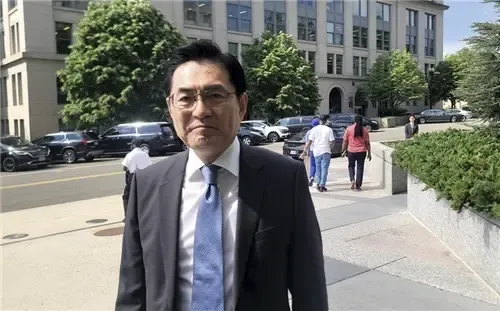
Vice Foreign Minister for Strategy and Intelligence Jeong Yeon-doo met with US Under Secretary of State for Political Affairs Allison Hooker at the State Department in Washington on Friday to address the growing rift. Both officials are recognised experts on North Korean affairs, making the bilateral meeting particularly significant in scope and substance.
When pressed by Yonhap News Agency on whether the two sides were moving toward normalisation, Jeong responded directly: "That is what we are trying to do. Both sides are making (efforts)." Asked whether misunderstandings had been resolved, he added, "We had discussed (issues), including that. Let's wait and see."
The Intelligence Leak Controversy: What Triggered the Rift
The dispute centres on remarks made by South Korean Unification Minister Chung Dong-young, who publicly referenced the Kusong area in North Korea as a site hosting uranium enrichment facilities. The US reportedly considers this information to have originated from classified satellite intelligence shared through private diplomatic channels — and views its public disclosure as a serious breach of protocol.
Seoul, however, maintains that Chung's reference to the Kusong site was drawn from "open-source" information — publicly available data — and therefore did not constitute a leak of confidential material. This fundamental disagreement over the classification status of the information is at the heart of the current diplomatic tension.
In response, the US is reported to have partially restricted South Korea's access to its satellite intelligence on North Korea — a move that, if confirmed, would represent a significant and rare punitive step against a close treaty ally.
Washington's Position: Partners Must Safeguard Shared Intelligence
A senior official from the Trump administration made the US government's expectations unambiguous, stating that Washington "expects all our partners to safeguard sensitive US information that has been shared in private channels." The statement, while not naming South Korea explicitly, was widely interpreted as a direct signal to Seoul.
The US position reflects a broader concern within American intelligence circles about the security of classified data shared with partner nations — a concern that has grown more acute as geopolitical sensitivities around North Korea's nuclear programme intensify.
Seoul's National Security Advisor Weighs In
During a press briefing in Hanoi on Thursday, South Korea's National Security Advisor Wi Sung-lac confirmed that the two governments had been in active communication over the matter. When asked directly whether the US had indeed curbed intelligence sharing, Wi offered a carefully worded response: "It is difficult to either confirm or deny it," citing the sensitive nature of intelligence cooperation between the allies.
His deliberate ambiguity underscores the delicate diplomatic tightrope Seoul is walking — acknowledging the problem without publicly validating reports that could further strain the alliance or embarrass either government.
Strategic Implications for the US-South Korea Alliance
The reported intelligence curbs come at a particularly fraught moment. North Korea continues to advance its nuclear and missile programmes, making real-time satellite intelligence from the US indispensable for South Korea's defence posture. Any sustained reduction in intelligence sharing would directly degrade Seoul's situational awareness and early-warning capabilities — a fact that both sides clearly recognise.
Historically, the US-South Korea alliance, formalised through the Mutual Defense Treaty of 1953, has weathered numerous political storms. However, disputes over intelligence handling are particularly sensitive because they strike at the foundational trust that underpins classified cooperation. Critics in Seoul have argued that the US response is disproportionate, while analysts in Washington warn that lax information security by allies sets dangerous precedents.
Vice Foreign Minister Jeong is also scheduled to attend a meeting of states parties to the Treaty on the Non-Proliferation of Nuclear Weapons (NPT) at UN headquarters in New York early next week — where North Korea's nuclear activities will inevitably dominate discussions, adding another layer of urgency to resolving the bilateral rift before multilateral diplomacy begins.
As both governments signal a desire for resolution, the coming days will be critical in determining whether this episode becomes a temporary diplomatic friction point or a longer-term erosion of one of the most strategically vital alliances in the Indo-Pacific.
Point of View
Any fracture in the US-South Korea intelligence relationship carries consequences far beyond bilateral optics. The speed with which both sides are now signalling 'normalisation' suggests neither can afford the luxury of a prolonged rift — but the underlying trust deficit will take longer to repair than any press statement can acknowledge.
NationPress
28 Sept 2026
Frequently Asked Questions
Why did the US restrict intelligence sharing with South Korea?
The US reportedly restricted South Korea's access to satellite intelligence on North Korea after Unification Minister Chung Dong-young publicly referenced the Kusong area as a uranium enrichment site, which Washington considers a classified disclosure. Seoul maintains the information was drawn from open-source data, not classified US intelligence.
What is the current status of US-South Korea intelligence normalisation?
As of April 25, 2025, both governments are actively working toward normalisation, according to South Korea's Vice Foreign Minister Jeong Yeon-doo after his meeting with US Under Secretary Allison Hooker in Washington. He stated that 'both sides are making efforts' but cautioned observers to 'wait and see' on whether misunderstandings have been fully resolved.
Who is Allison Hooker and why is her role significant here?
Allison Hooker serves as the US Under Secretary of State for Political Affairs and is a recognised expert on North Korean affairs. Her direct engagement with South Korea's Vice Foreign Minister signals that Washington is treating this intelligence dispute as a high-priority diplomatic matter at the senior policy level.
What is the Kusong site and why is it controversial?
The Kusong area in North Korea is reported to host uranium enrichment facilities linked to the country's nuclear weapons programme. Its public identification by a South Korean minister became controversial because the US believes the specific intelligence linking Kusong to enrichment activities came from classified American satellite data shared through private channels.
How does this intelligence dispute affect South Korea's security?
US satellite intelligence is critical to South Korea's ability to monitor North Korea's military activities and provide early warnings of potential threats. Any sustained restriction on this intelligence access would directly weaken Seoul's situational awareness and defensive preparedness against one of the world's most unpredictable nuclear-armed states.