South Korea's North Korea surveillance intact despite US intel restrictions: Report
Synopsis
Despite Washington reportedly restricting intelligence sharing after Seoul's public identification of a North Korean nuclear site in Kusong, South Korea says its five-satellite surveillance network keeps its monitoring capabilities fully intact — a signal that Seoul is quietly building strategic autonomy on the Korean Peninsula.
Key Takeaways
South Korea's surveillance of North Korea remains unaffected by US intelligence-sharing restrictions, a government source confirmed on 28 April .
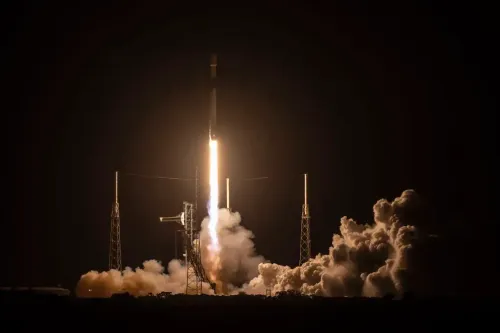
A military surveillance satellite launched in November is set to become fully operational this month, bringing Seoul's total to five ground-vehicle-distinguishing satellites.
Arirang 7 , launched in December , is scheduled for deployment in July and carries an ultrahigh-resolution electro-optical camera and infrared sensor.
Washington reportedly complained after Unification Minister Chung Dong-young publicly identified Kusong as a North Korean uranium enrichment site during a parliamentary session.
The South Korean unification ministry said the minister's remarks were based on "open information," not classified US intelligence.
South Korea's surveillance of North Korea remains unaffected by United States restrictions on intelligence sharing, a government source said on Tuesday, 28 April, amid a diplomatic row over the public disclosure of a Pyongyang nuclear facility location. The source confirmed some "partial" curbs on US intelligence sharing but said Seoul's own satellite assets have kept its monitoring capabilities fully intact.
Seoul's Satellite Network Holds Strong
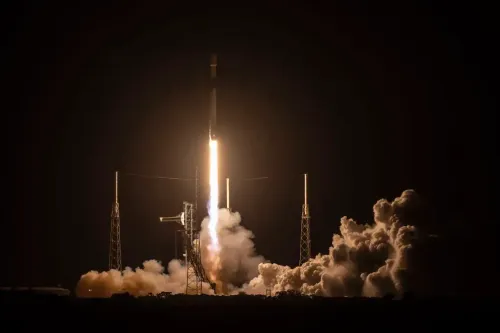
According to the government source, a military surveillance satellite launched in November is set to become fully operational this month after completing deployment tests. With this addition, South Korea will operate a total of five surveillance satellites capable of distinguishing individual vehicles on the ground, reports Yonhap news agency.
Further bolstering Seoul's intelligence architecture, Arirang 7 — the country's multipurpose satellite launched in December — is scheduled for deployment in July. The satellite is equipped with an ultrahigh-resolution electro-optical camera and an infrared sensor, offering high-quality imagery suited for environmental and disaster monitoring, in addition to surveillance applications.
What Triggered the US Complaint
The diplomatic tension stems from a rare public disclosure by Unification Minister Chung Dong-young, who identified North Korea's Kusong region as one of three sites housing the country's uranium enrichment facilities during a parliamentary session last month. Washington reportedly objected to the disclosure, believing the information was derived from intelligence shared by the United States.
Notably, such explicit identification of specific nuclear facility locations is rarely made in open legislative settings, making Chung's statement an unusually candid public acknowledgement of Pyongyang's enrichment infrastructure.
Seoul's Defence of the Disclosure
The South Korean unification ministry pushed back against Washington's concerns, stating that Minister Chung's remarks were based on "open information" and did not constitute a breach of classified intelligence protocols. The government source reiterated that the "partial" restrictions imposed by the US have not materially impacted Seoul's overall intelligence-gathering posture.
Broader Context and What's Next
This comes amid ongoing scrutiny of the US-South Korea intelligence-sharing alliance, which has been a cornerstone of deterrence on the Korean Peninsula. The episode underscores the delicate balance Seoul must maintain between transparency with its own legislature and the confidentiality expectations of its primary security partner. As Arirang 7 moves toward deployment and the fifth surveillance satellite becomes operational, South Korea's autonomous monitoring capacity is set to expand significantly in the months ahead.
Point of View
While Washington expects strict compartmentalisation of shared intelligence. The unification ministry's 'open information' defence is legally defensible but diplomatically thin — if the Kusong detail was genuinely open-source, it raises questions about why it had not been stated publicly before. More significantly, Seoul's emphasis on its own five-satellite constellation signals a deliberate push for intelligence self-reliance, reducing dependence on Washington at a moment when the alliance's terms appear to be quietly renegotiated.
NationPress
19 Sept 2026
Frequently Asked Questions
Has the US restricted intelligence sharing with South Korea?
Yes, the US has reportedly imposed "partial" restrictions on intelligence sharing with South Korea following Unification Minister Chung Dong-young's public identification of North Korea's Kusong region as a uranium enrichment site. However, a South Korean government source said these restrictions have not disrupted Seoul's overall surveillance capabilities.
How is South Korea monitoring North Korea without full US intelligence support?
South Korea relies on its own satellite network, which will comprise five surveillance satellites capable of identifying individual vehicles on the ground once a military satellite launched in November becomes fully operational this month. An additional multipurpose satellite, Arirang 7, is set for deployment in July 2025.
What did Unification Minister Chung Dong-young disclose about North Korea?
Minister Chung publicly identified North Korea's Kusong region as one of three sites housing the country's uranium enrichment facilities during a parliamentary session last month. The disclosure was described as rare, as such specific facility locations are seldom named in open legislative settings.
Why did the US object to South Korea's disclosure?
Washington reportedly believed that the information about the Kusong nuclear facility was derived from intelligence shared by the United States, and objected to its public disclosure. The South Korean unification ministry countered that the minister's remarks were based on open information.
What is Arirang 7 and when will it be deployed?
Arirang 7 is South Korea's multipurpose satellite launched in December, equipped with an ultrahigh-resolution electro-optical camera and an infrared sensor. It is scheduled for deployment in July 2025 and will support environmental monitoring, disaster response, and surveillance.