South Korea-US security talks Day 2: uranium enrichment rights in focus
Synopsis
Seoul is pushing Washington for ‘advance consent' to enrich uranium and reprocess spent fuel for civilian use — a move that would rewrite the decade-old 123 Agreement. With nuclear-propelled submarines, a USD 350 billion US investment plan and the Coupang dispute all entangled, this is the most consequential US-Korea nuclear conversation in years.
Key Takeaways
South Korea and the US held Day 2 of security talks in Seoul on Wednesday , focused on uranium enrichment and spent fuel reprocessing rights.
Seoul is seeking to revise the 2015 123 Agreement to secure ‘advance consent' from Washington.
The US delegation is led by Under Secretary of State Allison Hooker , joined by NSC and NNSA officials.
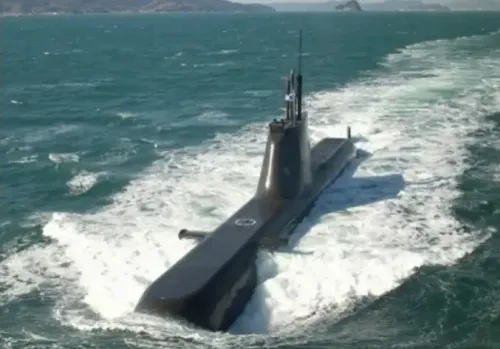
Tuesday's session covered South Korea's conventionally armed nuclear-propelled submarine programme.
Talks were delayed by Seoul's pending USD 350 billion US investment legislation and the Coupang treatment dispute.
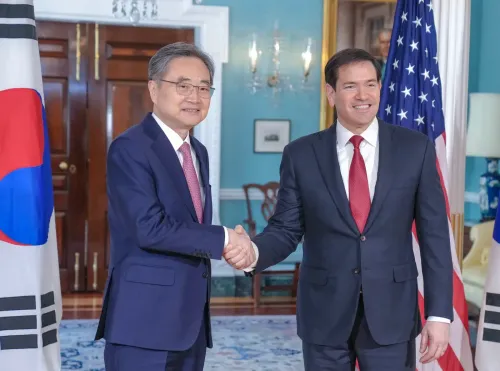
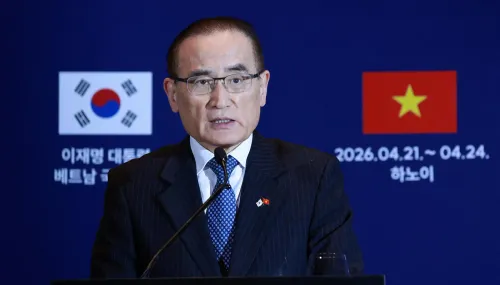
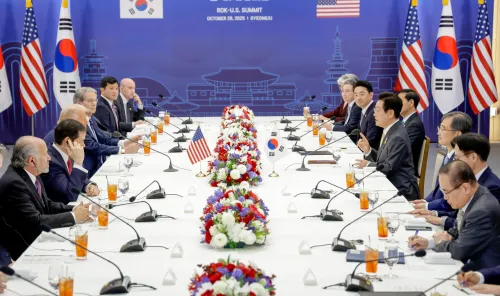
South Korea and the United States on Wednesday entered the second and final day of bilateral security consultations in Seoul, with Seoul's push to secure uranium enrichment and spent nuclear fuel reprocessing rights for civilian use expected to dominate the agenda. The talks aim to operationalise commitments made at the October 2024 summit between the two leaders.
Key agenda items
According to the joint fact sheet, Washington has committed to supporting processes that would enable Seoul to pursue uranium enrichment and spent fuel reprocessing for peaceful purposes, alongside South Korea's ambition to build conventionally armed, nuclear-propelled submarines.
Wednesday's session was expected to focus on enabling Seoul to enrich uranium and reprocess spent nuclear fuel for civilian use — a step that would require revising the 2015 bilateral nuclear energy cooperation pact, commonly referred to as the 123 Agreement.
What the 123 Agreement currently allows
The existing pact bars South Korea from enriching uranium or reprocessing spent nuclear fuel unless it secures US consent through written consultations. Seoul is reportedly seeking a revision that would grant ‘advance consent' — a preapproved, long-term permission that would reduce case-by-case dependence on Washington.
The US delegation
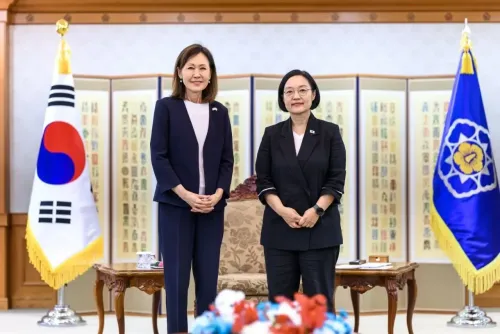
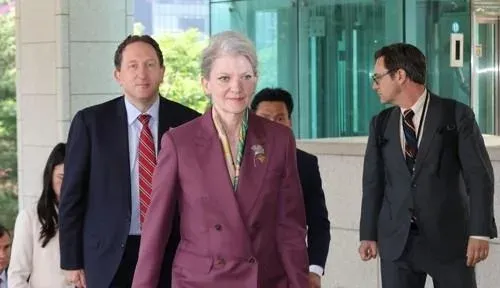
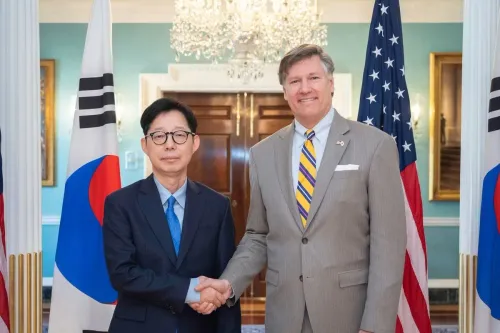
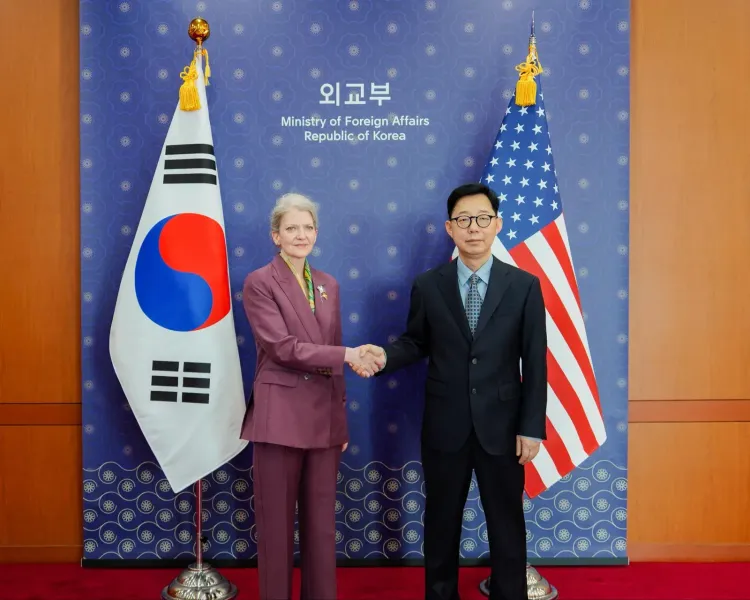
The American team is led by Under Secretary of State for Political Affairs Allison Hooker, who arrived in Seoul on Monday. She is accompanied by Ivan Kanapathy, senior director for Asia at the National Security Council (NSC), and Matthew Napoli, deputy administrator for defense nuclear nonproliferation at the National Nuclear Security Administration, among others.
In a post on social media platform X on Wednesday, Hooker said she ‘discussed working closely to make progress on bilateral nuclear cooperation' during her meeting with National Security Adviser Wi Sung-lac on Tuesday. ‘We also covered a wide range of issues that underscored economic security is national security,' she added.
Why the talks were delayed
The follow-up consultations took place months later than expected, with Seoul's legislative process for a planned USD 350 billion investment in the US — another core summit deliverable — facing delays. Washington's concerns over what it views as discriminatory treatment of US-listed e-commerce firm Coupang Inc. in South Korea have also been cited as a drag on progress.
What's next
Working-level discussions on Wednesday were likely to be led by officials from South Korea's National Security Office and the US NSC. The Tuesday session had focused on the nuclear-powered submarine programme. Any revision to the 123 Agreement would mark one of the most significant shifts in the US-Korea civil nuclear framework in a decade.
Point of View
Where the non-proliferation architecture becomes a chip rather than a principle.
NationPress
18 Oct 2026
Frequently Asked Questions
What is the 123 Agreement between South Korea and the US?
The 123 Agreement is the 2015 bilateral civil nuclear cooperation pact that governs nuclear trade between the two countries. It bars South Korea from enriching uranium or reprocessing spent nuclear fuel without prior written US consent obtained through case-by-case consultations.
Why does South Korea want to enrich uranium and reprocess spent fuel?
Seoul says it needs these capabilities for peaceful, civilian energy purposes and to manage its growing stockpile of spent nuclear fuel. It is reportedly seeking ‘advance consent' from the US — a preapproved, long-term permission rather than the current case-by-case clearance regime.
Who is leading the US delegation in Seoul?
The US team is led by Under Secretary of State for Political Affairs Allison Hooker. She is joined by Ivan Kanapathy, senior director for Asia at the National Security Council, and Matthew Napoli, deputy administrator for defense nuclear nonproliferation at the National Nuclear Security Administration.
Why were the security talks delayed?
The follow-up talks slipped by months because Seoul's legislative process for a planned USD 350 billion investment in the US — a key summit commitment — has been delayed. Washington's concerns over what it views as discriminatory treatment of US-listed Coupang Inc. in South Korea have also been cited as a factor.
What was discussed on Day 1 of the talks?
Tuesday's session focused on South Korea's programme to build conventionally armed, nuclear-propelled submarines. Hooker also met National Security Adviser Wi Sung-lac, where the two sides discussed bilateral nuclear cooperation and the broader economic-security agenda.