South Korea, US open inaugural security talks on submarines and nuclear rights
Synopsis
For the first time since their October summit, South Korea and the US sat down in Seoul to translate headline commitments into hard policy — with nuclear-powered submarines and uranium enrichment rights on the table. The talks, delayed by Washington's Middle East focus and Seoul's legislative stumbles, now carry the weight of a ₩350-billion investment deal and a fundamental renegotiation of the two allies' nuclear energy pact.
Key Takeaways
South Korea and the US opened inaugural bilateral security talks on 2 June 2025 in Seoul .
Key agenda items include nuclear-powered submarines , uranium enrichment rights , and shipbuilding cooperation .
Talks implement commitments from the Lee Jae Myung–Donald Trump summit held in October last year.
South Korea's investment pledge of US$350 billion in the US is linked to a reduced American tariff rate.
Foreign Minister Cho Hyun has called for revision of the 123 Agreement 'as soon as possible' to allow uranium enrichment and spent fuel reprocessing.
The session was delayed by Washington's focus on the Middle East and concerns over Seoul's Coupang Inc. data-breach probe.
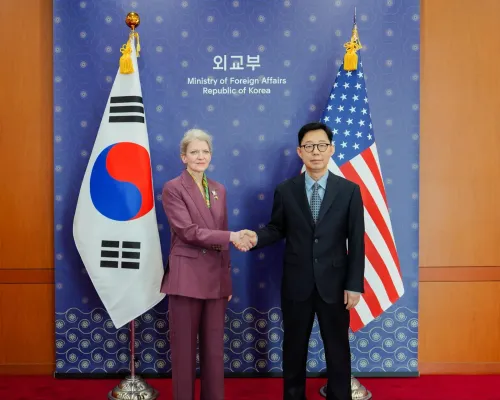
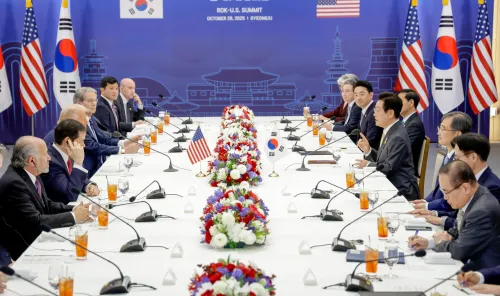
South Korea and the United States launched their first formal round of bilateral security consultations on Tuesday, 2 June, at the South Korean Foreign Ministry building in Seoul, aimed at implementing a package of defence and economic agreements reached at a leaders' summit last year. The two-day inaugural talks mark a significant step in translating summit-level commitments — including Seoul's push to acquire nuclear-powered submarines — into actionable policy.
What the Talks Cover
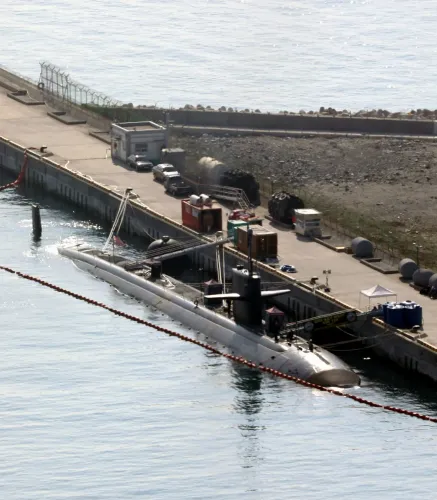
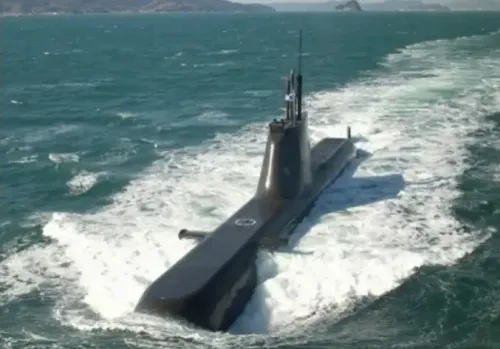
The agenda centres on three core issues: Seoul's ambition to construct nuclear-powered submarines, its effort to secure the right to enrich uranium and reprocess spent nuclear fuel for peaceful purposes, and expanded shipbuilding cooperation between the two allies. These provisions were outlined in a bilateral joint fact sheet issued following the summit between South Korean President Lee Jae Myung and US President Donald Trump in October last year.
Who Is at the Table
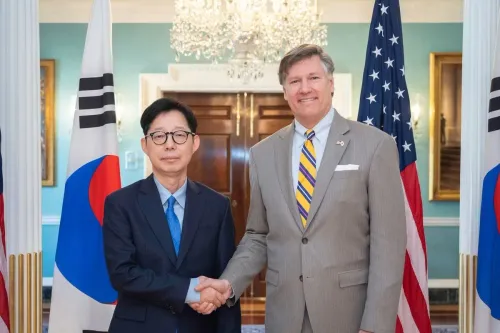
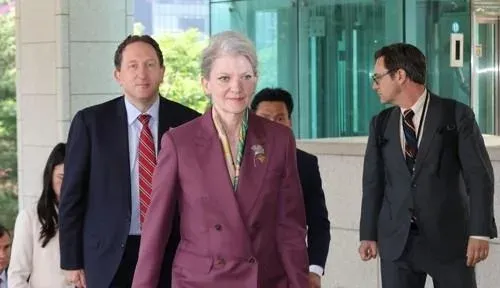
First Vice Foreign Minister Park Yoon-joo leads the South Korean delegation, which includes senior officials from the presidential office and the defence, science, and industry ministries. The US side is headed by Under Secretary of State for Political Affairs Allison Hooker, and includes Ivan Kanapathy, senior director for Asia at the National Security Council (NSC), and Matthew Napoli, deputy administrator for defence nuclear nonproliferation at the National Nuclear Security Administration, alongside officials from the Department of Energy.
Why the Talks Were Delayed
The inaugural session had been expected earlier in 2025 but was postponed as Washington prioritised other concerns, including the ongoing Middle East conflict. The US had also raised objections over delays in Seoul's legislative approval of its pledge to invest US$350 billion in the United States — a commitment made in exchange for a reduced US tariff rate — and a probe into US-listed e-commerce firm Coupang Inc. over a large-scale data breach. Despite these delays, both sides maintained working-level discussions throughout.
The Nuclear Pact at the Centre
A key sticking point is the existing 123 Agreement — the bilateral nuclear energy pact that currently prohibits South Korea from enriching uranium or reprocessing spent nuclear fuel. South Korean Foreign Minister Cho Hyun said last week that Seoul seeks to revise the agreement 'as soon as possible' to enable those activities. The push reflects Seoul's broader strategic goal of deepening its independent nuclear energy capabilities, particularly for submarine propulsion.
What Comes Next
Officials indicated that despite the delayed start, both delegations are expected to move quickly into substantive discussions during these inaugural sessions. Progress on the 123 Agreement revision and the nuclear submarine framework will be closely watched as indicators of how far the two allies can align on sensitive non-proliferation questions. The outcome of these talks could set the template for future US partnerships on nuclear technology in the Indo-Pacific.
Point of View
At a moment when it is simultaneously pressuring other nations on exactly these issues. The Coupang probe and investment-pledge delays reveal that even close alliances are transactional under the current US administration. If Seoul gets what it wants, it will have leveraged a trade deal to rewrite the rules of nuclear cooperation — a template that others in the Indo-Pacific will study carefully.
NationPress
16 Oct 2026
Frequently Asked Questions
What are the South Korea-US security talks about?
The talks, which opened on 2 June 2025 in Seoul, focus on implementing security agreements from the October summit between President Lee Jae Myung and US President Donald Trump. Key issues include South Korea acquiring nuclear-powered submarines, revising the bilateral 123 Agreement to allow uranium enrichment and spent fuel reprocessing, and expanding shipbuilding cooperation.
What is the 123 Agreement and why does South Korea want to revise it?
The 123 Agreement is the bilateral nuclear energy pact between South Korea and the United States that currently prohibits Seoul from enriching uranium or reprocessing spent nuclear fuel. South Korea wants to revise it to enable these activities, particularly to support a nuclear-powered submarine programme and broader energy independence goals.
Why were the inaugural talks delayed?
The talks were delayed because Washington was focused on other priorities, including the Middle East conflict. The US also raised concerns about delays in South Korea's legislative approval of its US$350 billion investment pledge and a probe into Coupang Inc. over a data breach.
Who is leading the delegations at the Seoul talks?
South Korea's delegation is led by First Vice Foreign Minister Park Yoon-joo, with officials from the presidential office and defence, science, and industry ministries. The US delegation is headed by Under Secretary of State for Political Affairs Allison Hooker, and includes NSC senior director Ivan Kanapathy and National Nuclear Security Administration official Matthew Napoli.
What is South Korea's US$350 billion investment pledge?
As part of the joint fact sheet from the October summit, South Korea pledged to invest US$350 billion in the United States in exchange for a reduced US tariff rate. Delays in Seoul's legislative approval of this commitment had been one of the sticking points that postponed the launch of these consultations.