South Korea PM Han, US envoy Steel vow stronger alliance in Seoul meet
Synopsis
South Korean PM Han Seong-sook and US Ambassador Michelle Steel reaffirmed a 'blood-forged' alliance in Seoul, while Foreign Minister Cho Hyun lobbied US senators at the UN for swift action on a landmark deal that commits Seoul to USD 350 billion in US investments — including nuclear submarines and uranium enrichment rights.
Key Takeaways
PM Han Seong-sook met US Ambassador Michelle Steel in Seoul on 23 September 2026 to advance ROK-US bilateral ties.
Han urged expanded cooperation in shipbuilding , semiconductors , and artificial intelligence .
Steel described the alliance as 'blood-forged' and pledged to build a 'stronger' partnership across security and investment.
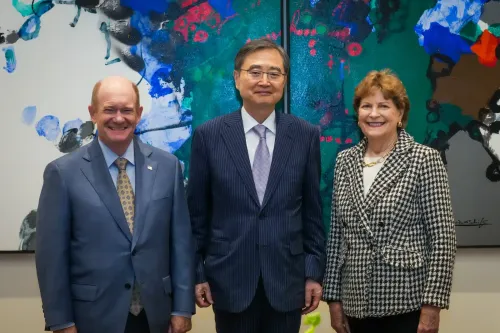
Foreign Minister Cho Hyun met US Senators Shaheen and Coons in New York on the sidelines of the UN General Assembly .
South Korea is committed to investing USD 350 billion in the US — including USD 150 billion for shipbuilding — under a summit-era joint fact sheet.
The deal also covers Seoul's pursuit of nuclear-powered submarines and rights to enrich uranium and reprocess spent nuclear fuel.
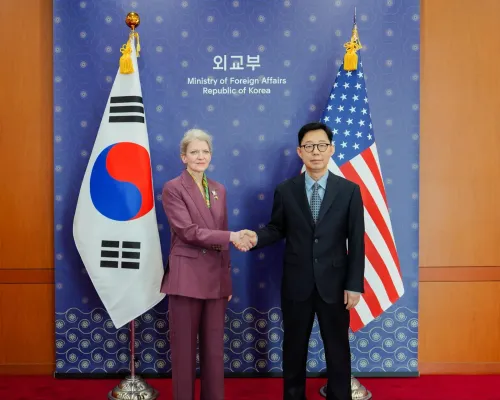
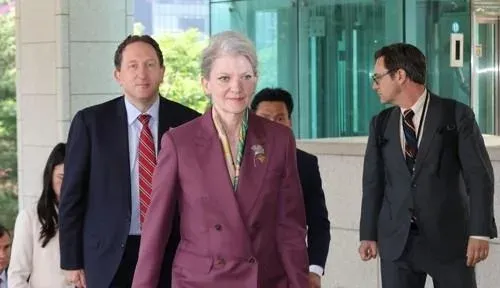
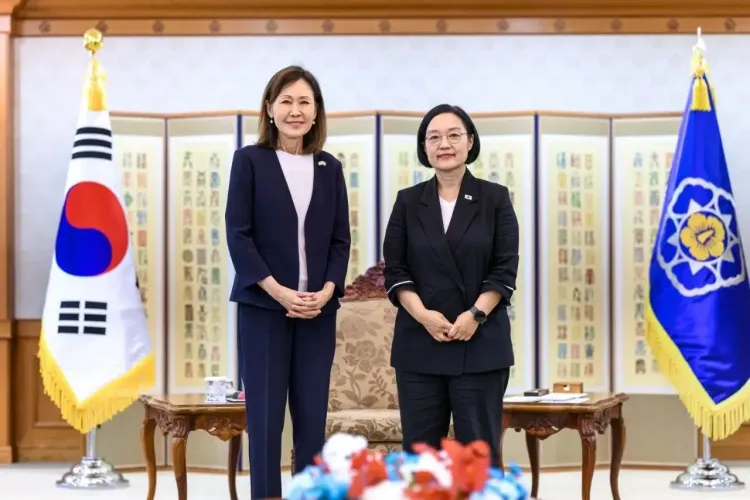
South Korean Prime Minister Han Seong-sook met with US Ambassador to South Korea Michelle Steel in Seoul on Wednesday, 23 September 2026, to explore avenues for deepening bilateral cooperation across security, trade, and emerging industries. The high-level meeting signals continued momentum in the South Korea-US alliance at a time when both capitals are working to translate a landmark summit agreement into concrete outcomes.
Key Developments from the Meeting
During the talks, Prime Minister Han noted that the bilateral partnership had grown well beyond its original security foundations to encompass the economy and culture. She specifically urged Ambassador Steel to take an active role in advancing ties during her tenure in Seoul.
Han also expressed hope that the two countries would expand economic cooperation and mutual investment, pointing to shipbuilding, semiconductors, and artificial intelligence as priority sectors for achieving 'greater outcomes.'
Ambassador Steel, who was born in Seoul, responded by pledging efforts to build a 'stronger' alliance across security and investment, describing the partnership as 'blood-forged.' She also highlighted South Korea's remarkable economic ascent and its growing global cultural influence since she left the country decades ago.
Steel's Remarks on X
Following the meeting, Steel posted on X: 'Today, I met with Prime Minister Han Seong Sook and reaffirmed the deep and unwavering ROK-US alliance. I look forward to continued close cooperation in the future for our two countries' shared priorities.' She added: 'Had a great meeting with PM Han Seong Sook today and reaffirmed the deep and enduring US-South Korea Alliance. Looking forward to continued cooperation on shared priorities.'
Foreign Minister Cho's Diplomatic Push at the UN
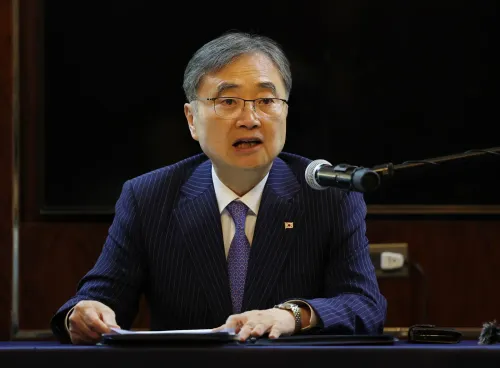
Separately, South Korean Foreign Minister Cho Hyun met with US Senators Jeanne Shaheen (Democrat, New Hampshire) and Chris Coons (Democrat, Delaware) in New York on Monday while attending the UN General Assembly's high-level week. Discussions covered the South Korea-US alliance, Korean Peninsula issues, and broader regional affairs.
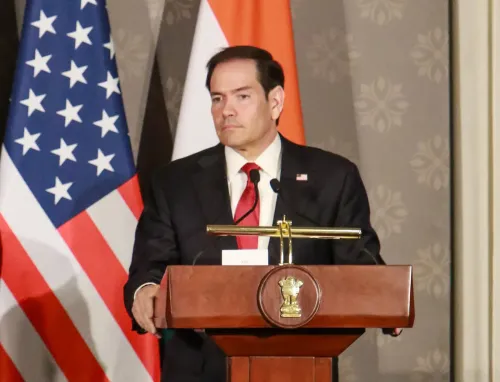
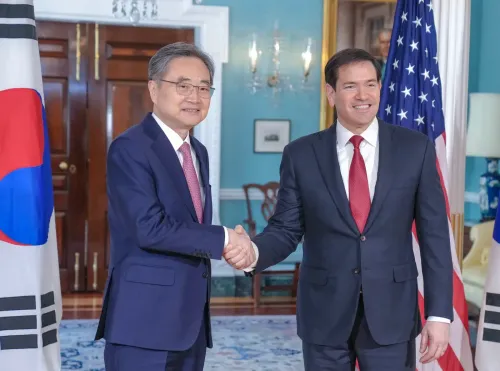
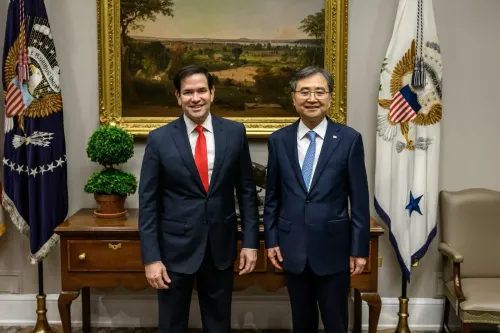
Cho referenced his recent bilateral talks with US Secretary of State Marco Rubio in Washington, during which both sides agreed to maintain close communication for the faithful implementation of summit agreements. He called on the US Congress to actively support swift progress in strategic cooperation, particularly in shipbuilding and nuclear energy.
The Summit Agreement and Its Stakes
The backdrop to these diplomatic engagements is a joint fact sheet issued in November following a summit between South Korean President Lee Jae Myung and US President Donald Trump the previous month. Under that framework, Seoul committed to investing USD 350 billion in the United States — including USD 150 billion earmarked for shipbuilding cooperation — in exchange for lower US tariff rates.
The agreement also covers security arrangements, including Seoul's push to develop nuclear-powered submarines and secure rights to enrich uranium and reprocess spent nuclear fuel — provisions that carry significant strategic weight on the Korean Peninsula.
Senators Shaheen and Coons reaffirmed strong bipartisan congressional support for the alliance and welcomed South Korean investments in the US, noting their contribution to American job creation and manufacturing revival. Both senators pledged continued attention to the smooth implementation of summit agreements and active cooperation toward peace and stability on the Korean Peninsula.
What's Next
With Foreign Minister Cho's UN-sideline diplomacy and Ambassador Steel's fresh pledge of engagement, both governments appear intent on maintaining the alliance's upward trajectory. The practical test will be the pace at which the USD 350 billion investment framework and its nuclear energy and submarine provisions are operationalised in the months ahead.
Point of View
A foreign minister's Senate outreach at the UN, and fresh pledges on the USD 350 billion investment pact — suggests both sides are under pressure to show tangible momentum before the summit's commitments face domestic scrutiny. The nuclear provisions are the most consequential and the least publicly debated: Seoul's bid for uranium enrichment rights and nuclear-powered submarines would mark a structural shift in the peninsula's security architecture. Bipartisan Senate support sounds reassuring, but the real variable is whether the US Congress will codify the tariff concessions that make the investment math work for Seoul. Without legislative backing, the fact sheet remains aspirational.
NationPress
23 Sept 2026
Frequently Asked Questions
What did South Korean PM Han Seong-sook and US Ambassador Michelle Steel discuss?
They met in Seoul on 23 September 2026 to discuss expanding bilateral cooperation in security, the economy, and culture, with Han specifically highlighting shipbuilding, semiconductors, and artificial intelligence as priority sectors. Steel pledged to build a stronger alliance and described the partnership as 'blood-forged.'
What is the USD 350 billion South Korea-US investment deal?
It is a commitment by South Korea to invest USD 350 billion in the United States — including USD 150 billion for shipbuilding cooperation — in exchange for lower US tariff rates, as outlined in a joint fact sheet issued in November following a summit between President Lee Jae Myung and US President Donald Trump. The deal also includes provisions on nuclear-powered submarines and uranium enrichment rights for Seoul.
Why did South Korean Foreign Minister Cho Hyun meet US senators at the UN?
Cho Hyun met Senators Jeanne Shaheen and Chris Coons in New York on the sidelines of the UN General Assembly's high-level week to seek active congressional support for swift progress in shipbuilding and nuclear energy cooperation. He also discussed Korean Peninsula denuclearisation and regional stability.
What is the significance of South Korea's nuclear submarine and uranium enrichment push?
Seoul's bid to develop nuclear-powered submarines and secure rights to enrich uranium and reprocess spent nuclear fuel — both referenced in the joint fact sheet — would represent a major shift in South Korea's defence and energy posture. These provisions require US approval and carry significant strategic implications for the Korean Peninsula.
How have US senators responded to South Korea's investments in America?
Senators Shaheen and Coons reaffirmed strong bipartisan congressional support for the ROK-US alliance and welcomed South Korean investments, noting their positive impact on US job creation and manufacturing. They pledged to support smooth implementation of the summit agreements and cooperation toward Korean Peninsula stability.