Rubio, Cho meet in Washington to advance South Korea's $350 bn US investment talks
Synopsis
South Korea's $350 billion US investment commitment is moving from pledge to project — but the announcement of the first concrete deal has slipped to next week after a National Assembly briefing was delayed. The Rubio-Cho meeting in Washington signals both sides are pressing forward, even as procedural and political hurdles slow the timeline.
Key Takeaways
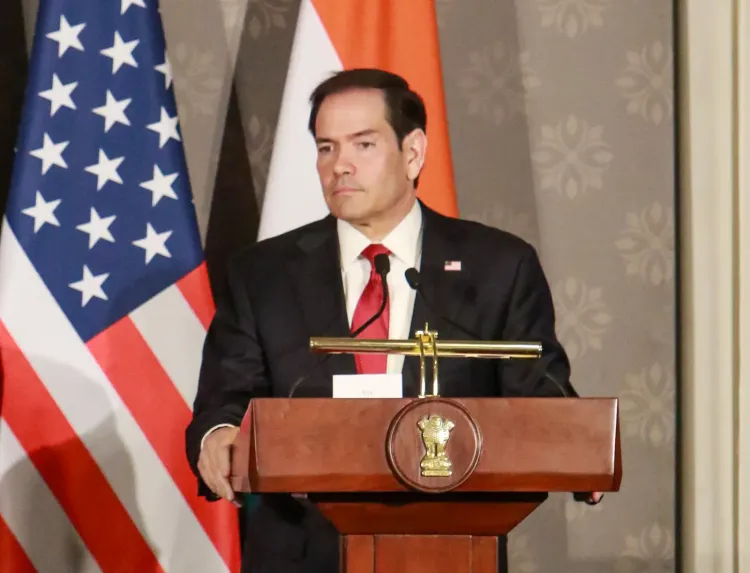
US Secretary of State Marco Rubio and South Korean FM Cho Hyun met at the State Department on 19 September 2026 .
Seoul has committed to investing $350 billion in the US under a bilateral trade deal struck last year.
Announcement of South Korea's first investment project under the deal was reportedly postponed until next week after a National Assembly briefing was delayed.
Both sides reaffirmed commitment to the US-South Korea alliance and to denuclearisation of the Korean Peninsula through dialogue.
Rubio stressed the need for a fair business environment for American companies in South Korea and called for securing critical supply chains.
Trilateral cooperation with Japan was described as 'critical' for regional security in the State Department readout.
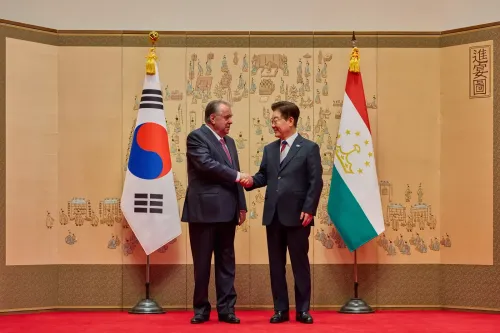
US Secretary of State Marco Rubio and South Korean Foreign Minister Cho Hyun met at the State Department in Washington, DC on 19 September 2026, pledging joint efforts to secure 'good' results from ongoing bilateral consultations over South Korea's proposed investment projects in the United States. The talks are part of efforts to implement a landmark bilateral trade deal under which Seoul has committed to investing $350 billion in the US.
What the Two Ministers Agreed
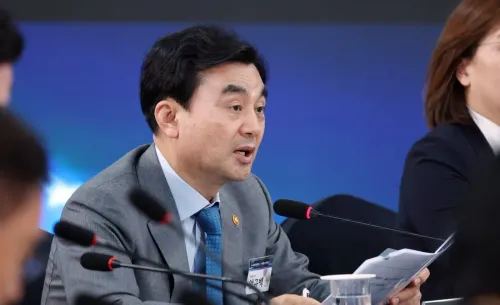
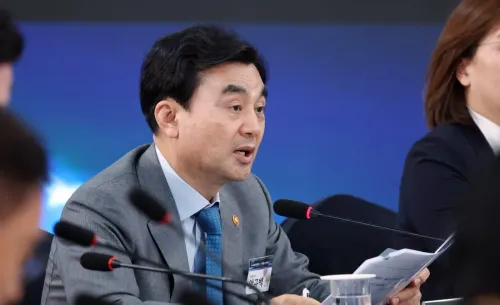
During the meeting, Foreign Minister Cho urged Rubio to play an active role in ensuring that consultations on South Korea's strategic investment projects in the US yield positive outcomes. 'I called on (Secretary Rubio) to make joint efforts to ensure that ongoing consultations related to strategic investment projects in the U.S. will yield good results, while asking the secretary to play a role in that process,' Cho said at a press meeting with South Korean correspondents.
Rubio responded with a reciprocal commitment. 'Secretary Rubio said that the State Department will also make its efforts to ensure that the consultations will be successfully concluded,' Cho added.
Investment Announcement Delayed
The two countries had initially been expected to announce South Korea's first investment project under the deal on Friday (Korea time). That announcement was reportedly postponed until the following week, after a related briefing to the National Assembly was delayed. The postponement signals the political and procedural complexity surrounding investment deals of this scale.
Alliance, North Korea and Regional Security
Beyond the investment agenda, the two ministers reaffirmed their 'solid' commitment to the bilateral alliance and pledged to pursue the denuclearisation of the Korean Peninsula through dialogue and diplomacy. The talks also covered trilateral cooperation with Japan, which a State Department readout described as 'critical' for regional security.
State Department spokesman Tommy Pigott said Rubio reiterated the importance of cooperating to secure freedom of navigation in the Strait of Hormuz — remarks that come after South Korean President Lee Jae Myung said there would be no troop dispatch that might result in Seoul's involvement in an overseas conflict, while underlining the need to protect South Korean citizens and national interests in the strait.
Business Environment and Supply Chains
Rubio also underscored the 'critical' need for a 'fair, transparent, and equitable' business environment for American companies operating in South Korea, and stressed the importance of securing supply chains for critical industries, according to Pigott's readout.
The two sides additionally agreed to continue communication for the faithful implementation of summit agreements between President Lee and US President Donald Trump, including commitments outlined in a joint fact sheet released in November covering trade, investment, security, and other areas.
With the first investment announcement expected as early as next week, the pace of implementation will be closely watched as a test of how durable the bilateral trade framework — and its headline $350 billion pledge — proves in practice.
Point of View
And the postponement of even the first project announcement — however procedural — underscores how difficult it is to operationalise pledges of this scale. The Rubio-Cho meeting suggests both governments remain politically invested in making the deal visible, but the gap between summit declarations and signed projects is widening. Notably, Rubio's parallel push for a 'fair business environment' for American firms in Seoul hints at unresolved regulatory grievances that could complicate the investment pipeline. The Strait of Hormuz thread is a reminder that the alliance's agenda has expanded well beyond the peninsula, placing fresh burden-sharing demands on Seoul at a moment when its domestic politics — and President Lee's explicit no-dispatch signal — limit how far it can go.
NationPress
19 Sept 2026
Frequently Asked Questions
What is South Korea's $350 billion US investment commitment?
South Korea has committed to investing $350 billion in the United States as part of a bilateral trade deal struck last year between President Lee Jae Myung and US President Donald Trump. The two governments are now in talks to implement this pledge through specific strategic investment projects.
Why was South Korea's first investment project announcement delayed?
The announcement was reportedly postponed until the following week after a related briefing to the South Korean National Assembly was delayed. The two sides had initially expected to make the announcement on Friday (Korea time) on 19 September 2026.
What did Rubio and Cho agree on regarding North Korea?
Both ministers reaffirmed their commitment to the complete denuclearisation of the Korean Peninsula through dialogue and diplomacy. They agreed to continue close communication on North Korea policy, including efforts to resume US-North Korea dialogue, with Seoul pledging to act as a 'pacemaker' in support of Trump administration outreach.
What is the significance of the Strait of Hormuz in the Rubio-Cho talks?
Secretary Rubio reiterated the importance of cooperating to secure freedom of navigation in the Strait of Hormuz during the meeting. This comes after South Korean President Lee Jae Myung stated that Seoul would not dispatch troops in ways that could involve it in an overseas conflict, while still emphasising the need to protect South Korean citizens and interests in the strait.
What other issues did Rubio raise with South Korea's foreign minister?
Rubio underscored the need for a fair, transparent, and equitable business environment for American companies operating in South Korea, and stressed the importance of securing supply chains for critical industries. He also highlighted the critical importance of trilateral cooperation with Japan for regional security.