Gadkari Signs MoU With Bihar to Desilt Rivers, Build Highways
Synopsis
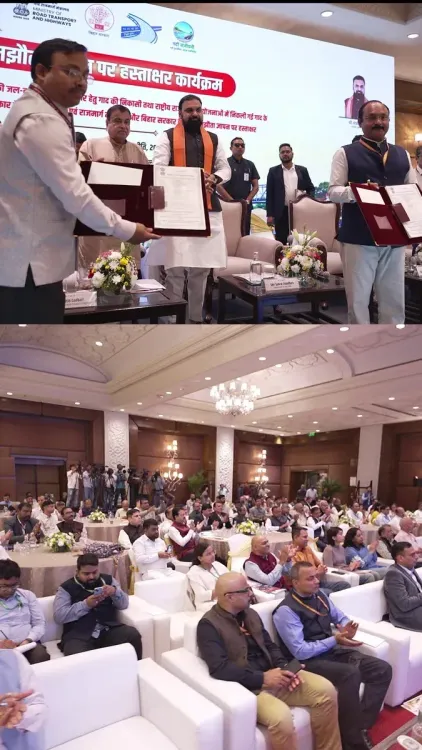
MoRTH and the Government of Bihar have signed a landmark MoU to scientifically desilt rivers, restore their water-carrying capacity, and use the excavated silt as construction material for National Highways — combining flood mitigation with infrastructure development.
Key Takeaways
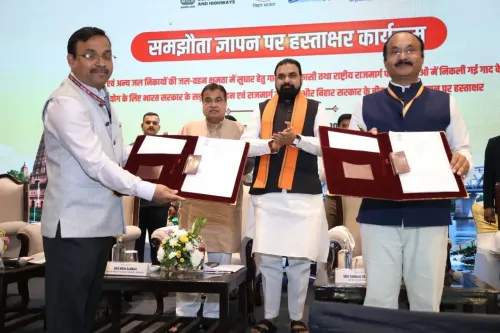
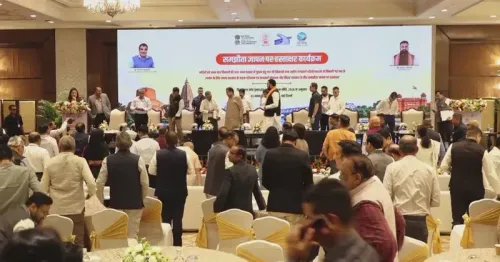
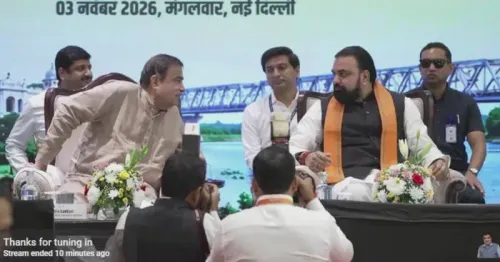
MoRTH and the Government of Bihar signed a landmark MoU on 3 November 2026 for river desilting and highway material sourcing.
Excavated river silt will be directly utilised in National Highway construction , reducing material costs and waste.
The initiative aims to enhance the water-carrying capacity of Bihar's rivers, addressing chronic flood vulnerability.
It is branded under the #NadiSanjivani (River Rejuvenation) and #ScientificDesilting programmes.
The MoU aligns with the PM Gati Shakti National Master Plan (2021) for integrated multimodal infrastructure.
The model could be replicated across other flood-prone Gangetic plain states if Bihar's rollout succeeds.
Two crises — flooding rivers and costly highway construction — may now share a single fix. Union Road Transport and Highways Minister Nitin Gadkari announced on Tuesday, 3 November 2026 that the Ministry of Road Transport and Highways (MoRTH) has signed a landmark MoU with the Government of Bihar to scientifically desilt rivers, boost their water-carrying capacity, and channel the excavated silt directly into National Highway construction.
One MoU, Two Problems Solved
The logic is elegant in its simplicity. Bihar's rivers — many of them tributaries of the Ganga — silt up year after year, shrinking their capacity and amplifying flood damage in one of India's most flood-vulnerable states. Desilting them restores that capacity. But the excavated material, millions of tonnes of it, has historically been a disposal headache. This MoU flips the equation: the silt becomes a raw material input for highway embankments and construction works, cutting both procurement costs and environmental waste in one stroke.
Gadkari flagged the initiative under the hashtags #NadiSanjivani (River Rejuvenation) and #ScientificDesilting, signalling that this is not an ad-hoc arrangement but part of a named programme with a defined methodology. The tag #PragatiKaHighway ('Highway of Progress') and #GatiShakti underscore its alignment with the PM Gati Shakti National Master Plan, the 2021 framework designed to integrate planning across transport, logistics, and allied sectors.
Bihar's Flood Crisis as Construction Opportunity
Bihar is among India's most flood-prone states, with the Kosi, Gandak, Bagmati and other north Bihar rivers breaching banks with near-annual regularity, displacing communities and wiping out agricultural cycles. River desilting has long been recommended by engineers and ecologists alike, but the scale and cost of such operations have kept systematic efforts limited.
By tying desilting directly to highway material supply, MoRTH creates a financial incentive that could make large-scale operations viable. Contractors get a local, low-cost fill material. The state gets cleaner, deeper river channels. Flood-prone communities in districts like Darbhanga, Sitamarhi and Muzaffarpur stand to gain the most if the programme delivers on its promise.
MoRTH's Expanding Playbook on Waste-to-Road Materials
This MoU is not the ministry's first push on alternative construction materials. Since 2014, MoRTH has progressively mandated the use of fly ash, plastic waste, and industrial by-products in highway construction — a policy that simultaneously addresses waste management and reduces dependence on expensive virgin aggregates. River silt fits squarely into that philosophy.
The move also marks a deepening of central-state coordination on infrastructure. With Bihar — a politically significant state in the NDA alliance — as the first signatory, the model could serve as a template for similarly flood-affected states along the Gangetic plain.
What comes next will matter as much as the signing. Specific river stretches to be targeted, volumes of silt to be excavated, and the National Highway corridors earmarked to receive the material will determine whether this MoU translates from a headline into measurable change on the ground — and in the rivers.
Point of View
A policy that cuts costs while generating political capital in states with chronic flooding. For Bihar, the arrangement is also strategically timed, reinforcing the NDA's infrastructure narrative in a state critical to alliance arithmetic. The real test will be whether implementation matches ambition — past desilting initiatives in India have often stalled at execution.
NationPress
3 Nov 2026
Frequently Asked Questions
What is the MoRTH-Bihar MoU on river desilting about?
The MoU signed between the Ministry of Road Transport and Highways and the Government of Bihar commits both parties to scientifically desilt rivers in Bihar to improve their water-carrying capacity and use the excavated silt as construction material in National Highway projects.
What is the NadiSanjivani initiative?
NadiSanjivani, meaning 'River Rejuvenation,' is the named programme under which MoRTH is pursuing scientific desilting of rivers as part of a dual strategy to mitigate floods and source low-cost highway construction material.
How will river silt be used in highway construction?
Silt excavated during river desilting operations is intended to serve as fill and embankment material in National Highway construction, reducing dependence on costly virgin aggregates and cutting project expenses.
What is PM Gati Shakti and how does this MoU relate to it?
PM Gati Shakti is the National Master Plan launched in 2021 to integrate planning across transport and logistics sectors. The Bihar river-desilting MoU aligns with its goals by linking flood management and innovative material sourcing to highway development.
Which parts of Bihar could benefit most from this river desilting programme?
Flood-prone districts in north Bihar — particularly those along the Kosi, Gandak, and Bagmati river systems such as Darbhanga, Sitamarhi, and Muzaffarpur — stand to gain the most if the desilting programme improves river capacity and reduces annual flooding.