Gadkari addresses CII conference on India's future highways
Synopsis
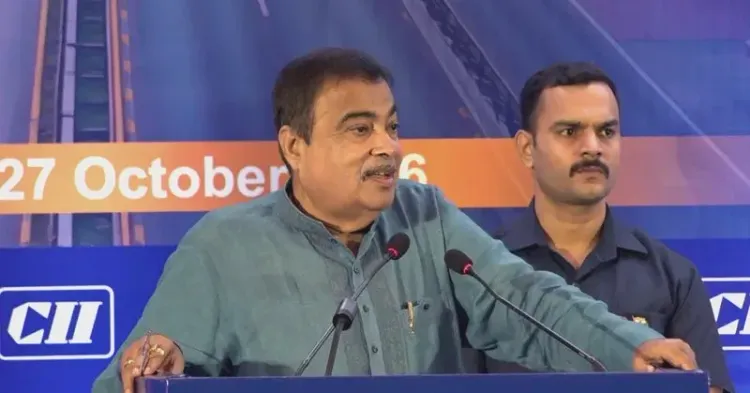
Union Minister Nitin Gadkari addressed CII's National Conference on India's future highways in New Delhi on 27 October 2026, focusing on making the country's expanding road network smarter, safer, and more sustainable.
Key Takeaways
Nitin Gadkari addressed CII's National Conference on 'Highways of India's Future: Smart, Safe and Sustainable' in New Delhi on 27 October 2026 .
The conference theme reflects the ministry's pivot from pure network expansion to digital intelligence, road safety, and green construction standards.
India's national highway network has grown from roughly 91,000 km in 2014 toward targets exceeding 2,00,000 km .
Bharatmala Pariyojana (approved 2015 ) and PM Gati Shakti (launched 2021 ) are the two flagship programmes anchoring this expansion.
Reducing India's high logistics-cost-to-GDP ratio is a key economic driver behind the smart and sustainable highways agenda.
Follow-up ministry notifications on smart highway pilots or revised safety norms are expected in coming parliamentary sessions or budget cycles.
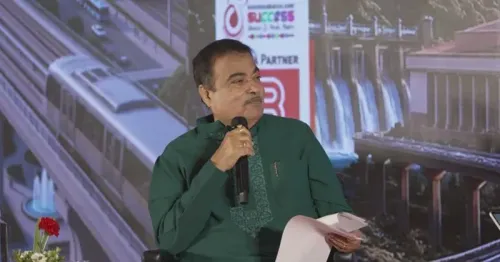
Smart corridors, safer roads, and a greener asphalt future — Union Road Transport and Highways Minister Nitin Gadkari took the stage at the Confederation of Indian Industry (CII)'s National Conference on 'Highways of India's Future: Smart, Safe and Sustainable' in New Delhi on Tuesday, 27 October 2026, placing the ministry's three-pronged vision squarely before the country's top industry voices.
Where the conference fits in India's highway ambition
The CII forum is not a routine gathering. It brings together highway developers, logistics firms, and road-infrastructure financiers under one roof — exactly the constituency that will execute or fund whatever the ministry envisions. Gadkari's presence signals that the policy conversation is moving beyond kilometres-built to the quality, intelligence, and environmental cost of every kilometre ahead.
The backdrop matters: India's national highway network has grown from roughly 91,000 km in 2014 to targets pushing past 2,00,000 km, powered by flagship programmes like Bharatmala Pariyojana — approved in 2015 to build 34,800 km of economic corridors — and the PM Gati Shakti National Master Plan, launched in 2021 to stitch roads, rail, ports, and logistics into a single multimodal grid.
Why 'smart, safe, sustainable' is the ministry's new operating language
Raw network expansion, while still continuing, is no longer the only headline. The ministry has increasingly framed its agenda around three overlapping pressures: embedding digital monitoring and intelligent traffic systems into highway design; reducing the toll of road fatalities on one of the world's most accident-prone networks; and meeting India's green commitments by incorporating low-carbon construction materials and drainage systems that protect ecosystems alongside expressways.
Reducing logistics costs — currently estimated to consume a disproportionately high share of India's GDP compared to peer economies — is the economic thread tying all three pillars together. Faster, safer, smarter roads directly accelerate manufacturing corridor efficiency and compress supply-chain timelines for exporters.
CII's role as a policy sounding board
CII, as India's premier industry body, has historically been the space where ministry thinking gets tested against private-sector appetite. A national conference framed around the future of highways — rather than a specific project launch — suggests the session is designed to harvest industry input on smart highway pilots, revised safety standards, and sustainability benchmarks that could feed into upcoming parliamentary sessions or the next Union Budget cycle.
Watch for follow-up ministry notifications on smart highway pilots or revised road-safety norms in the months ahead. The conference may not produce an announcement today, but it is often where the language of future policy gets drafted.
India's highway story has always been told in kilometres. Gadkari is signalling that the next chapter will be told in data points, fatality rates, and carbon counts.
Point of View
Safe and sustainable' highways marks a deliberate tonal shift in how the ministry presents its agenda — moving from raw construction targets to the quality architecture of the network. This aligns with a broader government effort to demonstrate that India's infrastructure story has matured beyond milestone announcements into systems-level governance. For the BJP, showcasing ministry-industry alignment ahead of budget season also carries political utility, positioning infrastructure leadership as an economic multiplier rather than just a vote-winning capital-expenditure narrative. The real test will be whether conference dialogue translates into measurable safety and technology mandates in the next policy cycle.
NationPress
27 Oct 2026
Frequently Asked Questions
What was the CII conference Nitin Gadkari attended in October 2026?
It was CII's National Conference on 'Highways of India's Future: Smart, Safe and Sustainable', held in New Delhi on 27 October 2026, where Gadkari addressed industry stakeholders on the future direction of India's highway network.
What is Bharatmala Pariyojana?
Bharatmala Pariyojana is a central government programme approved in 2015 to construct approximately 34,800 km of new highways, with a focus on economic corridors, port connectivity, and ring roads.
What is PM Gati Shakti and how does it relate to highways?
PM Gati Shakti is a National Master Plan launched in 2021 to integrate multimodal infrastructure planning — roads, rail, ports, and logistics — into a unified grid, with the goal of reducing logistics costs and boosting manufacturing competitiveness.
How long is India's national highway network?
India's national highway network has grown from roughly 91,000 km in 2014 and is targeted to exceed 2,00,000 km, representing one of the world's largest road-building programmes.
What does 'smart highways' mean in the Indian context?
'Smart highways' in India refers to embedding digital monitoring systems, intelligent traffic management, electronic toll collection, and data-driven safety features into highway infrastructure, moving beyond simple road construction to technology-integrated corridors.