Bihar signs MoU to use river silt in highway construction under Nadi Sanjeevani
Synopsis
Bihar has signed a formal MoU with the Centre to redirect river silt — a major flood accelerant — straight into national highway construction. With 83.5 million cubic metres earmarked across 27 projects and 24.3 million cubic metres offered free of cost, the Nadi Sanjeevani initiative is a rare policy move that simultaneously addresses flood vulnerability, topsoil depletion, and highway construction costs.
Key Takeaways
Bihar and the Centre signed an MoU on 4 November 2026 under the Nadi Sanjeevani initiative to use river silt in national highway construction.
Approximately 83.5 million cubic metres of silt will be used across 27 road projects in Bihar.
24.3 million cubic metres will be provided free of cost for 16 ongoing NHAI projects .
Silt has accumulated up to 10 metres deep in several Bihar rivers, worsening annual flood risks.
39 NHAI projects covering 1,561 km worth ₹58,340 crore are currently underway in the state.
Minister Nitin Gadkari urged other states to adopt similar river-desilting and road-construction linkages.
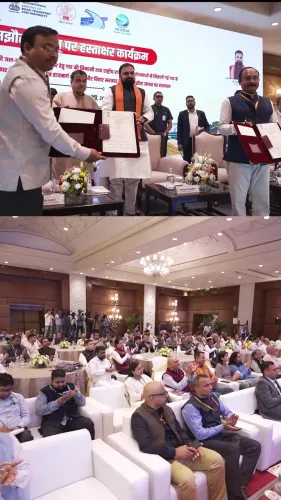
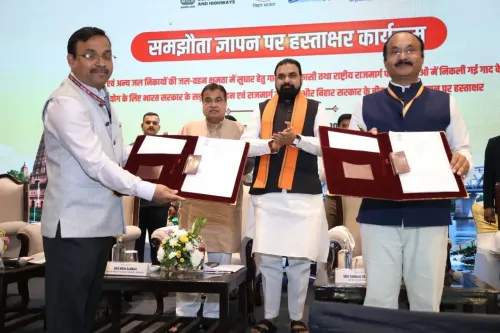
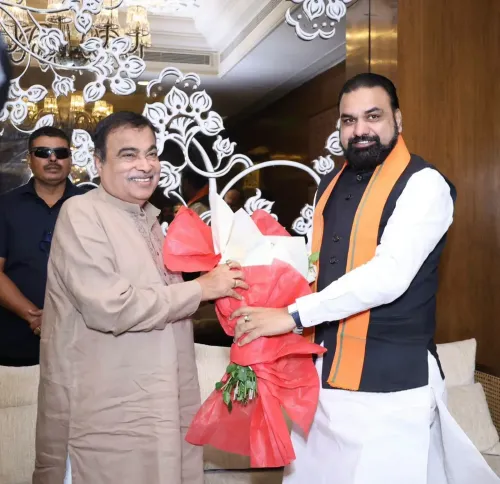
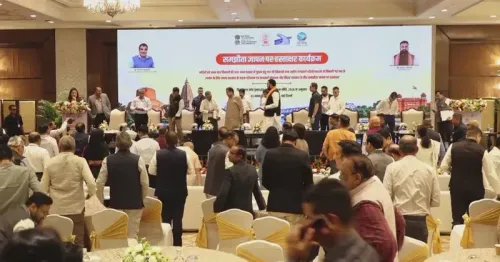
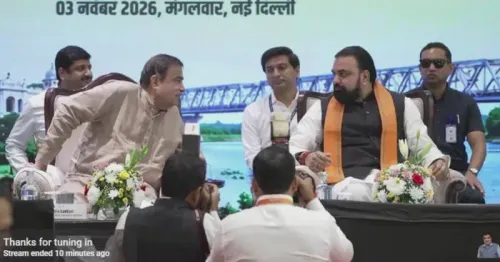
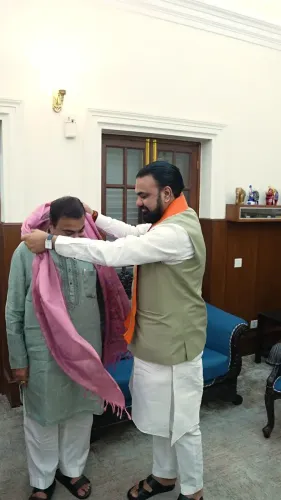
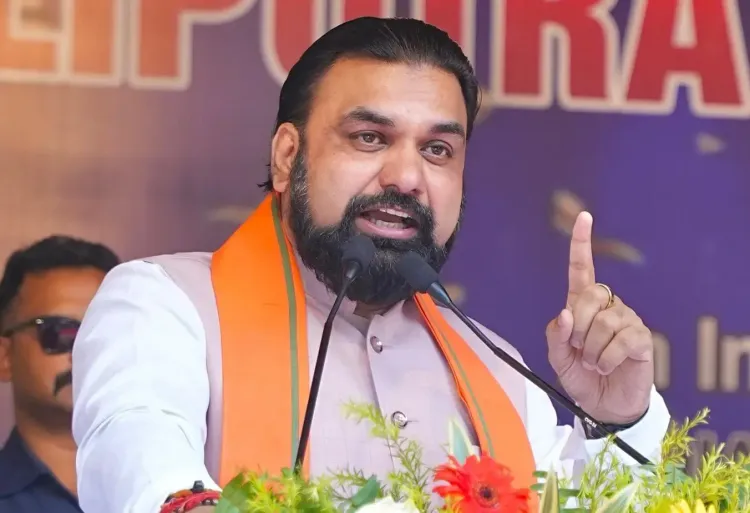
The Bihar government has signed a Memorandum of Understanding (MoU) with the Centre to deploy river silt extracted under the 'Nadi Sanjeevani' initiative in the construction of national highways across the state. The agreement was formalised in New Delhi on 4 November 2026 in the presence of Bihar Chief Minister Samrat Choudhary and Union Road Transport and Highways Minister Nitin Gadkari, marking a significant policy linkage between river management and road infrastructure.
Key Terms of the Agreement
Under the MoU, approximately 83.5 million cubic metres of river silt will be utilised across 27 road projects in Bihar. Of this, 24.3 million cubic metres will be made available free of cost for 16 ongoing national highway projects. The National Highways Authority of India (NHAI) has been designated as the implementing agency and will be responsible for extracting the material using modern and scientific methods.
Why Rivers in Bihar Need Desilting
Chief Minister Samrat Choudhary noted that silt has accumulated to depths of up to 10 metres in several rivers across Bihar, significantly impeding water flow and reducing their capacity to retain water. This accumulation is widely cited as a contributing factor to the state's recurring flood crisis. By extracting silt systematically, the initiative aims to restore river health while simultaneously channelling the recovered material into productive infrastructure use — reducing reliance on natural soil and topsoil extraction.
Gadkari's Wider Vision
Minister Nitin Gadkari shared details of the agreement on social media platform X, emphasising that suitable silt from rivers would be integrated into highway construction. He framed the initiative as converting a flood-risk liability into an infrastructure asset, and urged other states to consider adopting similar frameworks. Notably, this approach directly addresses two long-standing policy challenges — river siltation and the environmental cost of topsoil mining for road projects — within a single agreement.
Bihar's Highway Pipeline
According to information shared by the Union Minister, 39 NHAI projects are currently underway in Bihar, covering approximately 1,561 km at an estimated cost of ₹58,340 crore. In addition, 11 proposed road projects spanning around 1,982 km carry an estimated investment of ₹1,85,200 crore. The government has indicated that the use of river silt will also be explored in these upcoming projects, potentially expanding the scope of the initiative considerably.
Expected Impact
The Nadi Sanjeevani initiative is intended to deliver multiple outcomes: improved river water flow and retention, reduced construction costs through locally available material, and lower dependence on ecologically sensitive natural soil sources. This is one of the first formal state-Centre agreements to structurally embed river desilting into a national highway programme, and could serve as a template for flood-prone states across the country.
Point of View
Theoretically cutting costs and improving river flow in one stroke. But the execution risk is real: NHAI's track record on project timelines in Bihar is mixed, and the scientific extraction of silt at this scale is largely untested in India. The deeper question is whether the free-of-cost provision for 16 projects is genuinely accounted for in Bihar's fiscal framework or is a headline concession that will surface as a dispute later. If it works, it is a replicable model for every flood-prone Gangetic state; if it stalls, it joins a list of ambitious bilateral infrastructure frameworks that looked better on signing day than in execution.
NationPress
3 Nov 2026
Frequently Asked Questions
What is the Nadi Sanjeevani initiative in Bihar?
The Nadi Sanjeevani initiative is a joint Centre-state programme that links river desilting with national highway construction. Under an MoU signed on 4 November 2026, river silt extracted from Bihar's rivers will be used as construction material across 27 road projects, aiming to improve river health while reducing road-building costs.
How much silt will be used and at what cost?
Approximately 83.5 million cubic metres of river silt will be utilised across 27 projects. Of this, 24.3 million cubic metres will be provided free of cost for 16 ongoing national highway projects, reducing dependence on commercially procured natural soil.
Who will implement the Nadi Sanjeevani MoU?
The National Highways Authority of India (NHAI) has been designated as the implementing agency. It will be responsible for extracting river silt using modern and scientific methods and deploying it in highway construction across Bihar.
How does river silt contribute to flooding in Bihar?
Silt has accumulated to depths of up to 10 metres in several Bihar rivers, according to Chief Minister Samrat Choudhary. This reduces water-flow capacity and water-retention, worsening the state's chronic annual flooding. Systematic desilting is expected to partially address these conditions.
Could other states adopt a similar model?
Union Minister Nitin Gadkari urged other states to consider adopting similar frameworks that link river desilting with road infrastructure. Bihar's MoU could serve as a template, particularly for flood-prone Gangetic plain states facing analogous challenges with silt accumulation and topsoil availability.