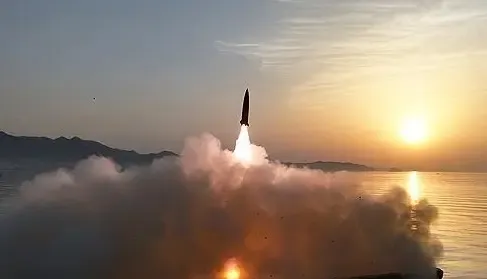
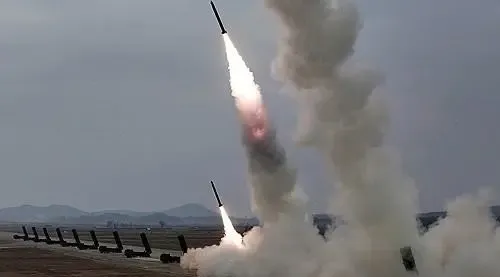
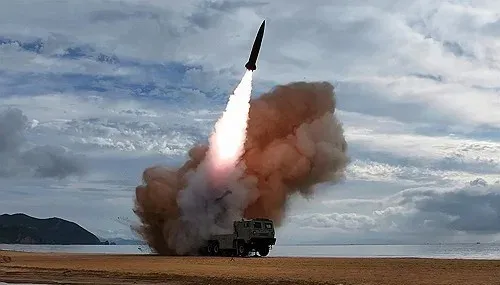
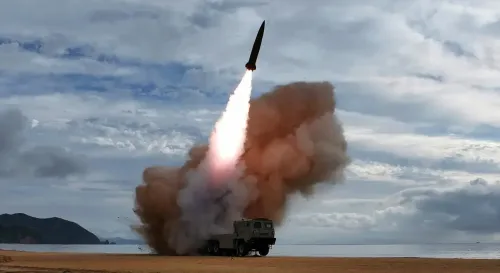
North Korea test-fires upgraded 240mm rocket launcher shells, eyes southern border
Synopsis
North Korea has confirmed back-to-back weapons tests in days — first a new combat system in front of Kim Jong-un on Sunday, now upgraded 240mm rockets capable of hitting targets 115 km away. Senior official Pak Jong-chon's call to concentrate the 'deadliest' forces on the southern border signals this is not routine testing but a deliberate signalling campaign tied to Pyongyang's formal redefinition of inter-Korean ties as 'hostile states.'
Key Takeaways
North Korea confirmed on 24 September 2026 that it test-fired shells for an upgraded 240mm multiple rocket launcher system .
The rockets can reportedly strike targets 100 km away in trajectory mode and 115 km in combined glide mode.
Pak Jong-chon , vice chairman of the Central Military Commission , called for concentrating the 'deadliest' forces on the southern border.
A separate test of a 'new combat weapon system' was conducted on Sunday in the presence of leader Kim Jong-un .
South Korea's military detected multiple rounds fired toward the Yellow Sea on Tuesday and is conducting detailed analysis.
North Korea declared inter-Korean ties 'hostile' in 2023 , since which it has systematically upgraded its strike capabilities targeting the South.
North Korea on Thursday, 24 September 2026 confirmed it has test-fired shells for an upgraded 240mm multiple rocket launcher system, with senior military officials stressing the need to deploy the 'deadliest' attack forces along the border with South Korea. The test marks the latest escalation in Pyongyang's accelerating push to modernise its artillery and missile arsenal under a declared five-year plan.
Details of the Test
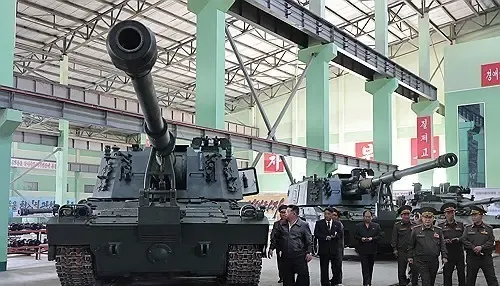
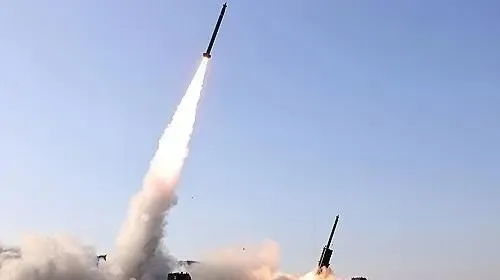
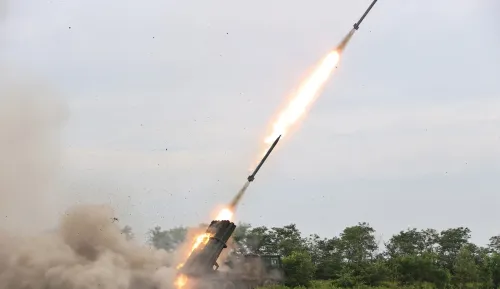
The test of upgraded 240mm-calibre controlled multiple-launch rockets was conducted on Tuesday under North Korea's five-year plan for modernising its artillery and missile forces, according to reports citing the Korean Central News Agency (KCNA). Military cadres overseeing the exercise said the development of range-extended rockets 'assures them of a significant change in the firepower readiness along the southern border.'
The rockets, equipped with what Pyongyang describes as an 'autonomous pinpoint guide system,' are reportedly capable of striking targets up to 100 kilometres away in trajectory flight mode and 115 kilometres away in a combined glide mode — a range that places significant portions of South Korea within strike distance.
What Senior Officials Said
Pak Jong-chon, vice chairman of the Central Military Commission of the ruling Workers' Party of Korea, was quoted by KCNA as stressing the need to 'concentrate the deadliest and most destructive attack forces on the southern border.' He further 'underscored the need to make the enemy aware of the fact that we have replaced all our armed forces' long-range strike means with the latest ones at the earliest date,' according to the KCNA statement.
South Korea's Response
South Korea's military confirmed it detected North Korea firing multiple rounds toward the Yellow Sea on Tuesday and said it is conducting a detailed analysis of the launches. Seoul added that it is maintaining 'overwhelming' capabilities against any provocations and is closely monitoring North Korean activities under the combined South Korea-US defence posture.
Broader Pattern of Provocation
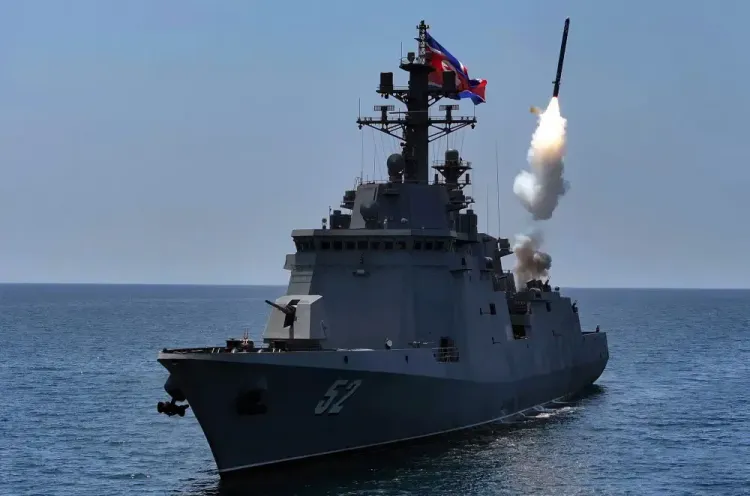
This test is not an isolated incident. North Korea separately reported earlier this week that its missile bureau 'successfully conducted a test of a new combat weapon system' on Sunday in the presence of leader Kim Jong-un, with Pyongyang describing the exercise as significant in demonstrating advances in its weapons technology.
Notably, since North Korea formally declared inter-Korean ties to be those between 'two states hostile to each other' in 2023, analysts observe that Pyongyang has systematically focused on upgrading the performance and reach of strike systems capable of targeting South Korea. This is the second confirmed weapons test within days, underscoring an intensifying tempo of provocations that places both Seoul and its US defence partner on heightened alert.
Point of View
Paired with explicitly threatening language from a senior military commission official, suggest Pyongyang is conducting a deliberate signalling campaign rather than routine development work. The formal 'hostile states' declaration of 2023 removed what little diplomatic scaffolding constrained North Korea's provocation tempo, and the pattern since has been consistent escalation. What is underreported is the qualitative shift in these systems: a 115 km glide-mode range means Pyongyang's upgraded artillery — not just ballistic missiles — can now threaten the Seoul metropolitan area and US base at Camp Humphreys. That changes the tactical calculus for the combined South Korea-US posture in ways that go well beyond a routine test.
NationPress
24 Sept 2026
Frequently Asked Questions
What did North Korea test-fire on 24 September 2026?
North Korea confirmed it test-fired shells for an upgraded 240mm multiple rocket launcher system, equipped with an 'autonomous pinpoint guide system' capable of striking targets up to 115 km away in a combined glide mode. The test was conducted on Tuesday under the country's five-year artillery and missile modernisation plan.
How far can the upgraded North Korean rockets reach?
According to North Korea's state media, the upgraded rockets can hit targets 100 km away in standard trajectory flight mode and 115 km away when using a combined glide mode. This range places large parts of South Korea, including the Seoul metropolitan area, within potential strike distance.
What did senior North Korean official Pak Jong-chon say?
Pak Jong-chon, vice chairman of the Central Military Commission of the Workers' Party of Korea, stressed the need to 'concentrate the deadliest and most destructive attack forces on the southern border.' He also called for making clear to adversaries that North Korea has replaced all long-range strike means with the latest systems.
How has South Korea responded to the North Korean rocket test?
South Korea's military confirmed it detected North Korea firing multiple rounds toward the Yellow Sea on Tuesday and said it is conducting a detailed analysis. Seoul stated it is maintaining 'overwhelming' capabilities against provocations and is monitoring the situation under the combined South Korea-US defence posture.
Why is North Korea escalating weapons tests now?
Since North Korea formally declared inter-Korean ties to be 'hostile' in 2023, Pyongyang has systematically focused on upgrading strike systems capable of targeting South Korea. Analysts note this is consistent with a deliberate strategy to signal deterrence and demonstrate weapons advancement, rather than isolated technical testing.