India's Northeast as gateway to South-East Asia: Security and economic potential
Synopsis
India's Northeast could be a transformational economic corridor to South-East Asia — but a former Manipur police chief warns that China's deepening ties with Myanmar and Bangladesh, unchecked cross-border insurgency, and alleged Western-linked drone smuggling are actively working against that future.
Key Takeaways
A report in 'Saviours' magazine identifies India's Northeast as a potential gateway to South-East Asia with multi-sector economic promise.
Former Manipur DGP and Home Secretary B L Vohra warns that Manipur's unrest is being exploited by foreign forces to destabilise the region.
China reportedly supported Manipuri insurgent groups as far back as the late 1970s and early 1980s , and its growing ties with Myanmar and Bangladesh raise fresh concerns.
The NIA arrested one American and six Ukrainians in March 2025 for allegedly entering Mizoram illegally and smuggling drones into Myanmar.
Myanmar's military junta lacks border control, enabling Indian insurgent groups — including NSCN-K (Khaplang) — to operate from across the frontier.
India's Northeast region holds vast untapped potential across multiple sectors and could emerge as a major economic powerhouse — transforming itself into a true gateway to South-East Asia, according to a detailed analysis published in 'Saviours' magazine. The assessment, however, comes with a sharp warning: persistent instability, foreign interference, and cross-border insurgency remain serious obstacles to realising that promise.
Security Threats and Foreign Interference
B L Vohra, a former Director General of Police and Home Secretary of Manipur, argues in his article that the ongoing unrest in Manipur has handed an opening to what he describes as 'inimical international and national forces' — both within India and abroad — seeking to destabilise the region and, by extension, impede India's rise as a global power.
Vohra draws a direct line to China's historical support for insurgent groups in the Northeast. 'In the late 1970s and early 80s, it was providing physical training and weapons to Manipuri insurgent groups like PLA (whose then-leader, Biseswor Singh, had told me personally after he had gone to China with a group for training and weapons), PREPAK, etc., and to NSCN from Nagaland. And now, its increasing economic cooperation with Myanmar and, more recently, with Bangladesh, is not a good sign for India in the northeast,' he wrote.
Vohra also pointed to the Bangladesh Prime Minister's recent visit to China, during which an agreement on the Teesta Project was reportedly finalised, as a strategic signal that warrants close attention from New Delhi.
Myanmar as a Source of Instability
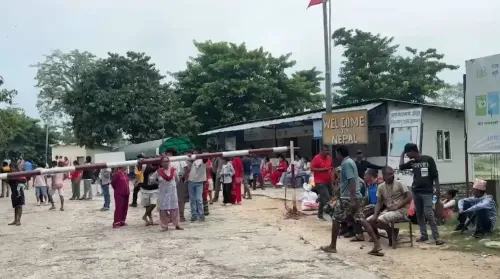
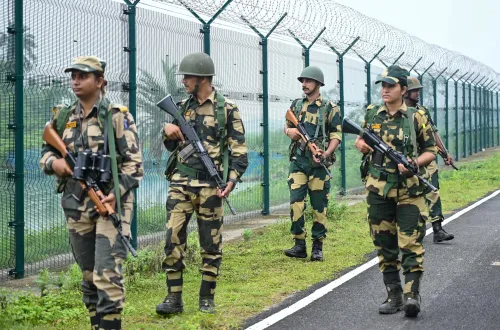
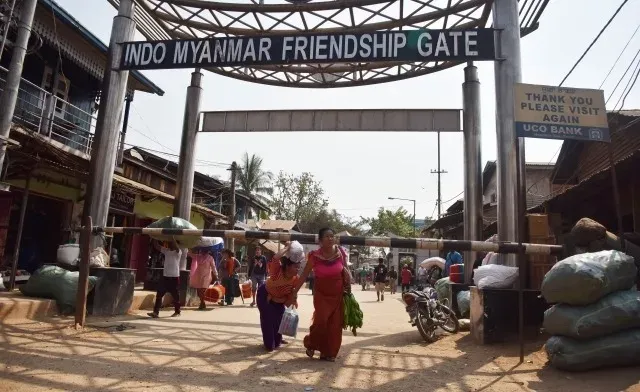
According to Vohra, Myanmar has by default become a destabilising factor for India's Northeast. The military junta in Myanmar, he argues, exercises little effective control over border regions, allowing Indian insurgent groups to operate freely from bases across the frontier.
He specifically highlighted NSCN-K (Khaplang), noting that its leader Khaplang is a native of Myanmar, and that shared tribal kinship across the India-Myanmar border creates additional complications for Indian states in the region. 'Most of the tribes living in the Indian states of the northeast and bordering Myanmar have kith and kin on both sides, and this creates other problems in Indian states as noticed often,' Vohra wrote.
Western Actors and Drone Smuggling Allegations
The analysis also flags the role of non-regional global powers. Vohra cited an incident from March this year, when India's National Investigation Agency (NIA) arrested one American and six Ukrainians at airports in Delhi, Lucknow, and Kolkata on charges of illegally entering Mizoram without permits before crossing into Myanmar.
'It is alleged that even drones were smuggled by them there to help and train the local groups fighting against the Myanmar government. Some are even linking this to the use of drones sometime back by some Kuki groups in Manipur in the recent conflict. This cannot be ruled out,' he stated. Vohra added that other foreign powers are also reportedly taking an active interest in fomenting trouble in India, though he noted that much of this activity remains outside the public domain.
The Economic Opportunity at Stake
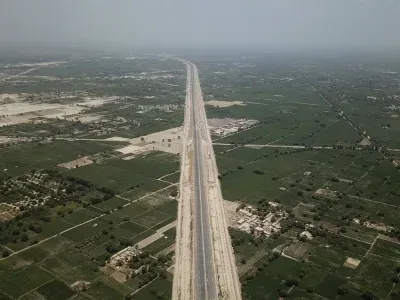
Despite the security challenges, the broader report underscores that the Northeast's geographic position — bordering Bhutan, China, Myanmar, and Bangladesh — makes it a natural corridor for trade and connectivity with South-East Asia. Sectors including infrastructure, agriculture, tourism, and energy are cited as areas with significant growth potential.
Analysts have long argued that India's Act East Policy cannot succeed without a stable and prosperous Northeast. Whether New Delhi can simultaneously address the security threats Vohra outlines while accelerating economic integration will be the defining challenge for the region in the years ahead.
Point of View
Yet the Northeast remains a region where geopolitical competition plays out in the shadows. China's strategic encirclement through Myanmar and Bangladesh is not new, but the alleged involvement of Western nationals in drone smuggling adds a dimension that demands transparency rather than vague intelligence references. New Delhi's challenge is not just stabilising Manipur — it is building a coherent Northeast strategy that treats security and economic integration as a single policy problem, not two separate files.
NationPress
22 Sept 2026
Frequently Asked Questions
Why is India's Northeast considered a gateway to South-East Asia?
India's Northeast shares borders with Bhutan, China, Myanmar, and Bangladesh, positioning it as a natural land corridor for trade and connectivity with South-East Asia. The region's multi-sector potential — spanning infrastructure, agriculture, tourism, and energy — makes it central to India's Act East Policy.
What foreign threats does the report identify in India's Northeast?
The report, authored by former Manipur DGP B L Vohra, identifies China's historical weapons and training support for insurgent groups, Myanmar's inability to control its border regions, and alleged involvement of foreign nationals — including one American and six Ukrainians arrested by the NIA — in smuggling drones into Myanmar.
Who are the NSCN-K (Khaplang) and why are they significant?
NSCN-K (Khaplang) is a Naga insurgent group whose leader Khaplang is a native of Myanmar. Because of its cross-border roots and shared tribal ties between Indian and Myanmar communities, the group exemplifies the challenge of managing insurgency along India's porous northeastern frontier.
What is the significance of the Bangladesh Prime Minister's visit to China?
Vohra flags the visit as a strategic concern because it reportedly led to an agreement on the Teesta Project, signalling deepening China-Bangladesh ties. For India, this represents a potential shift in the regional balance along its northeastern flank.
What did the NIA arrests of foreign nationals reveal about Northeast security?
In March 2025, the NIA arrested one American and six Ukrainian nationals at airports in Delhi, Lucknow, and Kolkata for allegedly entering Mizoram without permits and crossing into Myanmar. Vohra alleges drones were smuggled to assist groups fighting the Myanmar government, with some linking this to drone use by Kuki groups in Manipur.