Northeast India as gateway to SE Asia: Experts at Guwahati dialogue
Synopsis
At a two-day academic dialogue in Guwahati, experts argued that Northeast India is no longer just a buffer zone or transit corridor — it is a potential strategic hub linking South and Southeast Asia. From the Akhaura-Agartala rail link to reducing dependence on the Siliguri Corridor, the sessions mapped a bolder, community-inclusive vision for India's most geopolitically complex region.
Key Takeaways
A two-day dialogue titled 'Northeast India in a Changing Geopolitical Order' was held in Guwahati on 4–5 November 2026 , organised by the Chintan Research Foundation (CRF) .
Experts argued Northeast India must be seen as an active participant in India's regional diplomacy, not merely a transit corridor.
CRF President Shishir Priyadarshi called for sustained engagement with Bangladesh and greater inclusion of Northeast perspectives in India's foreign policy.
Key infrastructure projects discussed include the Akhaura-Agartala railway link , the India-Myanmar-Thailand Trilateral Highway and the Kaladan Multi-Modal Transit Transport Project .
Geopolitical concerns raised included China's strategic presence , Yarlung Tsangpo water security , Siliguri Corridor vulnerability and instability in Myanmar and Bangladesh .
Speakers called for Northeastern states to participate in para-diplomacy and for BIMSTEC to serve as a platform for wider regional cooperation.
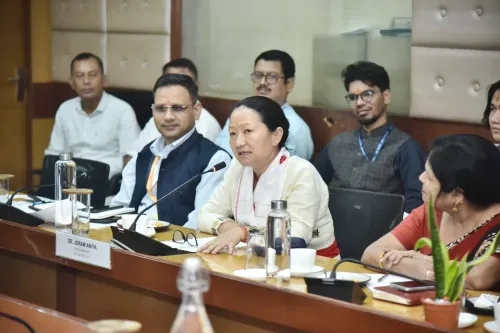
Northeast India's expanding geopolitical relevance, its unique position at the crossroads of South and Southeast Asia, and its capacity to become a vital hub for regional connectivity and economic integration took centre stage at a two-day academic dialogue held in Guwahati on 4 and 5 November 2026. The event was organised by the Chintan Research Foundation (CRF) in partnership with Girijananda Chowdhury University (GCU) and Assam Don Bosco University (ADBU).
Key Themes of the Dialogue
The two-day series, titled 'Northeast India in a Changing Geopolitical Order: Connectivity, Borderlands, Frontier Governance and Strategic Opportunities', brought together scholars, policy thinkers and institutional leaders to map the region's strategic future. A central argument running through the sessions was that Northeast India must be seen not as a peripheral buffer zone or a mere transit corridor, but as an active stakeholder in India's regional and international engagements.
Experts stressed that the region's geographical proximity to Bangladesh, Bhutan, Myanmar and multiple Southeast Asian countries opens significant doors for cross-border trade, energy cooperation, and people-to-people exchanges — provided structural challenges around border management, security, migration and infrastructure gaps are addressed in parallel.
What the Speakers Said
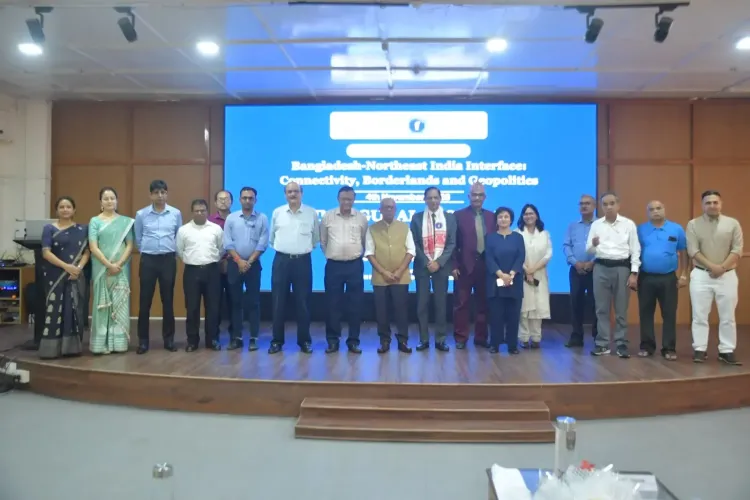
Shishir Priyadarshi, President of the CRF, delivered a special address at GCU during a one-day dialogue on the 'Bangladesh-Northeast India Interface: Connectivity, Borderlands and Geopolitics'. He emphasised 'the need for sustained engagement with Bangladesh, citing the ‘Woodpecker Approach’ of patience and consistent efforts.' Priyadarshi also highlighted CRF's role in fostering research and called for 'greater inclusion of Northeast India's perspectives in India's foreign policy.'
ADBU Vice Chancellor Jose Palely, speaking during the second day's seminar, stressed 'the importance of viewing international borders as spaces of economic opportunity and social interaction, with frontier communities recognised as important stakeholders in governance and development.'
Connectivity Projects in Focus
The panel discussions spotlighted several strategic infrastructure initiatives currently underway or planned. These included the Akhaura-Agartala railway link, access to Bangladesh's seaports and inland waterways, the India-Myanmar-Thailand Trilateral Highway, and the Kaladan Multi-Modal Transit Transport Project. The Agartala-Kolkata road link through Bangladesh was also discussed as a means of reducing the region's heavy dependence on the Siliguri Corridor.
Speakers called for improved intra-regional connectivity, upgraded border infrastructure, streamlined customs procedures and stronger institutional coordination to translate these initiatives into concrete gains for local communities.
Geopolitical Challenges on the Agenda
Discussions did not shy away from harder strategic questions. The growing strategic footprint of China in the region, water security concerns linked to the Yarlung Tsangpo River, cross-border drug trafficking, and the evolving political situations in Myanmar and Bangladesh were all examined. The strategic centrality of the Siliguri Corridor and the Bay of Bengal's rising geopolitical weight were also deliberated upon.
Experts underscored the importance of India's Act East Policy and Neighbourhood First doctrine, while emphasising that connectivity frameworks must generate measurable economic and developmental benefits for communities living along the frontier — not just strategic optics for the Centre.
The Road Ahead
The two-day dialogue concluded with a call for Northeastern states to play a more active role in shaping India's external engagement with neighbouring countries, including through para-diplomacy and stronger institutional cooperation. Regional platforms such as BIMSTEC were highlighted as vehicles for wider multilateral coordination.
Experts agreed that transforming Northeast India into a genuine strategic gateway requires more than roads and rail lines — it demands sustained diplomatic engagement, effective frontier governance, inclusive development, and the active participation of border communities in shaping the region's future.
Point of View
Yet the Kaladan and Trilateral Highway projects remain incomplete, and the Siliguri Corridor's vulnerability is an open secret. The real question is not whether Northeast India can be a gateway, but whether the Centre is willing to genuinely devolve diplomatic and economic agency to the states that live at that frontier. Without that shift, another round of well-attended academic dialogues risks producing the same shelf-bound recommendations.
NationPress
6 Nov 2026
Frequently Asked Questions
What was the Guwahati dialogue on Northeast India about?
The two-day dialogue, held on 4 and 5 November 2026, examined Northeast India's geopolitical significance, its potential as a strategic gateway to South and Southeast Asia, and challenges around connectivity, border governance and frontier communities. It was organised by the Chintan Research Foundation in collaboration with Girijananda Chowdhury University and Assam Don Bosco University.
Why is Northeast India considered strategically important?
Northeast India shares borders with Bangladesh, Bhutan, Myanmar and has proximity to Southeast Asian nations, making it a natural hub for cross-border trade, energy cooperation and regional connectivity. Experts argue it is central to India's Act East Policy and Neighbourhood First doctrine.
Which connectivity projects were highlighted at the Guwahati dialogue?
Key projects discussed included the Akhaura-Agartala railway link, the India-Myanmar-Thailand Trilateral Highway, the Kaladan Multi-Modal Transit Transport Project and the Agartala-Kolkata road link through Bangladesh. Speakers also emphasised the need to reduce dependence on the Siliguri Corridor.
What geopolitical challenges were raised for Northeast India?
Experts flagged China's growing strategic presence in the region, water security concerns over the Yarlung Tsangpo River, cross-border drug trafficking, the strategic sensitivity of the Siliguri Corridor, and political instability in Myanmar and Bangladesh as key challenges.
What is BIMSTEC and why was it mentioned?
BIMSTEC, the Bay of Bengal Initiative for Multi-Sectoral Technical and Economic Cooperation, is a regional grouping that includes India, Bangladesh, Myanmar, Sri Lanka, Thailand, Nepal and Bhutan. Speakers at the Guwahati dialogue highlighted it as a multilateral platform for advancing regional connectivity and cooperation involving Northeast India.