Will Outbound Traffic Surge on Sunday for Lunar New Year in South Korea?
Synopsis
As South Korea gears up for the Lunar New Year celebrations, traffic is expected to hit a high point this Sunday. With millions traveling home to mark this significant holiday, the roads will be bustling. Discover what this means for travelers and how North Korea is observing the holiday differently.
Key Takeaways
Outbound traffic is expected to peak on Sunday for the Lunar New Year.
Approximately 5 million vehicles will be on the road.
North Korea has a different approach to the holiday.
Travel times to major cities will increase significantly.
Restaurants will remain busy during the holiday season.
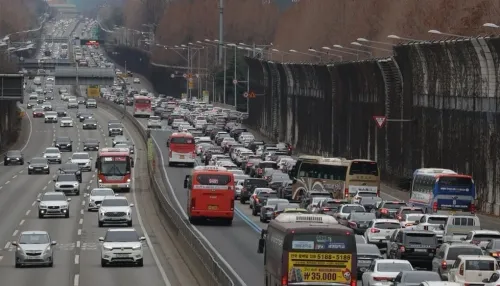
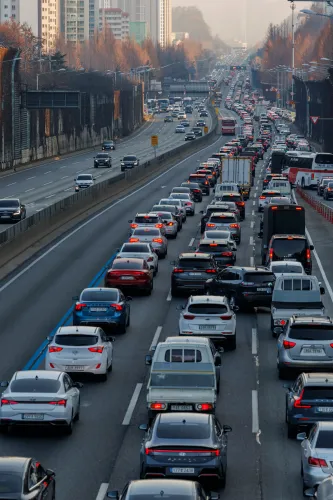
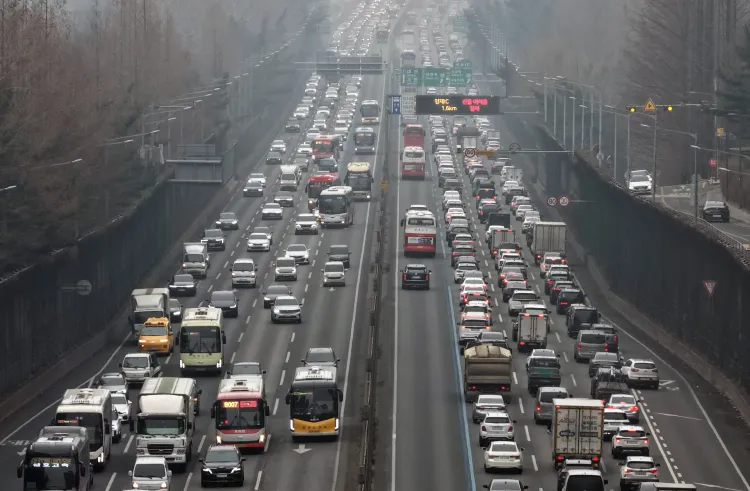
Seoul, Feb 15 (NationPress) Outbound traffic congestion is anticipated to reach its peak on Sunday as many individuals travel to their hometowns to celebrate the second day of the Lunar New Year holiday.
The country will observe this significant holiday, known as Seol, on Tuesday, with the holiday period commencing over the weekend and extending through Wednesday, as reported by Yonhap news agency.
According to the state-run Korea Expressway Corp, traffic congestion on outbound routes is expected to be most severe between noon and 1 p.m. and will begin to ease around 8 to 9 p.m.
As of 8 a.m., travel from Seoul to the southeastern port city of Busan, which is approximately 330 kilometers away, is predicted to take around six hours and 10 minutes, while a journey to Daegu, situated about 240 km southeast of Seoul, is forecasted to take 5 hours and 10 minutes.
In contrast, travel times heading back to Seoul are relatively shorter, requiring 5 hours and 10 minutes from Busan and 4 hours and 10 minutes from Daegu.
The agency projects that approximately 5 million vehicles will be on the roads nationwide on Sunday, which includes 450,000 cars departing from the greater Seoul area and 380,000 cars making their way toward it.
In the meantime, North Korea will be celebrating a longer Lunar New Year holiday this year, as it closely follows the national holiday commemorating the birthday of the late leader Kim Jong-il.
This year, North Korea's one-day Lunar New Year holiday falls on Tuesday, which is shorter than South Korea's three-day celebration.
This year's Lunar New Year is set for a day after the late leader's birthday on Monday, following Sunday, providing North Koreans with a three-day holiday.
Typically, North Koreans observe the new year according to the Western calendar, while South Koreans celebrate the Lunar New Year with greater enthusiasm.
Initially, the socialist North Korea had renounced this traditional holiday as a feudal relic, but reinstated it in 1989, along with the other traditional holiday, Chuseok, during the regime of Kim Jong-il.
Today, North Korea utilizes this traditional holiday not just to honor ancestral families, but also to commemorate the accomplishments of its two late leaders, including state founder Kim Il-sung, and to reinforce loyalty to the current leader, Kim Jong-un.
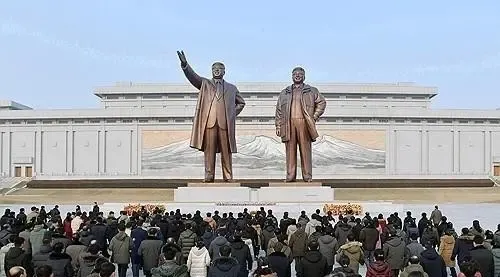
During the Lunar New Year, North Koreans customarily visit the Kumsusan mausoleum in Pyongyang, where the deceased leaders are interred, or pay respects at their statues across the nation by laying flowers.
Restaurants remain open and bustling with diners throughout the holiday season, as travel to other regions or hometowns is regulated and only permitted with authorization.
Point of View
It's vital to highlight the significance of the Lunar New Year in both South and North Korea. While millions of South Koreans prepare to reunite with their families, it’s essential to understand the contrasting traditions in the North. This year’s celebrations reflect deeper cultural values and the evolving landscape of inter-Korean relations.
NationPress
5 Oct 2026
Frequently Asked Questions
When is the Lunar New Year celebrated in South Korea?
The Lunar New Year, known as Seol, is celebrated in South Korea on the second day of the holiday period, which begins on the weekend and continues through Wednesday.
How many vehicles are expected on the roads during the holiday?
Approximately 5 million vehicles are projected to travel nationwide on Sunday, with significant traffic expected from the greater Seoul area.
What is the traffic peak time for outbound routes?
Traffic is expected to be heaviest between noon and 1 p.m. on Sunday, before starting to ease after 8 p.m.
How does North Korea celebrate the Lunar New Year?
North Korea observes a shorter one-day Lunar New Year holiday, which coincides with the birthday of Kim Jong-il, allowing for a three-day holiday this year.
What cultural significance does the Lunar New Year hold?
The Lunar New Year is a time for families to honor their ancestors and celebrate cultural heritage, with different customs observed in South and North Korea.