Will North Korea Extend Its Lunar New Year Holiday This Year?
Synopsis
North Korea is poised to celebrate a longer Lunar New Year holiday this year, aligned with the birthday of its late leader Kim Jong-il. This extension offers North Koreans a unique opportunity to honor their leaders while reflecting on their traditions amidst strict travel regulations.
Key Takeaways
North Korea will observe a three-day Lunar New Year holiday this year.
The holiday coincides with Kim Jong-il's birthday.
Travel within North Korea is restricted, affecting holiday celebrations.
In contrast, South Korea celebrates with more elaborate traditions.
Restaurants in North Korea remain busy during the holiday.
Seoul, Feb 15 (NationPress) This year, North Korea is set to enjoy a longer Lunar New Year celebration, coinciding with the national observance of the birthday of the late leader Kim Jong-il. Traditionally, North Korea recognizes a one-day holiday for the Lunar New Year, which occurs on Tuesday this year, in contrast to South Korea's three-day festivities.
The Lunar New Year in North Korea will be celebrated on the day following the late leader's birthday on Monday, resulting in a three-day holiday for citizens.
While North Koreans generally follow the Western calendar for new year celebrations, their southern counterparts engage in a more lavish observance of the Lunar New Year, as reported by the Yonhap news agency.
Initially, North Korea dismissed this traditional holiday as a remnant of feudalism but reinstated it in 1989 alongside the Chuseok holiday during the Kim Jong-il era.
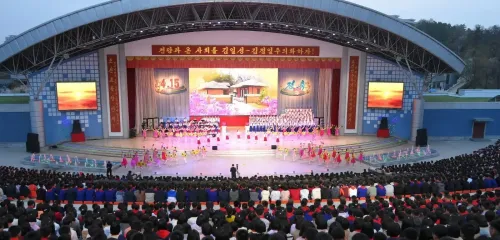
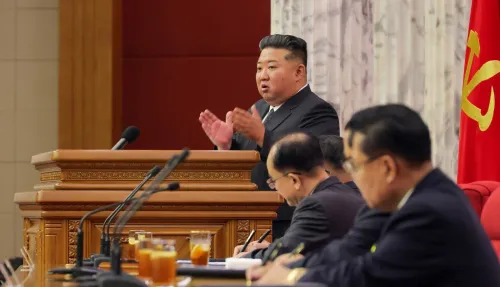
This holiday offers North Koreans an opportunity to honor their ancestors while also celebrating the legacies of their two deceased leaders, Kim Il-sung and Kim Jong-il, reinforcing loyalty to the current leader, Kim Jong-un.
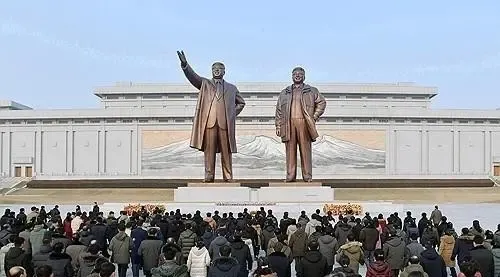
On Lunar New Year, it is customary for North Koreans to visit the Kumsusan Palace of the Sun in Pyongyang, where the remains of the two late leaders are preserved, and to pay their respects at statues across the nation.
During this holiday season, restaurants see a surge in patrons, although travel is heavily regulated and requires permission for movement between regions or back to hometowns.
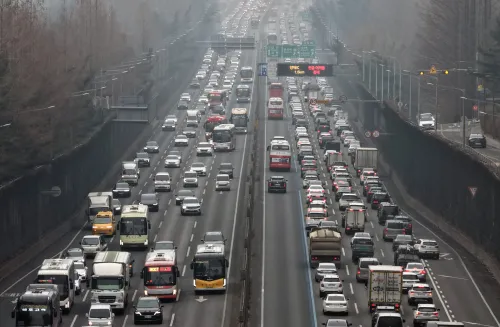
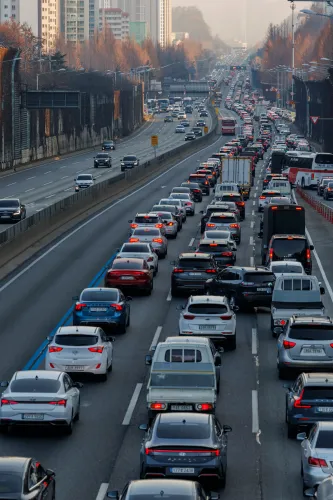
In South Korea, heavy outbound traffic is anticipated on Sunday as many people travel to reunite with family during the second day of their Lunar New Year holiday.
South Korea will celebrate Seol on Tuesday, with the holiday period kicking off over the weekend and extending through Wednesday.
Traffic congestion is expected to peak on outbound routes between noon and 1 p.m., easing later in the evening. As of 8 a.m., the journey from Seoul to Busan, approximately 330 kilometers away, is projected to take around six hours and 10 minutes, while a trip to Daegu, situated 240 kilometers southeast, is expected to last 5 hours and 10 minutes.
Travel times back to Seoul are notably shorter, taking about 5 hours and 10 minutes from Busan and 4 hours and 10 minutes from Daegu.
The agency estimates that around 5 million vehicles will be on the roads nationwide on Sunday, including approximately 450,000 departing the greater Seoul area and 380,000 returning to it.
Point of View
This extended holiday reflects North Korea's ongoing commitment to honoring its leadership while maintaining cultural traditions. While the regime uses such occasions to foster loyalty and unity, the contrasting celebrations in South Korea highlight regional differences in cultural observance.
NationPress
24 Sept 2026
Frequently Asked Questions
What holidays does North Korea celebrate?
North Korea celebrates several holidays, including the Lunar New Year, Chuseok, and notable dates related to its leaders.
How long is the Lunar New Year holiday in North Korea?
This year, the holiday is extended to three days due to its overlap with the birthday of Kim Jong-il.
How do North Koreans celebrate the Lunar New Year?
Celebrations often include visiting the Kumsusan Palace of the Sun and paying respects to the leaders' statues, along with family gatherings.