Is the Outrage Over a Chinese Tourist Defiling a Buddhist Shrine Justified?
Synopsis
A Chinese tourist's disrespectful act inside a Buddhist monastery has sparked outrage among Tibetans, who are demanding accountability. This incident highlights the growing tension between cultural respect and tourism. What does this mean for Tibet's cultural integrity?
Key Takeaways
Incident of disrespect at a Buddhist shrine by a tourist.
Tibetans are demanding accountability for the actions.
Social media plays a significant role in raising awareness.
Cultural tourism in Tibet raises questions about cultural integrity .
Authorities urged to investigate and take action.
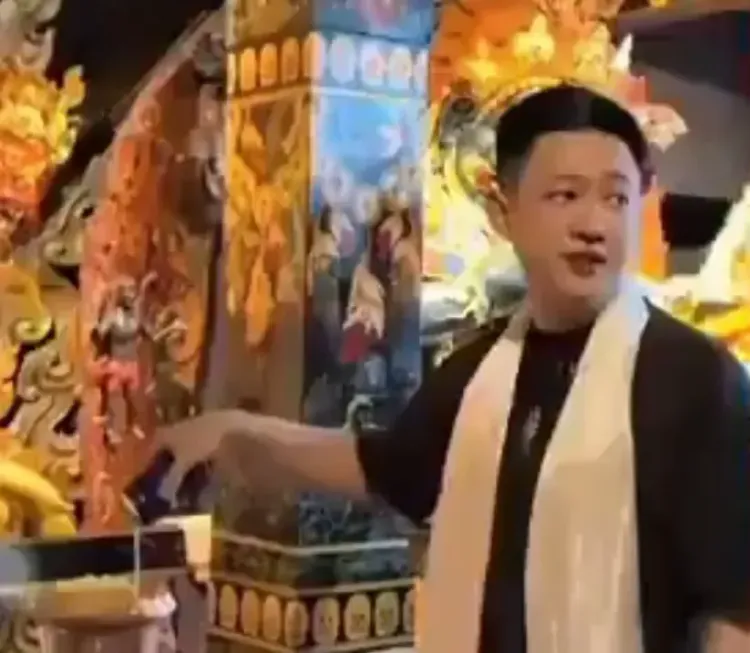
New Delhi, Jan 11 (NationPress) A shocking incident involving a Chinese tourist allegedly occurred at a revered Buddhist monastery shrine, igniting a wave of anger and discontent among the Tibetan community, which is now demanding swift action against the individual responsible.
Social media erupted with outrage as footage of the tourist's actions became widely shared.
In the viral clip, the tourist was seen consuming a beverage directly from the altar of the shrine and subsequently pouring the remnants into a butter lamp, actions that many Tibetans have condemned as a serious breach of their religious customs and the sanctity of the site.
As reported by Phayul, a prominent news portal, the tourist's disregard for the sacred space was caught on camera, prompting widespread condemnation.
Tibetans expressed their dismay, labeling the act as a “blatant insult” to their deity and a “shameless provocation,” emphasizing that monasteries should not be treated as mere attractions for tourists seeking notoriety.
Many Tibetan netizens pointed out that the incident reflects a deeper issue than mere ignorance of local customs.
“This isn't just a case of misunderstanding the rules. It's humiliating. It's a blatant provocation,” remarked a user on X, while another added, “Cultural integrity must be respected. I hope authorities thoroughly investigate this matter.”
Tsering Woeser, a respected Tibetan author and poet, also commented on the situation, attributing such behaviors to a long-standing leniency shown by authorities towards misconduct by tourists in Tibet.
“The outrageous actions of tourists stem from a history of tolerance,” Tsering noted on her X account.
She highlighted that the promotion of “cultural tourism” as one of Tibet’s “nine key industries” has led to tourists becoming seen as “untouchable figures,” while violations of Tibetan beliefs and customs have surged.
Point of View
It is essential to recognize the profound impact that actions like these have on cultural integrity and community sentiments. The outrage expressed by the Tibetan people is valid and must be acknowledged. We must advocate for respectful tourism that honors local customs and traditions.
NationPress
24 Oct 2026
Frequently Asked Questions
What happened with the Chinese tourist at the shrine?
A Chinese tourist allegedly consumed a beverage from the altar of a Buddhist monastery's shrine and poured the remnants into a butter lamp, which many Tibetans consider a serious violation of their religious beliefs.
Why are Tibetans upset about this incident?
Tibetans are outraged because the act is seen as a blatant insult to their deity and a disregard for their cultural and religious customs.
What are the calls to action from the Tibetan community?
Tibetans are demanding immediate accountability for the tourist's actions and highlighting the need for respectful treatment of their sacred spaces.
How has social media reacted to this incident?
Social media has erupted with condemnation and outrage, with many users expressing their disappointment and calling for thorough investigations into the matter.
What does this incident say about tourism in Tibet?
This incident highlights growing concerns over the impact of tourism on Tibetan cultural integrity and the need for better regulations to protect sacred sites.