Has the Chinese government banned children under 18 from visiting monasteries?
Synopsis
The Chinese government has intensified restrictions on Tibetan religious practices by prohibiting children under 18 from visiting monasteries. This policy raises serious concerns about the erosion of Tibetan cultural and religious rights, especially during traditional holiday periods when families would typically visit these sacred sites.
Key Takeaways
Chinese government restricts minors from monasteries.
Policy coincides with winter holidays.
Concerns over erosion of Tibetan culture .
Experts warn of cultural transmission issues.
Parents report changes in children's language use.
Beijing, Feb 8 (NationPress) The Chinese government has reportedly tightened restrictions on the religious practices of Tibetans by enforcing a ban that prohibits children under the age of 18 from accessing monasteries, according to a recent report.
This announcement was brought to light after a video emerged on the messaging platform WeChat, raising alarms about potential violations of Tibetan cultural and religious freedoms, as noted by Phayul, a news outlet focusing on Tibet and Tibetans in exile.
Notices stating "Children under 18 are not permitted in the monastery" have appeared at the entrance of a monastery in Kham, highlighting the strict enforcement of China's longstanding policies aimed at limiting participation of minorities in religious practices.
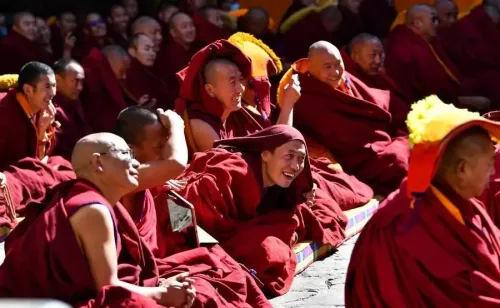
The implementation of this policy aligns with the winter holidays, a time when schools in Tibetan regions are closed for their annual recess. Traditionally, many Tibetan children would visit monasteries with their families during this period. However, this ban now prevents minors from entering even in the company of their parents.
Sonam Tobgyal, a researcher at Tibet Watch, remarked that this decision by China forms part of a systematic endeavor to erode Tibetan cultural legacy.
"In recent years, a series of Chinese policies in Tibet — such as mandatory pre-nursery boarding schools for Tibetan children, the ban on Tibetan language instruction in monasteries during holidays, and the restriction on children visiting monasteries during winter breaks — indicate a deliberate attempt to deprive cultural nurturing during critical developmental years," Phayul quoted him.
Tobgyal asserted that these policies collectively represent a "colonial project aimed at obliterating Tibetan cultural impressions from the daily lives of young Tibetans," according to the Phayul report.
State-run educational institutions for Tibetan children are supplemented with an extra administrative layer overseen by the United Front Work Department of the Chinese Communist Party (CCP), tasked with managing ethnic minorities and religious organizations. This department supervises Tibetan students, subjects them to ideological indoctrination, and encourages policies promoting forced linguistic and cultural assimilation, as reported by Phayul.
This framework encourages or compels Tibetan children to abandon their native language in favor of the Chinese language, identity, and political allegiance. Critics argue that these actions are intended to reshape Tibetan children into individuals who communicate, think, and identify as Chinese. Parents have noted that during winter and summer breaks, their children converse in Chinese, respond to inquiries in Chinese, and exhibit fear or reluctance about visiting monasteries.
Point of View
It is crucial to recognize the broader implications of such policies on minority rights and cultural identities. While the government may argue that these measures are for social stability, they threaten the very essence of what makes Tibet unique. A balanced approach that respects religious and cultural diversity is essential for a harmonious society.
NationPress
27 Aug 2026
Frequently Asked Questions
What is the new ban imposed by the Chinese government?
The Chinese government has imposed a ban preventing children under 18 from entering monasteries, which is part of a broader restriction on religious practices among Tibetans.
Why is this ban concerning?
This ban raises serious concerns about the erosion of Tibetan cultural and religious rights, especially during significant times such as winter holidays when families traditionally visit monasteries.
What are the implications of such restrictions?
These restrictions may undermine the transmission of Tibetan culture and identity to future generations, effectively erasing important cultural practices.
How have parents reacted to this ban?
Parents have reported that their children are increasingly speaking Chinese and showing reluctance to visit monasteries, which reflects the impact of these policies on their cultural identity.
What does this mean for Tibetan culture?
The ban is seen as part of a systematic effort to diminish Tibetan cultural heritage, raising alarms about the future of Tibetan identity and traditions.