Why Were Over 4000 Afghan Refugees Forcibly Repatriated from Pakistan and Iran in One Day?

Synopsis
Over 4,000 Afghan refugees faced forced repatriation from Pakistan and Iran in a shocking turn of events. Reports reveal violent police actions against migrants in Islamabad, raising serious concerns about human rights violations. Activists are calling for urgent international attention to protect vulnerable families. What does this mean for the future of Afghan refugees?
Key Takeaways
Over 4,000 Afghan refugees forcibly repatriated in one day.
Police conducted overnight raids in Islamabad.
Humanitarian aid provided to 780 families .
Concerns raised over violations of international refugee protection .
Activists urge global attention for Afghan migrants.
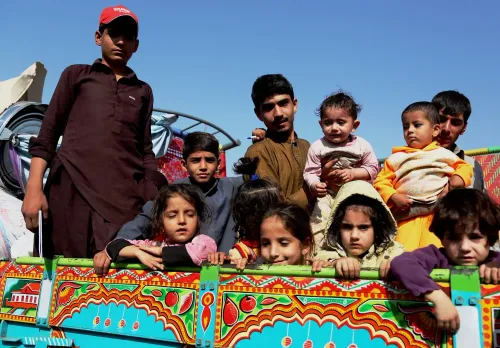
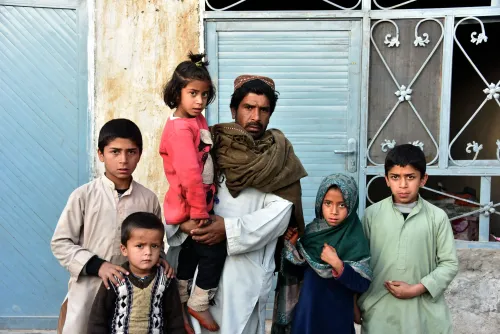
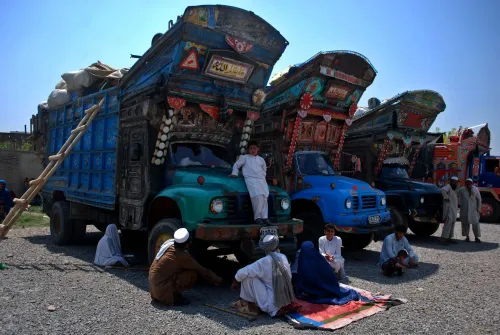
Kabul, Dec 1 (NationPress) Over 4,000 Afghan refugees were forcibly sent back from Pakistan and Iran within just one day, according to a senior Taliban official cited by Afghan media on Monday.
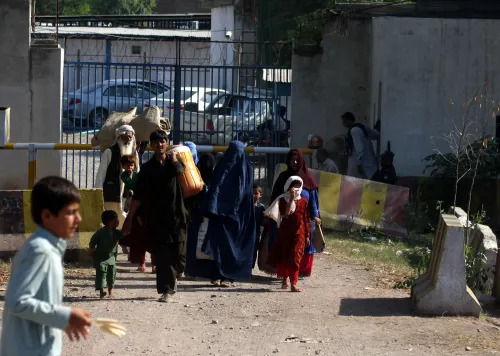
Taliban Deputy Spokesperson Hamdullah Fitrat shared a report from the High Commission for Addressing Migrants’ Issues on X, revealing that 1,053 families, totaling 4,834 individuals, returned to Afghanistan on Sunday, as reported by Pajhwok Afghan News.
The returnees entered Afghanistan via multiple crossings: Torkham in Nangarhar, Islam Qala in Herat, Pul-i-Abresham in Nimroz, Spin Boldak in Kandahar, and Bahramcha in Helmand.
Fitrat mentioned that 1,160 families, comprising 6,566 people, were relocated to their respective areas, while 780 families received humanitarian aid. Additionally, 827 SIM cards were distributed to the returning refugees.
On the previous day, 1,188 families, equating to 6,553 individuals, were forcibly repatriated from Pakistan and Iran.
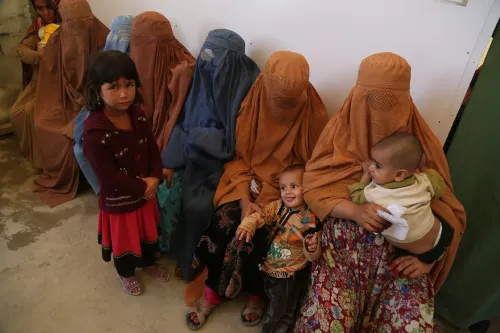
Recently, reports emerged of Afghan migrants and women activists facing violence and detention following overnight police raids in Islamabad's Argentina Park, as reported by Afghan media.
Without prior warning, police surrounded the park and forcefully dismantled tents occupied by around 200 Afghan families and activists who had been residing there for approximately four months, according to Amu TV.
In a video shared by a migrant, he expressed, "They arrived, gathered everyone, tore down the tents, and loaded us into vehicles. Some children are injured. We are uncertain about where they are taking us."
Another activist, visibly injured, recounted being assaulted by police while advocating for women's rights and human rights, stating, "I am here for the rights of women, for human rights. Because I am Afghan. Because I am a woman," as reported by Amu TV.
The Afghan refugees and activists reported that police threatened to forcibly relocate approximately 400 vulnerable families back to Afghanistan, raising alarms among rights organizations about potential violations of international refugee protection standards.
Activists are urging international human rights organizations and the media to speak out for Afghan migrants, cautioning that continued silence equates to abandoning individuals whose only means of defense is their plea for justice.
Point of View
It is imperative to recognize the plight of Afghan refugees facing forced repatriation amidst escalating tensions. The reported incidents not only highlight the urgent need for humanitarian assistance but also underscore the responsibility of the international community to uphold human rights standards. Our commitment to advocating for justice remains steadfast.
NationPress
1 Oct 2026
Frequently Asked Questions
What led to the forced repatriation of Afghan refugees?
The forced repatriation was largely due to police actions in Pakistan, where authorities conducted raids on Afghan migrants, resulting in the return of over 4,000 individuals in one day.
How many families were affected by this situation?
Approximately 1,053 families, totaling over 4,800 individuals, were reported to have returned to Afghanistan in a single day.
What humanitarian assistance was provided to the refugees?
Humanitarian assistance was given to about 780 families, along with the distribution of SIM cards to help facilitate communication.
What are the implications of this forced repatriation?
This situation raises significant concerns regarding the violation of international refugee protection standards and the well-being of vulnerable families.
How are activists responding to this crisis?
Activists are calling for international attention and action to protect Afghan refugees and uphold their rights in the face of forced repatriation.