Nepal EV registrations cross 63,000; electric cars top 70% of new private imports
Synopsis
Nepal has quietly become the world's second-largest market for private EV sales by share — behind only Norway — with electric cars now topping 70% of new private four-wheeler imports. With 63,280 EVs registered by mid-2026 and NDC 3.0 targets of 90% BEV share by 2030, the Himalayan nation is running one of the most aggressive EV transitions among developing economies, even as charging infrastructure and battery recycling lag behind.
Key Takeaways
63,280 EVs registered in Nepal by end of fiscal year 2025-26 (mid-July), per the National Transport Policy 2026 .
Electric four-wheelers account for more than 70 per cent of newly imported private cars, making Nepal the world's second-largest market by private EV share — behind only Norway .
Nepal imported 11,666 electric four-wheelers in the last fiscal year alone.
Under NDC 3.0 (2025) , Nepal targets 90% BEV share in private passenger sales by 2030 and 95% by 2035 .
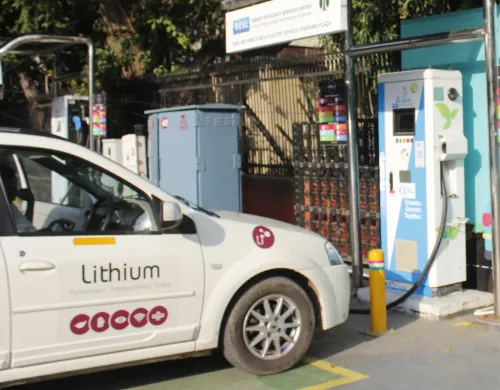
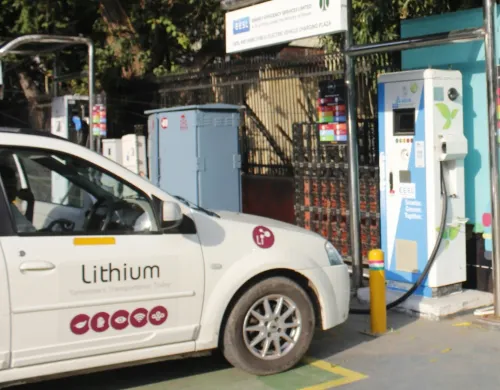
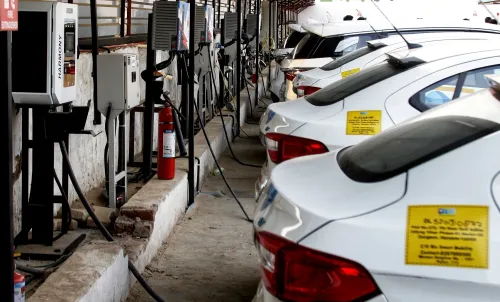
The Ministry of Infrastructure Development flagged gaps in charging infrastructure, battery recycling, and safety standards as key challenges.
Chinese brands are displacing Indian ICE vehicles in Nepal's four-wheeler EV segment.
Nepal's electric vehicle market has reached a significant milestone, with 63,280 EVs — spanning two-, three-, and four-wheelers — registered by the end of fiscal year 2025-26 in mid-July, according to the National Transport Policy 2026 released by the Ministry of Infrastructure Development. Electric cars now account for more than 70 per cent of newly imported private four-wheelers, placing Nepal second only to Norway in private EV share of new vehicle sales globally.
Scale of Nepal's EV Penetration
Against Nepal's total registered vehicle fleet of nearly 6.25 million, EVs represent a small fraction overall. However, the 63,280 registrations reflect a remarkable pace of adoption achieved in under a decade — a timeline that took conventional ICE vehicles far longer to build. In the last fiscal year alone, Nepal imported 11,666 electric four-wheelers, underlining the accelerating momentum.
This comes amid a broader structural shift: for decades, Indian-made ICE vehicles dominated Nepal's automobile market, but Chinese brands have increasingly captured ground, particularly in the four-wheeler EV segment.
Policy Drivers Behind the Surge
The growth has not happened by accident. Nepal has maintained significantly lower tax rates on EVs compared with conventional ICE vehicles, while relatively accessible financing and an expanding range of electric models have widened the consumer base. The Ministry of Infrastructure Development noted that the shift aligns with Nepal's strategy to cut dependence on imported petroleum and leverage its abundant hydropower resources.
'The increasing use of EVs has contributed to reducing the country's dependence on imported fossil fuels while expanding the use of domestically generated electricity, indicating a gradual transformation of Nepal's vehicle fleet,' the ministry stated.
Ambitious Targets Under Nepal's Climate Commitments
Under Nepal's Nationally Determined Contribution (NDC) 3.0, introduced in 2025 under the Paris Agreement, the country has set a target to raise the share of Battery Electric Vehicles (BEVs) in private passenger vehicle sales — including two-wheelers — to 90 per cent by 2030 and 95 per cent by 2035. For public passenger vehicles, the targets are 70 per cent by 2030 and 90 per cent by 2035.
Notably, these are among the most aggressive EV transition targets set by any developing nation, and Nepal's current trajectory — second globally in private EV share — suggests the 2030 milestone is within reach if infrastructure keeps pace.
Infrastructure Gaps Remain a Concern
The rapid expansion has exposed weaknesses in Nepal's supporting infrastructure and regulatory framework. The ministry itself acknowledged that 'charging infrastructure, battery management, safety standards, battery recycling mechanisms and operational regulations remain at different stages of development.'
Bridging these gaps will be critical to sustaining the growth curve. Without adequate charging networks and battery recycling systems, the transition risks creating new dependencies even as it resolves old ones.
What Comes Next
With the EV segment intensifying in competition and government policy continuing to favour electrification, Nepal's automobile market is set for further disruption. The country's hydropower expansion — which underpins the entire green mobility strategy — will be a key variable in determining how quickly the broader vehicle fleet can be electrified beyond the private car segment.
Point of View
Robust resale markets, and decades of consumer trust; Nepal's is built on tax arbitrage and a thin import base. The real test arrives when the urban-to-rural transition begins and charging infrastructure has to follow. The ministry's own admission of regulatory gaps is the most important line in this story — and the one least likely to make headlines.
NationPress
21 Aug 2026
Frequently Asked Questions
How many EVs are registered in Nepal as of 2026?
Nepal had registered 63,280 electric vehicles — including two-, three-, and four-wheelers — by the end of fiscal year 2025-26 in mid-July 2026, according to the National Transport Policy 2026 released by the Ministry of Infrastructure Development.
Why is Nepal considered the world's second-largest EV market by share?
Electric four-wheelers accounted for more than 70 per cent of newly imported private cars in Nepal during the last fiscal year, placing it second only to Norway globally in private EV share of new vehicle sales, according to the Ministry of Infrastructure Development.
What are Nepal's EV targets under NDC 3.0?
Under Nepal's Nationally Determined Contribution (NDC) 3.0, introduced in 2025 under the Paris Agreement, the country aims for Battery Electric Vehicles to make up 90 per cent of private passenger vehicle sales by 2030 and 95 per cent by 2035. For public passenger vehicles, the targets are 70 per cent by 2030 and 90 per cent by 2035.
What is driving Nepal's EV adoption?
Nepal's EV growth is primarily driven by significantly lower taxes on electric vehicles compared with ICE vehicles, relatively accessible financing, and government policy aimed at reducing dependence on imported petroleum by leveraging the country's abundant hydropower resources.
What challenges does Nepal face in its EV transition?
The Ministry of Infrastructure Development has acknowledged that charging infrastructure, battery management, safety standards, battery recycling mechanisms, and operational regulations remain at different stages of development — gaps that could constrain the pace of Nepal's electric mobility expansion.