India EV market to hit $191 billion by 2034, sales up 46x since 2016
Synopsis
India's EV sales have surged 46-fold in under a decade, and the government now projects the market will hit $191 billion by 2034 — outpacing global EV growth rates by more than double. With two- and three-wheelers driving volume, Delhi leading investments, and exports jumping from $1.2 million to $84 million in four years, this is no longer an emerging story — it is a structural economic shift.
Key Takeaways
India's EV sales rose 46-fold from 50,000 units in 2016 to 2.3 million units in 2025 .
The market is projected to reach $191.04 billion by 2034 at a CAGR of 54.94 per cent .
The EV battery market is forecast to grow from $2.71 billion (2025) to $15.90 billion (2034) at a CAGR of 21.70 per cent .
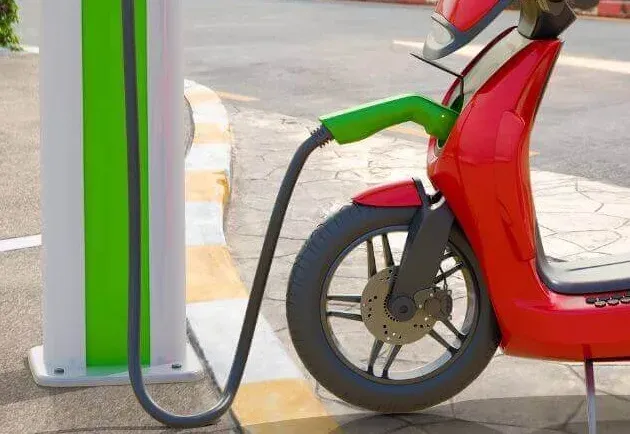
12.8 lakh two-wheelers and 8 lakh three-wheelers were sold in 2025 , driving mass-market adoption.
EV exports jumped from $1.2 million in 2020 to $84 million in 2024 ; top markets are Nepal , Indonesia , and Japan .
India targets 30% EV share in total vehicle sales and 1.32 million charging stations by 2030 .
India's electric vehicle market is on a steep upward curve, with EV sales surging 46-fold — from roughly 50,000 units in 2016 to 2.3 million units in 2025 — and the sector projected to reach $191.04 billion by 2034 at a compound annual growth rate of 54.94 per cent, according to a government statement released on Wednesday, 5 August 2026. The figures underscore India's emergence as one of the fastest-growing EV economies in the world.
India Outpacing Global EV Growth
India's EV expansion has significantly outrun the global average. Worldwide, EV sales grew roughly 20 times — from 9.18 lakh units in 2016 to 18.78 million units in 2024, according to official data. India, by contrast, recorded a 46-fold increase over a comparable period, signalling a structural acceleration rather than a cyclical uptick.
India's EV penetration relative to global levels rose from about one-fifth in 2020 to over two-fifths by 2024 — a doubling of market share in just four years. Much of this momentum has been carried by the mass-mobility segment: 12.8 lakh motorised two-wheelers and 8 lakh three-wheelers were sold in 2025 alone, reflecting the practical, affordability-driven nature of India's EV adoption.
Battery Market and Charging Infrastructure
The EV battery segment is also expanding rapidly. India's battery market is projected to grow from $2.71 billion in 2025 to $15.90 billion by 2034, at a CAGR of 21.70 per cent. This growth is critical to reducing India's dependence on imported cells and building a domestic supply chain.
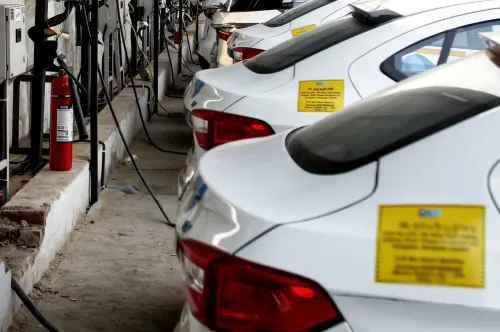
On the infrastructure front, India had 52,718 public EV charging stations operational as of July 2026, of which 16,561 are equipped with fast-charging facilities, according to data from Bharat Heavy Electricals Limited (BHEL). The government has set a target of 1.32 million charging stations by 2030 to support its broader electrification goals.
Investment and Export Momentum
Investment activity in the EV sector remained strong through FY25, with the industry raising approximately $1.4 billion — nearly 27 per cent higher than the previous year. EV manufacturers attracted the bulk of this capital, securing around $1.2 billion. New Delhi emerged as the leading city for EV investments during this period.
Indian EVs are also gaining traction internationally. Exports climbed from $1.2 million in 2020 to $84 million in 2024, with Nepal, Indonesia, and Japan ranking as the top three export destinations — a notable shift that points to growing competitiveness of Indian EV manufacturers in Asian markets.
Government Policy Driving the Shift
The Centre has been actively shaping the EV transition since 2015 through a suite of policy instruments, including the FAME (Faster Adoption and Manufacturing of Electric Vehicles) scheme, the Production-Linked Incentive (PLI) scheme for Advanced Chemistry Cells, and a dedicated push for battery localisation. India's stated target is for 30 per cent of all vehicle sales to be electric by 2030.
With investment inflows rising, export markets opening, and domestic two- and three-wheeler demand holding firm, the sector appears structurally positioned for sustained growth — though execution on charging infrastructure and battery localisation will determine whether the 2030 targets hold.
Point of View
But it rests heavily on two- and three-wheelers — segments where price points and running-cost savings make the EV case almost automatic. The harder test is four-wheelers and commercial vehicles, where the numbers remain modest and charging anxiety persists. The 2030 target of 30 per cent EV penetration across all vehicle categories is ambitious given that public fast-charging covers barely 16,500 of 52,000 stations today. Battery localisation, not sales projections, is the variable that will determine whether India captures EV value or merely assembles imported cells at scale.
NationPress
20 Sept 2026
Frequently Asked Questions
How fast has India's EV market grown?
India's EV sales rose 46-fold from approximately 50,000 units in 2016 to 2.3 million units in 2025, outpacing the global average growth of roughly 20 times over a comparable period.
What is India's EV market size projection for 2034?
The Indian EV market is projected to reach $191.04 billion by 2034, growing at a CAGR of 54.94 per cent, according to a government statement released on 5 August 2026.
Which vehicle segments are driving India's EV growth?
Motorised two-wheelers and three-wheelers are leading adoption, with 12.8 lakh and 8 lakh units sold respectively in 2025. These segments benefit from lower upfront costs and clear running-cost advantages over petrol equivalents.
What is India's EV charging infrastructure target?
India plans to have 1.32 million public charging stations operational by 2030. As of July 2026, there were 52,718 public stations, of which 16,561 offer fast-charging capability, according to BHEL data.
How much has India attracted in EV investment?
The EV sector raised approximately $1.4 billion in FY25, nearly 27 per cent higher than the previous year, with EV manufacturers securing around $1.2 billion of that total. New Delhi was the top city for EV investments.