West Bengal mulls PPP model for 4,133 zero-enrolment state schools
Synopsis
West Bengal has identified 4,133 government schools with not a single enrolled student — yet teachers remain on their rolls. The state is now weighing a PPP model to repurpose these buildings, with non-viable schools potentially converted into health or training centres, and surplus teachers redistributed to understaffed schools. A decision is due within a month.
Key Takeaways
West Bengal has identified 4,133 state-run schools with zero student enrolments , though teachers remain attached to them.
The state government is considering a public-private partnership (PPP) model and expects a decision within one month .
District Magistrates have been tasked with forming committees to assess each school's infrastructure, location, and future use.
Schools where PPP is not viable may be repurposed as health centres , training centres , or for administrative use.
The Kolkata Municipal Corporation has separately been asked to decide the fate of zero-enrolment schools within the city limits.
Teachers at these schools are likely to be transferred to nearby state schools with low teacher-to-student ratios.
The West Bengal government is actively considering a public-private partnership (PPP) model to repurpose 4,133 state-run schools across the state that currently have zero student enrolments, despite having teachers on their rolls. A final decision is expected within the next one month, according to a senior official from the state school education department.
Scale of the Problem
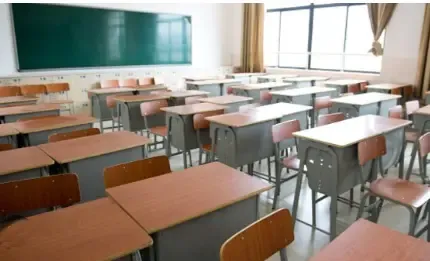
The sheer scale of the issue is striking: 4,133 government schools in West Bengal are operating without a single enrolled student, yet continue to draw on public resources for teacher salaries and infrastructure maintenance. A state school education department official confirmed that such a situation 'cannot be continued for an indefinite period,' making a structural intervention unavoidable.
On the instructions of the state school education secretary, District Magistrates across the state have already begun working on the matter. District-level committees are being set up to examine the current physical condition, infrastructure quality, and geographic location of each school building before sending proposals on how each can best be utilised.
How the PPP Model Would Work
Under the proposed framework, private operators would be brought in to run as many of the identified schools as feasible under a public-private arrangement. However, the official noted it is 'quite unlikely' that the PPP model would be applied uniformly to all 4,133 schools, given the variation in location, infrastructure, and local demand. Buildings where the PPP route is not viable could instead be repurposed as health centres, training centres, or for other administrative purposes.
'The priority will be to ensure as many schools as possible come under the PPP model,' the official said, adding that alternative uses would be a fallback rather than the default outcome.
Kolkata Schools Under Separate Review
For zero-enrolment schools located within the Kolkata Municipal Corporation limits, the state school education department has separately written to the Commissioner of the Kolkata Municipal Corporation, seeking a decision on their future. This parallel track reflects the administrative complexity of urban school closures, which carry different land and civic considerations compared to rural institutions.
What Happens to the Teachers
Teachers currently attached to these vacant schools are reportedly set to be transferred to the nearest state-run schools where teacher-to-student ratios are inadequate. This redistribution is intended to address two problems simultaneously — the redundancy at zero-enrolment schools and the shortage of teaching staff at functional institutions. The exact scale of transfers will depend on district-level assessments still under way.
With district committees expected to submit their proposals shortly, West Bengal's education administration faces a test of whether the PPP pivot can convert a long-standing fiscal anomaly into functional learning infrastructure.
Point of View
133 fully staffed schools with no students is less an education story than a governance accountability story — one that raises hard questions about how West Bengal's school mapping, demographic forecasting, and enrolment tracking have functioned for years. The PPP proposal is a pragmatic response, but the more uncomfortable question is how this anomaly persisted long enough to reach four-figure scale. Redistributing teachers is sensible, but without a transparent criteria for which buildings go to private operators and which get converted, the repurposing exercise carries real risk of institutional capture. The one-month deadline for a decision is promising; the quality of the district-level committee process will determine whether it holds.
NationPress
20 Sept 2026
Frequently Asked Questions
Why does West Bengal have 4,133 schools with no students?
West Bengal has identified 4,133 state-run schools that currently have zero enrolled students, likely due to demographic shifts, migration, and declining birth rates in certain districts. Despite having no students, these schools retain teachers on their rolls, creating a significant fiscal and administrative anomaly.
What is the PPP model being considered for these schools?
The state government is exploring a public-private partnership arrangement under which private operators would be brought in to run the vacant school buildings as functional educational institutions. The model is seen as the most viable option for repurposing the infrastructure, though it may not apply to all 4,133 schools.
What will happen to schools where PPP is not implemented?
Buildings where the PPP model is not feasible may be converted into health centres, training centres, or used for other administrative purposes. The government has said the priority remains maximising the number of schools brought under PPP, with alternative uses as a fallback.
What will happen to the teachers at these empty schools?
Teachers attached to zero-enrolment schools are expected to be transferred to the nearest functioning state schools where teacher-to-student ratios are currently low. The exact number of transfers will be determined following district-level assessments.
When will a final decision be taken?
According to a state school education department official, a decision on the future of these schools is expected within the next one month. District Magistrates have already begun working on assessments, and district-level committees will submit proposals on each school's infrastructure and potential use.