The Struggle for National Paid Leave: A Divided Congress
Synopsis
The debate over paid family and medical leave in the US highlights a significant divide among lawmakers. With no federal guarantees in place, millions of workers are left uncertain about their rights when it comes to family care. Explore the complexities and arguments surrounding this critical issue.
Key Takeaways
The US lacks a federal mandate for paid family and medical leave, unlike many developed nations.
Only 27% of private sector workers have access to paid family leave benefits.
The debate highlights significant disparities in access based on income and employment status.
State programs vary widely, complicating the landscape for employers and employees alike.
Legislative action is needed to establish a universal paid family leave policy.
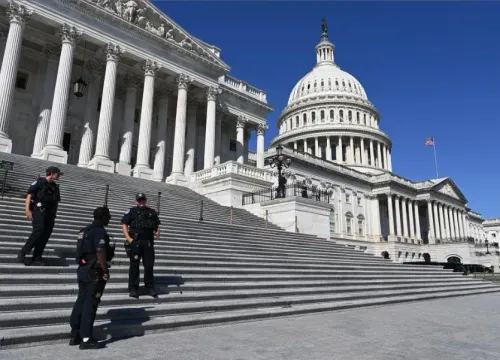
Washington, Feb 25 (NationPress) The enduring disparity in paid family and medical leave in the United States, which is commonplace in many developed nations, has emerged as a focal point on Capitol Hill. Lawmakers are currently debating whether the federal government should establish a national standard or permit states and employers to develop their own policies.
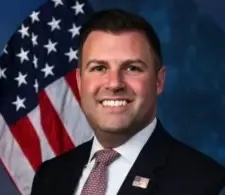
During a hearing titled "Balancing Careers and Care: Analyzing Innovative Methods for Paid Leave," Congressman Ryan Mackenzie, the Republican chair of the Subcommittee on Workforce Protections, emphasized that the US lacks a federal mandate for paid leave. Although the Family and Medical Leave Act (FMLA) delineates conditions for taking unpaid leave, there is no law guaranteeing paid leave.
“At present, there is no federal regulation that defines paid leave benefits,” Mackenzie stated, framing it as a personal matter as he shared his family's journey with young children and their dependence on his wife’s employer-provided leave. “Currently, my wife can care for our newborn daughter due to her company’s paid leave policy.”
Mackenzie referenced the “latest data from the Department of Labor,” revealing that “only 27 percent of private sector employees in the US have access to paid family leave through their employers.” This statistic underscored the discussion: despite being the world's largest economy, many workers cannot rely on paid leave.
A Democratic representative bluntly outlined the ramifications. He remarked that the United States is “one of the few affluent nations” that does not ensure paid family and medical leave for its workforce, leaving “over 100 million employees” uncertain about their ability to care for a new child, an ailing parent, or their personal health “without jeopardizing their job or financial stability.”
The lawmaker pointed out the inequities in access, noting that availability is “significantly inconsistent” for “low-wage and part-time workers,” and called on Congress to “establish a robust federal baseline” through “universal paid family leave.” He cautioned against “voluntary models” and “collaborations with private insurance companies” that yield “subpar quality and fail to enhance access meaningfully.”
Witnesses elucidated the complex landscape of paid leave in the US: a mix of state programs, private insurance options, and federal regulations that employers must navigate—an arrangement that even proponents acknowledge can baffle both workers and companies operating across state lines.
Julie Squire, representing the National Association of State Workforce Agencies, indicated that “13 states and the District of Columbia have instituted state paid family and medical leave.” She noted that the newest programs were launched in Minnesota and Delaware on January 1st, with Maine slated to implement benefits later this year.
Squire explained that state programs usually offer “partial wage replacement for a limited duration” for “medical needs for themselves or a loved one” or for bonding time with “a newborn or adopted child.” However, she pointed out the need for “greater inter-state coordination” due to varying rules, as basic eligibility criteria—like length of employment—“differ from one state to another.”
For individuals accustomed to national frameworks and centralized regulations, the decentralized US system can seem bewildering: the benefits accessible to a worker can hinge significantly on their geographic location, their employer, and the specific state's guidelines.
Adrienne Schweer from the Bipartisan Policy Center made the policy debate personal by recounting her experience with a high-risk pregnancy and her swift return to work at the Pentagon post-delivery. “I was drained from caring for a newborn, and barely recovered from childbirth,” she shared, mentioning that she had “very few days remaining” after utilizing sick and vacation days.
Schweer pointed out that “over 60 million Americans juggle work and caregiving daily,” including parents of young children, caretakers for elderly relatives, and “sandwiched” families addressing both needs. She asserted that parents desire “flexibility” and that “access to paid leave and affordable childcare allows them to remain in the workforce.”
Elyse Shaw from the Centre for Law and Social Policy urged Congress to broaden its scope, arguing that paid leave should extend beyond just parental leave. “Only a quarter of leaves under FMLA are for parental purposes, while over half are for medical reasons, and 1 in 5 pertains to caring for a family member with a serious health condition,” she explained. Shaw highlighted that “only one in four private sector employees has access to paid family leave via their employer, leaving 106 million” without that essential support.
Shaw also criticized a significant House proposal, H.R. 3089, asserting that “it does not sufficiently address the issues” and elaborating that “H.R. 3089 is essentially a paid leave grant program.” She warned that the bill lacks “job protection requirements,” which could deter many workers from seeking leave due to fear of retaliation.
From the employer's perspective, Greta Kessler, representing the Society for Human Resource Management, noted the strain on the workforce. “By 2025, nearly 70% of organizations are expected to face challenges in attracting full-time employees,” she stated, asserting that paid leave is now “a vital component of talent attraction and retention.”
However, Kessler acknowledged the complexities of administering paid leave across the US. “Mandatory programs are in place in 13 states plus Washington D.C., yet each has unique eligibility criteria, benefit structures, and administrative mandates,” she noted, adding that employers need to also comply with federal regulations like “FMLA” and “ADA.” She expressed concern that these differing regulations could lead to misuse, allowing individuals to “stack leaves,” making it difficult to detect fraud instead of utilizing them concurrently, which was the original intent.
Point of View
It's essential to recognize that the ongoing debate about paid leave in the United States reflects broader societal issues regarding family support and worker rights. The lack of a cohesive national policy puts millions at risk, highlighting the need for legislative action to ensure equity and security for all workers.
NationPress
13 Oct 2026
Frequently Asked Questions
What is the current status of paid leave in the US?
Currently, there is no federal law mandating paid family and medical leave in the US, leading to significant disparities among states and employers.
How many states have implemented paid leave programs?
As of now, 13 states and the District of Columbia have enacted paid family and medical leave programs.
Why is paid leave important for workers?
Paid leave is crucial for workers to balance family responsibilities, such as caring for newborns or sick relatives, without jeopardizing their job security or financial stability.
What are the main arguments against voluntary paid leave models?
Critics argue that voluntary models do not ensure equitable access and often result in lower quality benefits, leaving vulnerable workers without necessary support.
How can Congress improve the situation for workers regarding paid leave?
Congress can promote universal paid family leave by establishing a federal standard that guarantees access and job protection for all workers.