Pakistan debt crisis deepens as IMF injects $2.3 billion, China rolls over $2 billion loans
Synopsis
Pakistan's debt spiral deepened in 2025 with a $2.3 billion IMF lifeline and a Chinese loan rollover worth $2 billion — yet both are band-aids on a structural wound. Meanwhile, global LMIC debt hit an unprecedented $9.4 trillion, with the poorest nations facing their highest borrowing costs in decades, raising the spectre of cascading sovereign stress.
Key Takeaways
The IMF injected $2.3 billion into Pakistan in 2025 under its Extended Fund Facility (EFF) and Resilience and Sustainability Facility (RSF) .
China extended the maturity of $2 billion in existing loans to Pakistan in the same period.
External debt among low- and middle-income countries reached a record $9.4 trillion in 2025, rising 5.5 per cent year-on-year — the largest annual increase in four years.
IDA-eligible countries' external debt rose 8.1 per cent to $1.3 trillion ; low-income countries saw an 8.9 per cent jump to $262.4 billion .
Debt-servicing obligations rose for the fifth consecutive year , with the poorest nations bearing the highest borrowing costs in decades.
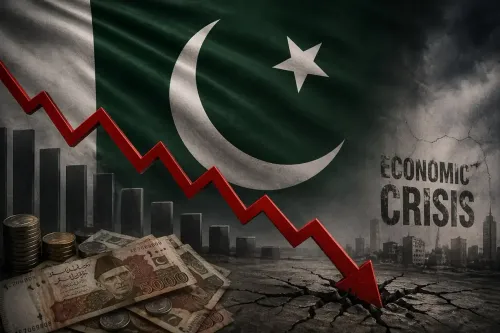
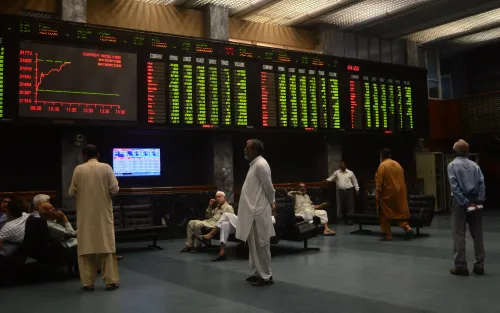
Pakistan's external debt burden intensified in 2025 as the International Monetary Fund (IMF) provided $2.3 billion in fresh financing under its Extended Fund Facility (EFF) and Resilience and Sustainability Facility (RSF), while China extended the maturity of $2 billion in existing loans to the country, according to a report by Bangkok-based research outlet Page 3 News. The dual intervention underscores the depth of Pakistan's fiscal fragility and its continued dependence on external creditors for economic survival.
Pakistan's Debt Within a Wider Global Crisis
Pakistan's predicament is not isolated — it unfolds against a backdrop of surging debt across the developing world. External debt among low- and middle-income countries (LMICs) reached an unprecedented $9.4 trillion in 2025, climbing 5.5 per cent year-on-year — the largest annual rise in four years, according to the report. The surge was driven by a combination of increased bond issuance, a weaker US dollar, and renewed investor appetite for lending to emerging economies.
Notably, the return of private capital to international markets came at a steep price. The world's poorest nations reportedly faced borrowing costs at their highest levels in decades, creating a paradox where greater access to credit simultaneously deepened long-term vulnerability.
Debt-Servicing Pressure Hits Five-Year High
Debt-servicing obligations rose for the fifth consecutive year, with no sign of plateauing. Countries eligible for financing from the International Development Association (IDA) faced an even sharper climb — their external debt rose 8.1 per cent to $1.3 trillion. Among low-income countries specifically, external debt jumped 8.9 per cent to $262.4 billion, the steepest increase since 2020.
These figures suggest that the countries with the most limited fiscal capacity are absorbing debt at the fastest rate — a structural imbalance that analysts warn could trigger fresh sovereign stress events in the near term.
Private Sector Borrowing Rises, But at a Cost
LMIC economies recorded growth of 5.1 per cent in private sector loans measured by Gross National Income (GNI). Stronger economic performance in several of these economies encouraged lenders to re-engage, and a number of governments continued borrowing despite relatively elevated interest rates, according to the report.
However, the report flags a critical asymmetry: countries with the least capacity to absorb additional debt are confronting the highest borrowing costs. The growing dependence on private financing has made debt structurally more expensive for IDA-eligible nations, raising questions about long-term debt sustainability.
What This Means for Pakistan's Economic Stability
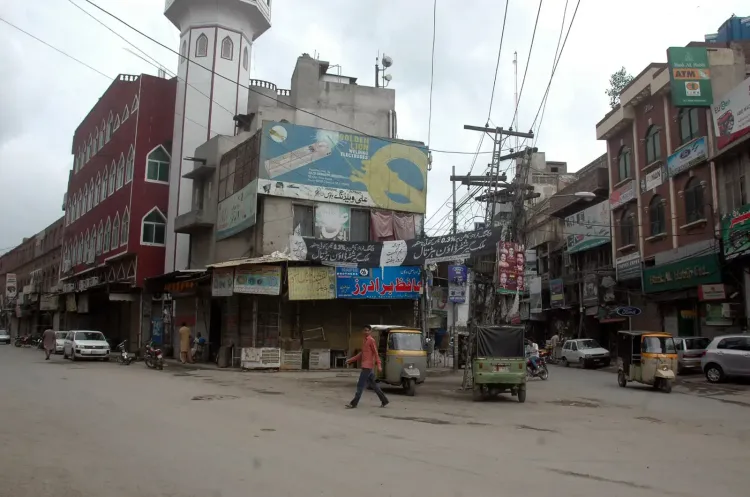
For Pakistan, the combination of IMF-led multilateral support and China's bilateral loan rollovers has prevented an outright default, but critics argue these measures merely delay structural adjustment rather than resolve underlying fiscal weaknesses. Pakistan's reliance on external financing — from both multilateral lenders and bilateral partners — reflects years of import-dependent growth, a narrow tax base, and recurring current account deficits.
This is the latest in a series of IMF engagements with Islamabad, which has historically struggled to implement the structural reforms attached to Fund programmes. The long-term trajectory, the report cautions, remains uncertain as rising repayment obligations and expensive private financing continue to pose serious challenges to economic stability.
Point of View
But they structurally entrench the very dependency they claim to address. Each rollover and fresh tranche buys time without demanding the tax and subsidy reforms that would reduce Pakistan's chronic current account vulnerability. More broadly, the $9.4 trillion LMIC debt figure masks a dangerous bifurcation: wealthier emerging markets are borrowing cheaply on revived investor confidence, while the poorest nations pay crisis-level rates for the same access. The global architecture for sovereign debt restructuring — still ad hoc and slow — has not kept pace with this divergence, and the next default cycle may arrive before it does.
NationPress
7 Nov 2026
Frequently Asked Questions
How much did the IMF provide to Pakistan in 2025 and under which programmes?
The IMF provided $2.3 billion to Pakistan in 2025 under two facilities — the Extended Fund Facility (EFF) and the Resilience and Sustainability Facility (RSF). Both programmes are aimed at strengthening the country's long-term economic stability, though past IMF engagements with Islamabad have faced challenges over reform implementation.
What did China do with its loans to Pakistan in 2025?
China extended the maturity of $2 billion in existing loans to Pakistan in 2025 rather than demanding repayment. This rollover effectively deferred Pakistan's repayment obligations, providing short-term relief without reducing the overall debt stock.
What is the current level of external debt among developing countries?
External debt among low- and middle-income countries reached a record $9.4 trillion in 2025, rising 5.5 per cent year-on-year — the steepest annual increase in four years. Among the poorest nations, borrowing costs are reportedly at their highest levels in decades.
Why are low-income countries facing higher borrowing costs despite more lending?
The return of private capital to international markets has benefited more creditworthy emerging economies disproportionately, while the poorest nations — often IDA-eligible — are forced to borrow at much higher rates. This asymmetry means greater access to credit is simultaneously increasing long-term debt vulnerability for the countries least equipped to manage it.
What are the risks of Pakistan's continued reliance on IMF and Chinese financing?
Critics argue that repeated IMF programmes and bilateral rollovers delay rather than resolve Pakistan's structural fiscal problems — a narrow tax base, persistent current account deficits, and import-dependent growth. Without deep structural reforms, rising debt-servicing obligations could force Pakistan back to external creditors in successive cycles.