Pakistan jailing, disappearing women who dare to speak out: Report
Synopsis
A media analysis by Italian journalist Francesca Marino reveals that Pakistan is turning the enforced-disappearance playbook it honed in Balochistan into a nationwide tool against women who speak out — from unnamed Baloch students to Imran Khan's own sisters. The re-arrest of human rights lawyer Imaan Mazari-Hazir hours after the Supreme Court granted her bail encapsulates the central finding: judicial orders mean nothing when the security apparatus decides otherwise.
Key Takeaways
Pakistan's Balochistan government declared nine women from Gwadar , Jiwani , and Turbat 'highly wanted' on 27 August , offering rewards of up to Rs 1.5 million — with no formal charges filed.
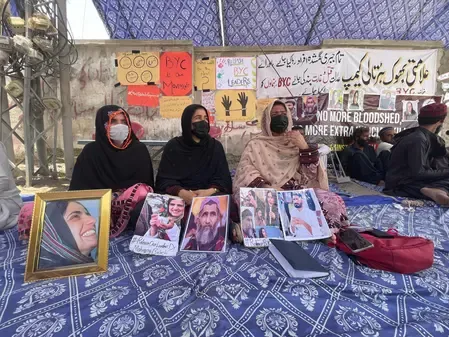
Safia Baloch , a 20-year-old student, and a 17-year-old named Aqsa (who vanished with her father) are among the women reportedly disappeared in Balochistan.
Former PM Imran Khan 's sisters — Aleema Khan , Uzma Khan , and Noreen Niazi — were given 30-day detention orders in Lahore ahead of a protest, without any court-established crime.
Human rights lawyer Imaan Mazari-Hazir was re-arrested with her husband within hours of the Supreme Court granting them bail.
Analyst Francesca Marino argues Pakistan's counter-insurgency tools have shifted from peripheral conflicts to 'an entirely domestic political application.'
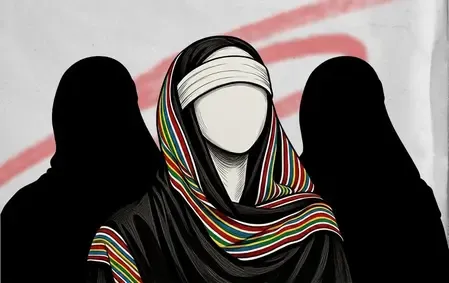
Pakistan is systematically deploying enforced disappearances and detention without charge — tools long used against dissidents in Balochistan — against women across the country who refuse to be silenced, according to an analysis published by Parrhesia News. The pattern, documented on 4 October 2026, spans Baloch students, human rights lawyers, and the sisters of former Prime Minister Imran Khan.
The Balochistan Crackdown
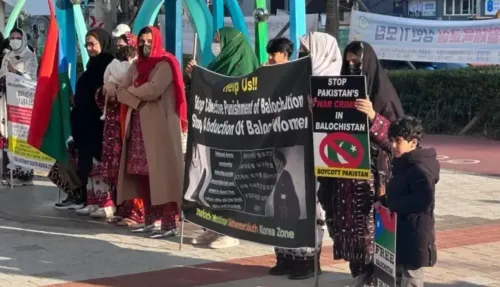
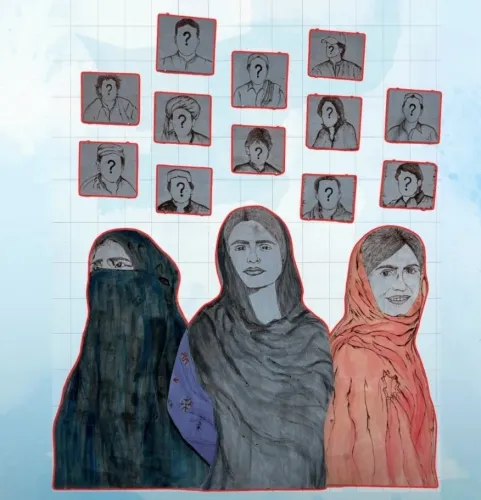
The most documented cases emerge from Balochistan. On 27 August, the provincial government declared nine women from Gwadar, Jiwani, and Turbat 'highly wanted', offering rewards of up to Rs 1.5 million for information leading to their capture. Authorities linked them to a group labelled 'Fitna al-Hindustan' but provided no verifiable evidence and no indication that any formal charges had been filed.
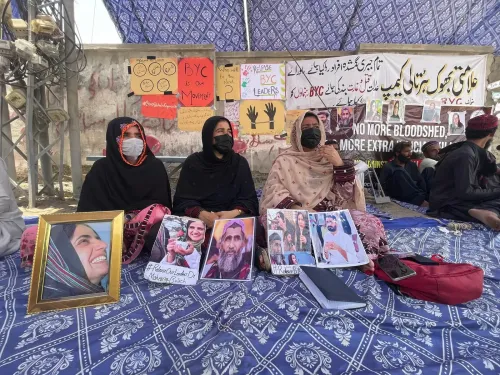
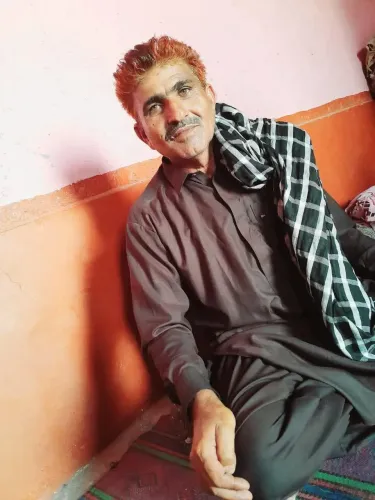
Before this announcement, several women had already reportedly disappeared. Safia Baloch, a 20-year-old student, was allegedly taken from Quetta. A 17-year-old identified as Aqsa vanished along with her father in Khuzdar. Three other women were reportedly detained at a Frontier Corps checkpoint and have not been seen since.
Italian journalist Francesca Marino, writing in an analysis for Parrhesia News, described a deliberate sequencing of state action: 'First women vanish; then the state explains why women should be feared,' she wrote. She further argued that the 'Fitna al-Hindustan' designation deliberately blurs the line 'between combatant, activist, lawyer, relative, and suspect,' allowing authorities to label any protester a 'facilitator' and any missing woman a 'hidden militant.'
Beyond Balochistan: Imran Khan's Sisters Detained
According to the report, the same pattern of pre-emptive, uncharged detention is now being applied outside Balochistan. Aleema Khan, Uzma Khan, and Noreen Niazi — the sisters of former Prime Minister Imran Khan — were issued 30-day detention orders in Lahore ahead of a protest demanding their brother's release from prison.
The report was explicit about the legal basis for these detentions, or the lack thereof: 'They were not detained because a court had established that they had committed a crime. They were detained because the government feared what they might persuade others to do in the future,' the analysis stated.
Courts Overruled by Security Apparatus
The case of human rights lawyer Imaan Mazari-Hazir illustrates what the report characterises as a structural breakdown in judicial authority. Mazari-Hazir, who represents families of forcibly disappeared persons, was re-arrested — along with her husband — within hours of the Supreme Court granting them bail.
'A court may order a prisoner released; the security apparatus will decide whether the order has any practical meaning,' the report observed. This episode, critics argue, signals that judicial remedies are being rendered ineffective when they conflict with the security establishment's priorities.
A Broader Shift in State Practice
Marino's analysis frames the developments as a qualitative shift in how Pakistan's state apparatus operates: 'The method long associated with and justified by Pakistan's peripheral conflicts has now an entirely domestic political application,' she wrote. What was once presented as a counter-insurgency tool in peripheral provinces is, according to the report, now being used as routine political management across the country.
This comes amid sustained international scrutiny of Pakistan's human rights record, with rights organisations having long documented enforced disappearances in Balochistan. The extension of these practices to more visible political figures and urban centres marks a significant — and, critics argue, deeply troubling — escalation. How Pakistani civil society, the judiciary, and the international community respond in the coming weeks will be closely watched.
Point of View
Once rationalised as Balochistan-specific counter-insurgency, are now being deployed against politically inconvenient women in Lahore and beyond. The re-arrest of Imaan Mazari-Hazir hours after a Supreme Court bail order is the sharpest data point — it suggests the security apparatus no longer feels compelled to even observe a delay before defying judicial authority. The 'Fitna al-Hindustan' label functions as a legal black hole: it requires no evidence, triggers no charge sheet, and transforms any woman into a suspect by association. International pressure on Pakistan's human rights record has historically produced limited results; the extension of these methods to high-profile political families tests whether that calculus is about to change.
NationPress
4 Oct 2026
Frequently Asked Questions
What is Pakistan accused of doing to women activists and dissenters?
Pakistan is reportedly using enforced disappearances and detention without charge against women who speak out — a set of practices long documented in Balochistan and now allegedly extended to political figures elsewhere, including the sisters of former Prime Minister Imran Khan. A media analysis by Italian journalist Francesca Marino outlines several specific cases, including women declared 'highly wanted' without formal charges.
Who are the women declared 'highly wanted' in Balochistan?
On 27 August, Balochistan's provincial government declared nine women from Gwadar, Jiwani, and Turbat 'highly wanted', offering rewards of up to Rs 1.5 million. The government linked them to a group labelled 'Fitna al-Hindustan' but provided no verifiable evidence and filed no formal charges.
Why were Imran Khan's sisters detained?
Aleema Khan, Uzma Khan, and Noreen Niazi — sisters of former Prime Minister Imran Khan — were issued 30-day detention orders in Lahore ahead of a protest demanding his release. According to the report, no court had established that they had committed a crime; they were detained pre-emptively over feared political mobilisation.
What happened to human rights lawyer Imaan Mazari-Hazir?
Imaan Mazari-Hazir, a lawyer who represents families of forcibly disappeared persons, was re-arrested along with her husband within hours of the Supreme Court granting them bail. The episode is cited in the report as evidence that judicial orders are being overridden by Pakistan's security apparatus.
Who authored the analysis and where was it published?
The analysis was written by Italian journalist Francesca Marino and published in Parrhesia News. She argues that Pakistan's enforced-disappearance methods, once justified as tools of peripheral counter-insurgency, have now acquired 'an entirely domestic political application.'