Pakistan violent extremism surges 38% in August 2026, policy gaps persist
Synopsis
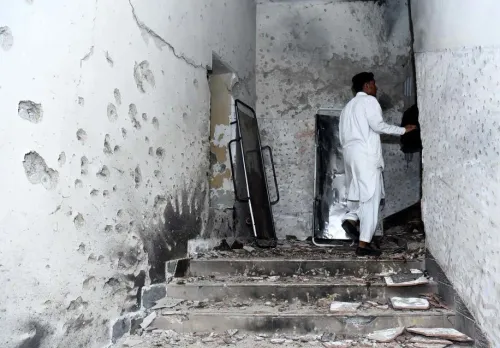
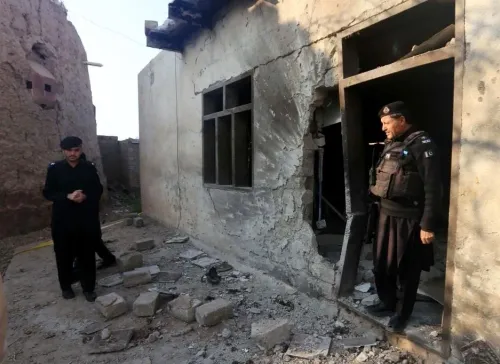
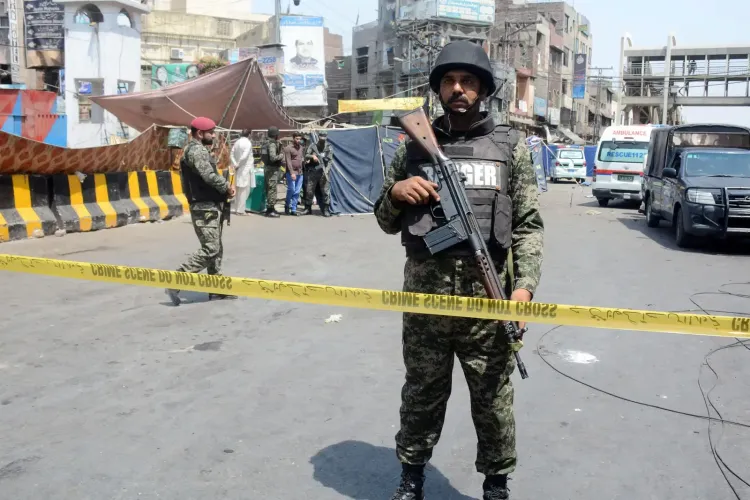
Pakistan logged 199 militant attacks in August 2026 alone — a 38% monthly spike — even as its National Policy on Violent Extremism, approved in late 2024, draws fire for offering little beyond its predecessors. Analysts warn the country is trapped in a cycle of policy announcements without implementation, and that militant groups once cultivated as proxies are now turning against the state itself.
Key Takeaways
Pakistan recorded 5,397 terrorism incidents in 2025 , with PICSS logging 1,066 militant attacks .
Attacks continued rising in 2026 : 118 in June, ~99 in July, and 199 in August — a 38% increase .
NACTA's National Policy on Violent Extremism (NPVE) , approved December 2024 , faces criticism over implementation failures.
Security analyst Muhammad Amir Rana called for reform of existing institutions rather than creation of new ones.
Reports link Pakistan's crisis to historical use of militant proxies , weak governance, and ideological radicalisation. 'Holistic Education' targeting teenagers has been proposed as a preventive tool against radicalisation.
Pakistan continues to face an intensifying threat from violent extremism, with militant attacks rising sharply through 2026 even as the country's counter-terrorism policy framework struggles with persistent implementation failures, according to a report published in Pakistan's Daily Times.
Alarming Rise in Militant Attacks
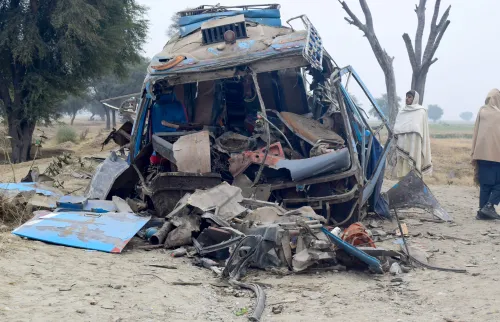
Government figures recorded 5,397 incidents of terrorism in 2025, while the Pakistan Institute for Conflict and Security Studies (PICSS) documented 1,066 militant attacks during the same period. The violence has shown no sign of abating in 2026, with 118 attacks in June, approximately 99 in July, and a steep 199 in August — representing a 38 per cent increase month-on-month. These figures, according to the report, underscore the continued high frequency of violent extremist incidents and the urgent need for stronger, more sustained countermeasures.
Pakistan's Counter-Terrorism Policy Under Scrutiny
The most recent formal response from Pakistan's National Counter Terrorism Authority (NACTA) was the National Policy on Violent Extremism (NPVE), approved in December 2024 and publicly unveiled in March 2025. The policy faced sharp criticism from political parties at launch, particularly over concerns about whether it could be meaningfully implemented on the ground.
Pakistani security analyst and counterterrorism expert Muhammad Amir Rana argued that the NPVE was not significantly different from earlier policies. He criticised the decision to establish a new institution without first addressing the shortcomings in existing structures, calling instead for serious implementation and reform of institutions already in place, according to the report.
The Policy-Implementation Gap
Citing an analysis by the S. Rajaratnam School of International Studies (RSIS), the report highlighted that Pakistan's recurring failure to translate counter-terrorism policies into effective ground-level action exposes a critical gap in its current framework. The analysis questioned whether Pakistan could close this gap through preventive systemic reforms and immediate field-level implementation — with or without the creation of new institutions that would require additional time and resources.
This comes amid a broader pattern: critics and researchers have repeatedly flagged that Pakistan has cycled through multiple counter-extremism strategies since the 2000s without achieving a durable decline in attack frequency.
Role of Education in Countering Radicalisation
The report pointed to 'Holistic Education' as one instrument that could help bridge the implementation gap. It described the approach as bringing together 'head, hand, and heart' — the idea that education must shape not only cognitive intelligence but also character and life skills.
'If this space is not filled with proper education, it will be vulnerable to being filled by other narratives. Therefore, this is where Holistic Education plays a role by addressing the four aspects — emotional, social, intellectual, and even spiritual — within children that are necessary to counter radical thought in advance,' the report noted. The focus on teenagers and young children reflects concern over ideological formation during formative years.
Historical Roots of Pakistan's Terrorism Crisis
A separate report in Global Kashmir traced Pakistan's ongoing struggle with terrorism to a confluence of historical strategic decisions, evolving militant ecosystems, ideological radicalisation, governance deficiencies, and regional instability. It noted that the cultivation or selective tolerance of militant organisations has produced severe and largely unintended security consequences.
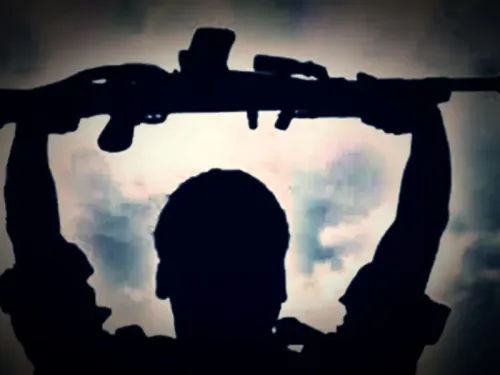
'The use of militant proxies as instruments of strategic influence, combined with weak governance, ideological radicalisation, and regional geopolitical rivalries, has created an environment in which terrorism has become deeply entrenched,' the report stated. It observed that militant groups have increasingly turned against the very state that once viewed some of them as strategic assets — a well-documented blowback dynamic that analysts have warned about for years.
With the August 2026 attack count already the highest in recent monthly data, international observers and domestic analysts alike will be watching whether Pakistan's next policy move addresses root causes or repeats the cycle of announcement without execution.
Point of View
Louder. The NPVE is at least the third major counter-extremism policy framework since the National Action Plan of 2015, and each cycle has ended with implementation falling short of announcement. What is distinctive now is the scale of the blowback: groups once strategically tolerated have become the primary threat. Until Islamabad builds a credible mechanism that ties policy milestones to measurable outcomes — and accepts independent verification — the gap between policy paper and ground reality will keep widening, and the monthly attack count will keep rising.
NationPress
18 Sept 2026
Frequently Asked Questions
How many militant attacks did Pakistan record in August 2026?
Pakistan recorded 199 militant attacks in August 2026, according to reports — a 38 per cent increase compared to the preceding months. This followed approximately 99 attacks in July and 118 in June of the same year.
What is Pakistan's National Policy on Violent Extremism (NPVE)?
The NPVE is Pakistan's latest counter-terrorism policy initiative, approved by NACTA in December 2024 and publicly launched in March 2025 . It faced immediate criticism from political parties and analysts, who argued it differed little from earlier policies and risked repeating past implementation failures.
Why has Pakistan's counter-terrorism policy been criticised?
Critics, including security analyst Muhammad Amir Rana , argue that Pakistan keeps creating new institutions and policies without addressing shortcomings in existing ones. An RSIS analysis cited in the report highlighted a persistent gap between policy formulation and effective on-ground implementation.
What role does education play in countering extremism in Pakistan?
Reports have proposed 'Holistic Education' — targeting children's emotional, social, intellectual, and spiritual development — as a preventive tool against radicalisation. The argument is that if formative ideological space is not filled with sound education, it becomes vulnerable to extremist narratives.
What are the historical roots of Pakistan's terrorism problem?
According to a report in Global Kashmir , Pakistan's terrorism crisis stems from historical strategic decisions including the cultivation of militant proxies, combined with weak governance, ideological radicalisation, and regional geopolitical rivalries. Many of these groups have since turned against the Pakistani state itself.