Balochistan displacement: Rights body slams Pakistan over 30,000 people eviction order in Kalat

Synopsis
Pakistani authorities have ordered roughly 30,000 people — 5,000 families — to abandon their ancestral homes in Balochistan's Shoor Paarod by 30 October ahead of a planned military operation. Rights body Paank says the mass eviction, combined with alleged raids and assaults in Kech district, represents a pattern of systematic disregard for Baloch civilian rights.
Key Takeaways
Paank (BNM's rights wing) condemned a Pakistani government order forcing approximately 30,000 people ( 5,000 families ) from Shoor Paarod , Kalat district, Balochistan .
The evacuation deadline is set for 30 October , ahead of a planned military operation .
Pakistani authorities cited the presence of armed fighters and classified the land as government property to justify the order.
Pakistani security forces separately stand accused of assaulting women and children and confiscating valuables during raids in Gomazi and Sarnkan , Kech district .
The affected families in Kech include the relatives of Adnan Baloch and Adham Baloch , both previously reportedly subjected to enforced disappearance.
Rights groups are calling for independent oversight and immediate intervention before the deadline.
Paank, the Human Rights Department of the Baloch National Movement (BNM), on Tuesday, 27 October strongly condemned an order by Pakistani authorities directing approximately 5,000 families — around 30,000 people — to vacate their ancestral homes in the Shoor Paarod region of Balochistan's Kalat district by 30 October, ahead of a planned military operation. The rights body said the forced evacuation raises grave concerns over civilian protection, indigenous land rights, and cultural identity.
The Evacuation Order and Its Scale
According to Paank, Pakistani authorities issued the evacuation order citing the presence of armed fighters in the area and claiming that the land in question is government property. The organisation has challenged both the justification and the urgency of the directive, noting that the 30 October deadline gives affected communities little time to respond or seek legal redress.
'These stated security concerns do not, in themselves, justify arbitrary displacement or absolve authorities of their obligations towards civilians. The scale of the order and the short deadline demand urgent scrutiny, transparency and accountability,' Paank stated.
What the Rights Body Said
Paank described the displacement as an assault on the foundational identity of Baloch communities. 'Ancestral land is not merely territory; it is the foundation of a people's identity, history and collective existence. For generations, Baloch have lived, worked, raised families and buried their dead on these lands. Forcibly removing people from territories with which their lives, heritage and traditions are deeply intertwined risks inflicting damage that extends far beyond the loss of shelter,' the organisation said.
The rights body further questioned what guarantees authorities could offer in relocation camps, pointing out that these communities have already endured prolonged deprivation and lack of basic facilities in their own homes. 'If basic facilities have remained unavailable to these communities in their own homes, what guarantees can authorities possibly offer that those same people will receive adequate shelter, heating, healthcare, clean water and sanitation in relocation camps?' Paank asked.
Allegations of Assault in Kech District
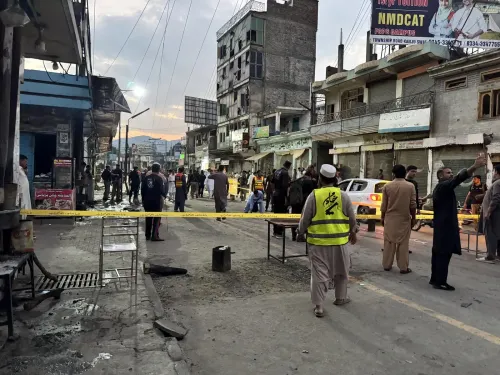
In a separate but related development, Pakistani security forces have been accused of assaulting women and children and confiscating mobile phones and other valuables during raids on homes in Gomazi and Sarnkan in Balochistan's Kech district. According to local sources cited by The Balochistan Post, security personnel raided several houses in Gomazi, Tump tehsil, on Sunday night and allegedly assaulted women before taking away mobile phones and valuables.
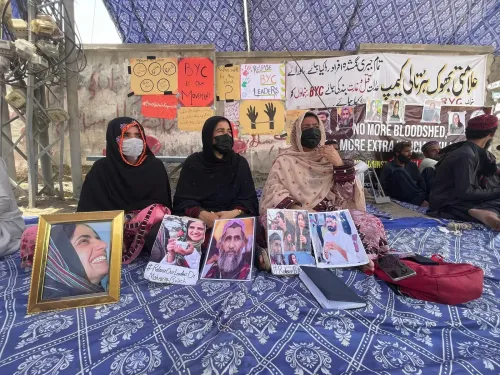
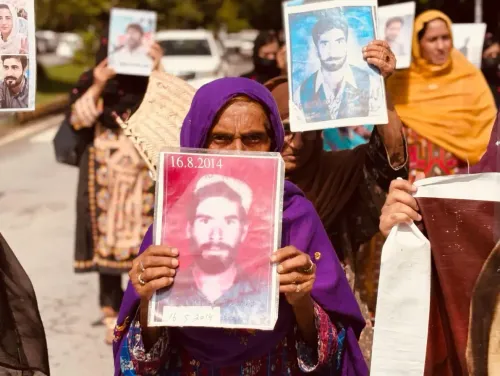
Reports further indicate that the family home of two civilians — Adnan Baloch and Adham Baloch — in Sarnkan, both of whom had previously been reportedly subjected to enforced disappearance, was searched. Women and children were allegedly subjected to violence and mistreatment during questioning. These accounts have not been independently verified, and Pakistani authorities have not publicly responded to the allegations at the time of reporting.
Broader Pattern of Concern
This comes amid longstanding international scrutiny over the treatment of Baloch communities in Pakistan. Rights organisations have for years documented allegations of enforced disappearances, targeted killings, and suppression of dissent in Balochistan — Pakistan's largest but least developed province. The BNM and its affiliated rights wing Paank have been among the most vocal critics of Pakistani security operations in the region, though Islamabad has consistently maintained that its operations target militant groups and not civilians.
Critics argue that large-scale displacement operations — regardless of security rationale — disproportionately harm civilian populations, many of whom have no ties to armed groups. The international community, including the United Nations, has established clear obligations under international humanitarian law requiring states to ensure civilian safety and basic services even during active military operations.
With the 30 October deadline fast approaching, the fate of approximately 30,000 people in Shoor Paarod remains deeply uncertain, and rights groups are calling for immediate intervention and independent oversight.
Point of View
000 people on a three-day notice is not just a humanitarian concern — it is a stress test of Pakistan's legal obligations under international law. Islamabad's standard defence that operations target militants, not civilians, rings hollow when entire communities are evicted wholesale with no independent oversight. What makes this pattern particularly troubling is its recurrence: Balochistan has seen repeated cycles of military operations, mass displacement, and allegations of abuse, with near-zero accountability. Until Pakistan allows independent monitoring of such operations, claims of 'security necessity' will continue to be treated as pretexts by the international community — and rightly so.
NationPress
27 Oct 2026
Frequently Asked Questions
Why are 30,000 people being displaced from Balochistan's Kalat district?
Pakistani authorities have ordered approximately 30,000 people — around 5,000 families — to leave the Shoor Paarod region in Kalat district by 30 October ahead of a planned military operation. Authorities cited the presence of armed fighters and described the land as government property, though rights body Paank has challenged both justifications.
Who is Paank and why has it condemned the eviction order?
Paank is the Human Rights Department of the Baloch National Movement (BNM). It condemned the order because it says the mass displacement violates civilian protection norms, indigenous land rights, and the cultural identity of communities that have lived on the land for generations.
What are the allegations from Kech district in Balochistan?
Pakistani security forces have been accused of raiding homes in Gomazi and Sarnkan in Kech district, allegedly assaulting women and children and confiscating mobile phones and valuables. The searches reportedly targeted the families of two men — Adnan Baloch and Adham Baloch — who had previously been subjected to enforced disappearance. These accounts have not been independently verified.
What is the deadline for the evacuation and what happens next?
The evacuation deadline set by Pakistani authorities is 30 October 2026. Rights groups are calling for immediate independent oversight and international intervention. Pakistani authorities have not publicly responded to Paank's condemnation at the time of reporting.
How does this fit into the broader situation in Balochistan?
Balochistan has a long history of military operations accompanied by allegations of enforced disappearances, civilian displacement, and suppression of dissent. Rights organisations, including Paank and international bodies, have repeatedly raised concerns about civilian harm in the province, with Pakistani authorities consistently maintaining that operations are directed at militant groups.