Urgent Reforms Needed as Pakistan Railways Faces Structural Crisis

Synopsis
As Pakistan Railways struggles with governance issues, ageing infrastructure, and dwindling public trust, experts call for immediate reforms to revitalize this critical national institution. The stark decline in freight share and dependency on government support underscores the urgency for an overhaul.
Key Takeaways
Pakistan Railways is in a severe structural crisis.
Revenue has increased significantly, but costs exceed income.
Freight share has plummeted from 75% to less than 5%.
Operational challenges include slow train speeds and safety concerns.
Experts advocate for urgent reforms and a clearer institutional model.
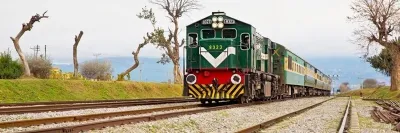
New Delhi, April 12 (NationPress) Pakistan Railways, previously seen as a vital element of national cohesion, is currently facing a profound structural crisis characterized by ineffective governance, outdated infrastructure, and a declining public confidence, according to a report.
Recent statistics from both government and industry, referenced by The News International, indicate that the railways' revenue has surged from approximately Rs 60 billion in 2021-22 to more than Rs 93 billion in 2024-25, demonstrating a growth of nearly 50 percent.
This increase is attributed to enhanced operations, outsourcing strategies, and a partial revival of services.
However, when evaluating expenses, the financial scenario remains challenging. Annual expenditures are estimated to be around Rs 120 billion, resulting in a deficit of Rs 30-35 billion.
Despite a modest surplus of approximately Rs 2 billion for 2024-25, this figure does not account for pension obligations and long-term infrastructure expenses, as noted in the report.
The system continues to depend heavily on state support, with federal subsidies approximated at Rs 40-50 billion each year, the report further states.
The reduction in freight share highlights deeper inefficiencies. From transporting 75 percent of the nation’s freight in 1970, Pakistan Railways now manages less than 5 percent, as road transport has taken the lead in logistics.
This transition has resulted in increased logistics costs, estimated at 14-18 percent of GDP, compared to 8-10 percent in more efficient economies.
Globally, freight serves as the primary revenue source for railways, yet in Pakistan, it contributes only around Rs 30 billion.
Operational hurdles exacerbate the crisis. Passenger trains run at average speeds of 50-65 km/h, while freight trains are even slower due to outdated tracks and a reliance on manual signaling.
Safety issues remain a concern, with 95 incidents reported in 2025 and over 3,000 of the country’s 7,000 level crossings remaining unmanned.
Experts contend that Pakistan Railways suffers from a vague institutional model, functioning neither as a fully commercial entity nor as an optimized public utility.
Comparisons with international systems reveal this disparity. The UK separates infrastructure from operations to encourage competition and efficiency, whereas India has bolstered its unified public network through electrification and dedicated freight corridors.
In contrast, Pakistan remains entrenched in a hybrid system that has led to inefficiencies and policy drift, the report concludes.
Point of View
Which once facilitated connectivity and trade, now requires a comprehensive overhaul to restore public confidence and operational efficiency.
NationPress
19 Sept 2026
Frequently Asked Questions
What is the current financial status of Pakistan Railways?
Pakistan Railways has reported a significant increase in revenue, rising from Rs 60 billion in 2021-22 to over Rs 93 billion in 2024-25. However, it faces a deficit of Rs 30-35 billion due to annual costs estimated at Rs 120 billion.
How has the freight share of Pakistan Railways changed?
The freight share has drastically declined from 75% in 1970 to less than 5% today, as road transport has become the dominant mode of logistics in the country.
What operational challenges does Pakistan Railways face?
Passenger trains operate at average speeds of 50-65 km/h, while freight trains are slower due to outdated tracks and manual signaling, leading to significant operational inefficiencies.
What safety concerns are associated with Pakistan Railways?
In 2025 alone, 95 incidents were reported, and over 3,000 level crossings remain unmanned, raising serious safety issues.
What solutions have been proposed for Pakistan Railways?
Experts suggest a clear institutional model that separates infrastructure from operations, similar to practices in the UK and India, to enhance efficiency and competition.