Pakistan: Paank condemns enforced disappearance of four Baloch civilians
Synopsis
Rights body Paank has formally documented the enforced disappearances of four Baloch individuals — including a student allegedly taken for the third time — allegedly by Pakistani security forces and intelligence agencies between late March and late July 2025. The cases span Gwadar, Barkhan, and Quetta, and point to a pattern that international rights groups have long flagged but Islamabad has yet to meaningfully address.
Key Takeaways
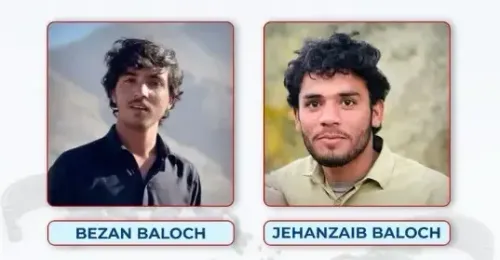
Paank , the human rights body of the Baloch National Movement , condemned the enforced disappearances of four Baloch individuals on 26 July 2025 .
Arif (labourer, Gwadar) and Atiq Khetran (Barkhan) were allegedly disappeared on 24 July and 21 July respectively.
Meeran Baloch , a 25-year-old student from Kharan, was reportedly disappeared for the third time on 23 July from Quetta .
Nasir Baloch , an 18-year-old student from Quetta, was allegedly disappeared on 27 March ; reports implicate Pakistani intelligence agencies and the CTD .
Paank demanded immediate disclosure of whereabouts, civilian court production, and independent investigations into all cases.
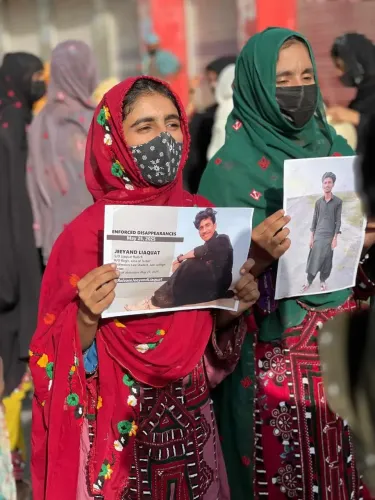
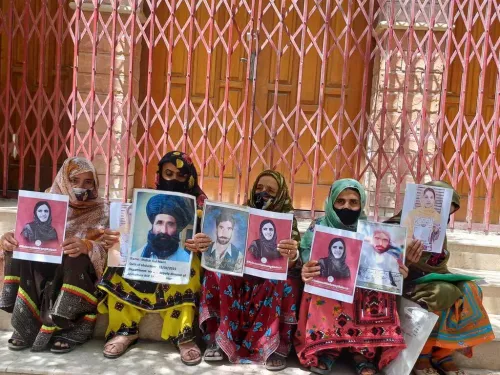
Paank, the human rights department of the Baloch National Movement, on Sunday, 26 July condemned the enforced disappearances of four Baloch individuals, allegedly carried out by Pakistani security forces and intelligence agencies. The rights body cited documented cases and called the incidents serious violations of international human rights law.
Key Disappearances Documented
Arif, son of Yaseen, a labourer from Dasht Sholig, was reportedly forcibly disappeared on 24 July from Palliri in Gwadar. According to Paank, reports suggest the involvement of Pakistan's Military Intelligence (MI).
Atiq Khetran, son of Rafiq, a resident of Barkhan, was allegedly taken from his home on 21 July by Pakistani state security forces, according to information received by the rights body.
Meeran Baloch, son of Gul Khan, a 25-year-old student from Kulaan in Kharan, was reportedly forcibly disappeared for the third time on 23 July at around 7 pm from Basheer Chowk in Quetta. Paank noted that reports suggest the involvement of Pakistan's Counter-Terrorism Department (CTD).
Nasir Baloch, son of Mehrab Khan, an 18-year-old student and resident of Sariab Road in Quetta, was allegedly disappeared on 27 March at around 2 am from Sariab Road. Reports, according to Paank, point to the involvement of Pakistani intelligence agencies and the CTD.
What the Rights Body Said
Paank's statement was unequivocal in its condemnation. “Enforced disappearance is a serious violation of international human rights law, depriving individuals of their liberty while placing them outside the protection of the law. Authorities must immediately disclose the fate and whereabouts of all disappeared persons, ensure their safety, and hold those responsible accountable through independent and impartial investigations,” the organisation stated.
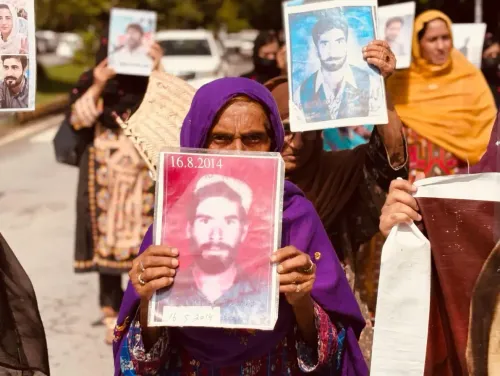
Notably, the case of Meeran Baloch marks his third alleged enforced disappearance, underscoring what rights groups describe as a pattern of repeat targeting of individuals from Balochistan.
Demands Placed on Pakistani Authorities
Paank called on the Pakistan government to immediately reveal the fate and whereabouts of all four individuals, ensure they are either released or promptly produced before a competent civilian court, and conduct independent, transparent, and effective investigations into the alleged crimes.
“Pakistan must uphold its obligations under international human rights standards by ending the practice of enforced disappearances and ensuring truth, justice, and reparations for victims and their families,” Paank added.
Broader Context
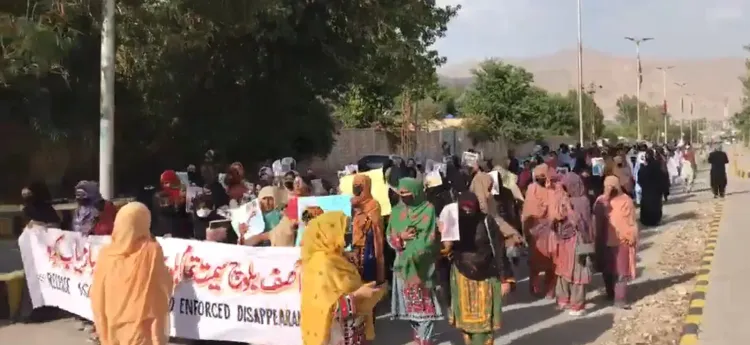
Enforced disappearances in Balochistan have been a long-running concern raised by international human rights organisations, including Amnesty International and the United Nations. Pakistani authorities have consistently denied systematic involvement, but rights groups argue that the documented frequency and scale of such cases point to a structural problem. This condemnation comes amid continued unrest and civil society pressure over the treatment of Baloch communities across Pakistan.
With four new cases now formally documented by Paank, pressure on Islamabad to respond to international scrutiny is likely to intensify in the days ahead.
Point of View
Barkhan, and Quetta — is not incidental; it reflects a systematic pattern that Paank and other rights groups have been cataloguing for years. What is striking here is the case of Meeran Baloch, allegedly disappeared for the third time, which suggests that even prior international attention on specific individuals has not deterred the practice. Pakistan's failure to produce credible accountability mechanisms leaves it exposed to escalating scrutiny at the UN Human Rights Council, where its record on Balochistan is an annual flashpoint. The real question is not whether these disappearances occurred, but whether any domestic institution in Pakistan has either the independence or the will to investigate them.
NationPress
27 Jul 2026
Frequently Asked Questions
What is an enforced disappearance, and why is it a human rights violation?
An enforced disappearance occurs when state agents detain a person and then deny knowledge of their fate or whereabouts, placing the individual outside legal protection. It is prohibited under international human rights law, including the UN Declaration on the Protection of All Persons from Enforced Disappearance.
Who is Paank, and what authority does it have?
Paank is the human rights department of the Baloch National Movement, a civil society organisation that documents alleged abuses against Baloch communities in Pakistan. While it has no legal enforcement power, its documented cases are frequently cited by international rights bodies and UN mechanisms.
Which Pakistani agencies are implicated in these disappearances?
According to Paank, reports suggest the involvement of Pakistan's Military Intelligence (MI) in the Gwadar case, and the Counter-Terrorism Department (CTD) in the disappearances of Meeran Baloch and Nasir Baloch. Pakistani authorities have not publicly confirmed or denied these specific allegations.
What has Paank demanded from the Pakistani government?
Paank has called on Pakistani authorities to immediately disclose the fate and whereabouts of all four individuals, ensure they are released or produced before a civilian court, and conduct independent, transparent investigations. It has also demanded accountability for those responsible.
Is this an isolated incident or part of a broader pattern in Balochistan?
Rights groups and international organisations have documented hundreds of alleged enforced disappearances in Balochistan over the past two decades. The case of Meeran Baloch, reportedly disappeared for the third time, is cited by Paank as evidence of a persistent and targeted practice rather than isolated incidents.