Is Pakistan Facing Challenges in Providing Basic Food and Education?
Click to start listening
Synopsis
Pakistan is facing a dire situation as families struggle to afford food and education. A recent report reveals alarming trends in household spending, with a significant reallocation of funds towards living costs. Understanding this crisis is crucial for addressing the urgent needs of the population.
Key Takeaways
- Households are reallocating funds from food to housing and utilities.
- Food insecurity has risen significantly over recent years.
- Education costs are being borne primarily by families.
- Approximately 20 million children are not receiving formal education.
- Public investment in education is critical for future growth.
Islamabad, Jan 25 (NationPress) Pakistan is encountering significant challenges in affording basic necessities such as food and education. A comparative analysis spanning 20 years reveals a notable shift in household spending, with families reallocating funds primarily to cover living expenses instead of food, as highlighted by a recent survey conducted by Gallup Pakistan.
Data from the Household Integrated Economic Survey (HIES) indicates that the proportion of household income spent on food has decreased from 43 percent to 37 percent between 2005 and 2025. In contrast, expenditures on housing and utilities have surged from 15 percent to a staggering 25 percent of household budgets, according to an editorial in The News International.
The editorial states, "Gallup analysis reveals that, when considering stagnant real incomes and reduced food quantities, this trend likely signifies households reducing food consumption to manage escalating fixed costs, such as housing and utilities, rather than indicating that food is becoming more affordable. Other analyses corroborate that Pakistanis are indeed cutting back on food consumption."
The HIES 2024-25 survey findings show that the number of individuals experiencing moderate-to-severe food insecurity has risen from one in six to one in four between 2018-19 and 2024-25, making survival increasingly challenging for residents, with future prospects appearing grim.
According to the Institute of Social and Policy Science (I-SAP)’s 15th annual report on Public Financing of Education, families now bear the brunt of educational expenses, marking a historic first. Household spending constitutes PKR 2.8 trillion of the total PKR 5.03 trillion education cost, while the public sector contributes PKR 2.23 trillion, as detailed in the editorial.
Household expenditures include PKR 1.31 trillion for private school fees, PKR 613 billion on tuition and shadow education, and PKR 878 billion in miscellaneous costs. This disparity arises from a preference for private education amidst significant concerns regarding the adequacy of the public education system.
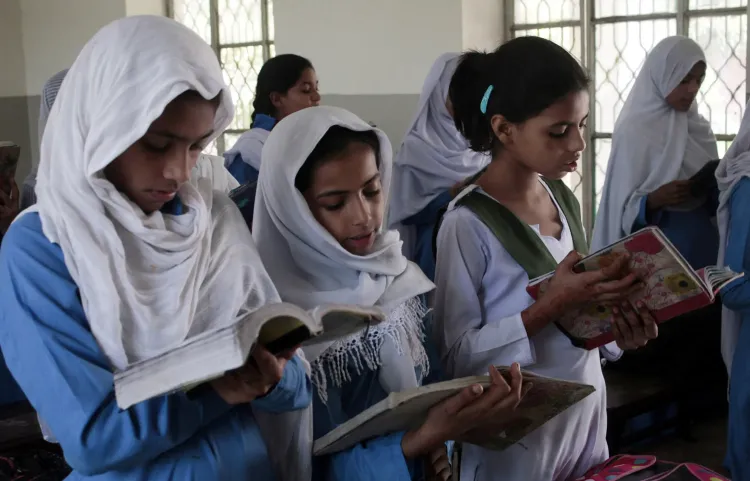
With approximately 20 million children out of school, it seems only those who can afford private education and tutoring will gain educational access in Pakistan, as per the editorial in The News International. Education should not be viewed as a luxury in countries that aspire to thrive and compete in the 21st century. Without increased public investment in education, Pakistan risks failing to develop the necessary workforce for the digital age and improve its citizens' living standards.
Point of View
We must prioritize the basic needs of our citizens, ensuring that food and education remain accessible for all. It is imperative that we advocate for increased public investment in these sectors to foster a brighter future for our children and communities.
NationPress
25/01/2026
Frequently Asked Questions
What is causing the shift in household spending in Pakistan?
The shift is largely due to rising living costs, particularly in housing and utilities, which has forced families to cut back on food expenditures.
How many children are out of school in Pakistan?
Approximately 20 million children remain out of school, highlighting a severe educational crisis.
What percentage of household income is spent on food?
The share of household income spent on food has decreased from 43% to 37% over the past 20 years.
What is the impact of private education costs on families?
Families are now responsible for the majority of educational expenses, leading to increased financial strain, particularly for those opting for private schooling.
Why is public investment in education critical for Pakistan?
Increased public investment is essential for building human capital, essential for competing in the digital age and improving living standards.