Is Pakistan Moving Forward with the Privatisation of Islamabad Airport?
Click to start listening
Synopsis
The Pakistani government is proceeding with the privatisation of Islamabad International Airport after the UAE's withdrawal from the outsourcing deal. This decision reflects ongoing challenges in managing state-owned enterprises amid political interference and mismanagement, raising questions about the future of Pakistan's aviation sector.
Key Takeaways
- Pakistan is privatising Islamabad International Airport.
- The UAE withdrew from the outsourcing agreement.
- Previous privatisation efforts include Pakistan International Airlines.
- Political interference has hampered the performance of state-owned enterprises.
- Privatisation is viewed as a potential solution to inefficiencies.
New Delhi, Jan 24 (NationPress) The government of Pakistan has taken steps towards the privatisation of Islamabad International Airport after deciding to abandon a plan to outsource its management and operations to the United Arab Emirates (UAE), as reports suggest that Abu Dhabi has seemingly "lost interest" in the ongoing negotiations.
According to a report from The Express Tribune, the UAE has continuously postponed the nomination of an entity for the airport’s outsourcing, resulting in a stalemate between the two nations.
Insiders indicate that the Pakistani government sought a definitive response from the UAE through a final call letter; however, the UAE’s reply was non-committal regarding any nominated entity.
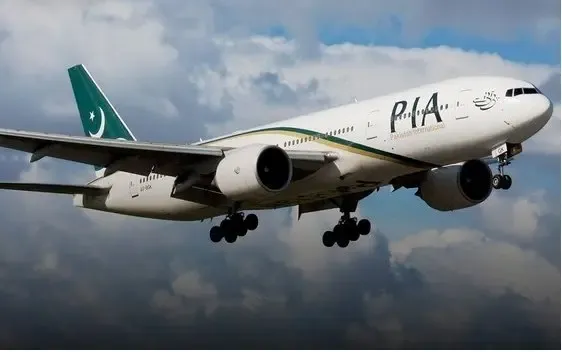
Consequently, the Pakistani government has included Islamabad International Airport in its list of entities slated for privatisation. This follows a previous privatisation of Pakistan International Airlines (PIA).
The report further states that Islamabad did not agree to the UAE's proposal to incorporate Jinnah International Airport (JIAP) in Karachi and Allama Iqbal International Airport (AIIAP) in Lahore into the draft government-to-government (G2G) agreement.
Moreover, Abu Dhabi's request for the privatisation of air links between Abu Dhabi and Pakistan under the G2G framework was also disregarded by Islamabad.
A delegation, led by the Adviser to the Prime Minister on Privatisation, along with senior officials from relevant ministries, traveled to Abu Dhabi to engage with UAE representatives for discussions on finalizing the draft framework agreement.
Previously, the Privatisation Division had submitted a summary to the Cabinet Committee on Privatisation (CCoP) advocating for the inclusion of the airports in Islamabad, Karachi, and Lahore in the active privatisation list.
A recent analysis indicated that poor governance and mismanagement, often exacerbated by political interference, are causing significant losses within Pakistan’s state-owned enterprises, leading to their distress sale at drastically reduced prices.
Despite their continuous underperformance and diminished accountability, these state-owned enterprises remain operational until they accumulate unsustainable debt and massive losses, at which point privatisation is considered.
aar/na
Point of View
My stance remains clear: the challenges faced by Pakistan's state-owned enterprises require urgent reform. The shift towards privatisation, as seen with Islamabad International Airport, is a necessary step towards accountability and efficiency. It's crucial for the nation to navigate these changes with strategic foresight, ensuring that public assets are managed effectively for the benefit of all.
NationPress
24/01/2026
Frequently Asked Questions
Why did Pakistan decide to privatise Islamabad Airport?
The decision was made after the UAE lost interest in managing the airport, leading to stalled negotiations and a deadlock.
What other airports were considered for privatisation?
The Pakistani government considered including Jinnah International Airport in Karachi and Allama Iqbal International Airport in Lahore in the privatisation list but ultimately did not agree.
What are the reasons behind the privatisation of state-owned enterprises in Pakistan?
Poor governance, mismanagement, and political interference have led to significant losses in these enterprises, prompting privatisation as a solution.