Pakistani forces kill Baloch farmer, disappear three others in Khuzdar, Quetta
Synopsis
Within a 72-hour window, Pakistani forces and affiliated groups killed a Baloch farmer returning from a wedding, disappeared two cousins from their home, abducted a university student in Quetta, and left eight bullet-riddled bodies across Panjgur and Gwadar — a concentration of documented atrocities that rights bodies say reflects a deepening human rights crisis with virtually no accountability.
Key Takeaways
Alam Khan , a 47-year-old farmer, was shot dead on 17 September in Khuzdar district by what the Baloch Yakjehti Committee calls a Pakistan-backed death squad.
Two cousins, Safar Baloch and Abdul Raziq , were forcibly disappeared from Reco village , Kech district on 17 September .
20-year-old student Kifayat Baloch was disappeared from outside the University of Balochistan in Quetta on 15 September ; his whereabouts remain unknown.
Eight bullet-riddled bodies were recovered from Panjgur and Gwadar districts; one victim, Ahsan , had reportedly been in custody since 21 January .
The BYC has called on the United Nations and international human rights bodies to take immediate notice of the situation.
Pakistani security forces and affiliated armed groups have killed at least one civilian and forcibly disappeared three others across Balochistan in incidents documented between 15 and 17 September 2026, according to leading Baloch human rights organisations. The killings and disappearances add to what rights bodies are calling an escalating pattern of extrajudicial violence against Baloch civilians.
Farmer Shot Dead at Gunpoint in Khuzdar
Alam Khan, a 47-year-old farmer from Khuzdar district, was shot dead on 17 September by what the Baloch Yakjehti Committee (BYC) describes as a Pakistan-backed death squad. According to the rights body, Khan and his friends were returning home after attending a wedding when the gunmen opened fire. Khan was killed on the spot; his friend Barkat Azeem sustained serious injuries.
The BYC condemned the killing in unequivocal terms. 'For Baloch people, safety is becoming impossible. A marriage gathering, a street, or even one's own home should never become a place where a civilian can be targeted and killed. No people should be forced to live under such fear. The continued pattern of enforced disappearances, target killings, and fake encounters constitutes a grave human rights crisis. These violations must not be normalised, and the absence of accountability must not be allowed to continue,' the organisation stated.
The committee has formally appealed to the United Nations, UN human rights mechanisms, and international human rights organisations to take immediate notice of the situation in Balochistan.
Three Youths Forcibly Disappeared Across the Province
Paank, the human rights department of the Baloch National Movement (BNM), documented the enforced disappearances of three individuals in separate incidents. On the evening of 17 September, Pakistani forces reportedly raided a house in Reco village of Kech district and took away two cousins — Safar Baloch and Abdul Raziq — whose whereabouts remain unknown.
In a separate case, 20-year-old student Kifayat Baloch was forcibly disappeared on 15 September from outside the University of Balochistan in Quetta. According to Paank, he has been denied access to his family, legal counsel, and due process. 'The enforced disappearance of a student is a grave violation of fundamental human rights and places him at serious risk of torture, ill-treatment, and other abuses,' the rights body stressed.
Eight Bullet-Riddled Bodies Recovered in Panjgur and Gwadar
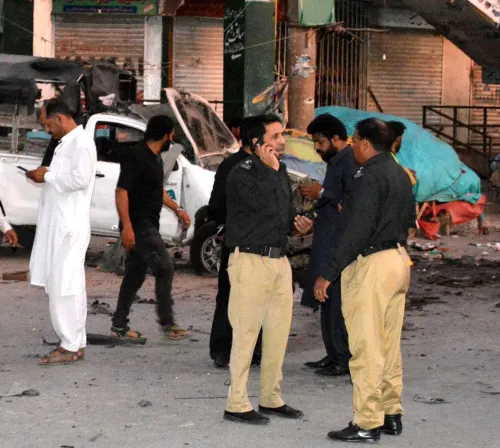
In a separate and deeply troubling development, eight bullet-riddled bodies were recovered from locations across Panjgur and Gwadar districts on Friday, according to Pakistani daily Dawn. Five of the bodies were found in the Gwargo area of Panjgur after local residents alerted authorities upon discovering them dumped in the area.
The remaining three bodies were recovered from Kuldan in the Jiwani sub-division of Gwadar district. The three were identified as Ahsan, a resident of Jiwani; Nadil, from Panwan in Jiwani; and Hassan Rafiq, a resident of Turbat. According to sources cited by Dawn, one of the deceased, Ahsan, had been taken from his home in Jiwani on the night of 21 January this year and had remained missing ever since — raising questions about his fate during custody.
All three bodies were handed over to families after completion of legal formalities, according to police.
A Province Under Siege: Broader Pattern of Abuse
Rights organisations note that these incidents are not isolated. Balochistan has witnessed a sustained and, by several accounts, intensifying campaign of enforced disappearances and extrajudicial killings for over two decades — with little to no accountability for perpetrators. Notably, international bodies including the UN Working Group on Enforced or Involuntary Disappearances have repeatedly raised the issue with Pakistani authorities, to limited effect.
The BYC and Paank are among several civil society bodies that have been systematically documenting these violations amid severe restrictions on press freedom and independent reporting in the province. Critics argue that the absence of independent oversight has allowed abuses to go largely unacknowledged in official Pakistani narratives.
With multiple incidents documented within a 72-hour window and eight bodies recovered in a single day, pressure on international human rights institutions to respond is likely to intensify in the days ahead.
Point of View
Two home raids, a university abduction, and eight dumped bodies, all within days — is not a statistical anomaly; it is a documented pattern. What makes Balochistan structurally different from other conflict zones is the near-total collapse of accountability: no independent judiciary, virtually no press access, and an international community that has consistently treated Pakistan's internal affairs as a diplomatic buffer. The BYC and Paank are filling the evidentiary vacuum, but documentation without consequence only emboldens perpetrators. Until international pressure translates into enforceable mechanisms — rather than periodic UN expressions of concern — these reports will continue to accumulate without deterring the next incident.
NationPress
20 Sept 2026
Frequently Asked Questions
What happened to Alam Khan in Balochistan?
Alam Khan, a 47-year-old farmer from Khuzdar district, was shot dead on 17 September by members of what the Baloch Yakjehti Committee describes as a Pakistan-backed death squad. He and his friends were returning from a wedding when gunmen opened fire, killing Khan on the spot and seriously injuring his friend Barkat Azeem.
Who is Kifayat Baloch and why was he disappeared?
Kifayat Baloch is a 20-year-old student who was forcibly disappeared by Pakistani forces from outside the University of Balochistan in Quetta on 15 September. His whereabouts remain unknown, and he has been denied access to his family and legal counsel; rights body Paank warns he is at serious risk of torture and ill-treatment.
How many bodies were recovered in Panjgur and Gwadar?
Eight bullet-riddled bodies were recovered from Panjgur and Gwadar districts on Friday. Five were found in the Gwargo area of Panjgur; three others were recovered from Kuldan in the Jiwani sub-division of Gwadar. One victim, Ahsan, had reportedly been missing since being taken from his home on 21 January.
Which human rights bodies documented these incidents?
The incidents were documented by the Baloch Yakjehti Committee (BYC) and Paank, the human rights department of the Baloch National Movement. Both organisations have called on the United Nations and international human rights bodies to take immediate action.
What is the broader human rights situation in Balochistan?
Balochistan has been the site of documented enforced disappearances and extrajudicial killings for over two decades, with rights bodies reporting an intensifying pattern and virtually no accountability for perpetrators. The UN Working Group on Enforced or Involuntary Disappearances has repeatedly raised the issue with Pakistani authorities, with limited effect.