Pakistan's external finances hinge on IMF loans and foreign deposits
Synopsis
Pakistan's economy has been propped up by IMF bailouts and Gulf deposits for decades, but a Dawn report warns the cycle is now more dangerous than ever: the country has shifted from development-oriented aid to costly short-term loans, with no export engine to replace them. Without structural reform, stabilisation risks becoming permanent stagnation.
Key Takeaways
Pakistan's external finances remain heavily dependent on IMF lending and deposits from Saudi Arabia and China , according to a Dawn report.
Post- 9/11 inflows and CPEC investment both failed to produce the export growth needed to reduce external vulnerabilities.
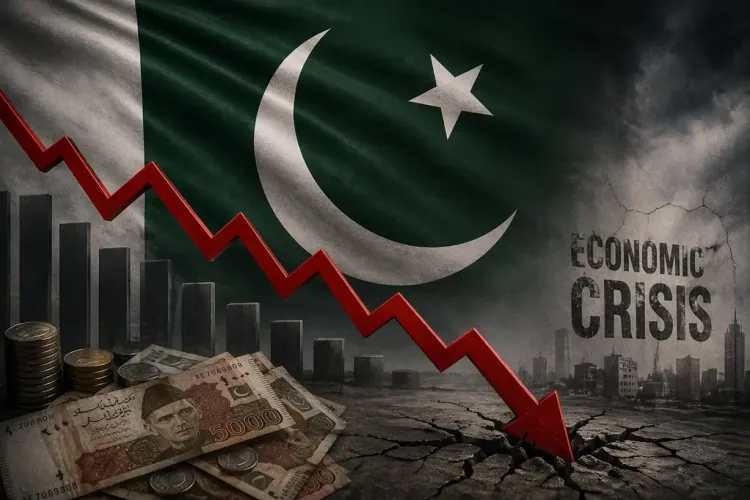
Pakistan recorded a record current account deficit in 2008 , triggering a major economic crisis; the pattern has since repeated.
IMF and friendly-country deposits do not directly generate economic activity or export earnings, making them an unstable foundation.
The report warns that without meaningful export growth, stabilisation efforts risk turning into prolonged stagnation .
Pakistan's external financial position remains critically dependent on IMF lending and deposits from friendly nations, a structural reliance that has repeatedly averted balance-of-payments crises but failed to deliver durable economic stability, according to a report by Dawn. The findings, published on 2 October 2026, paint a sobering picture of an economy caught in a cycle of foreign-supported stabilisation without meaningful export-led growth.
A Pattern of Dependency
According to the report, successive governments in Pakistan have leaned heavily on foreign support anchored in the country's geopolitical significance, rather than cultivating a self-sustaining export economy. Periods of economic expansion have consequently been driven by imports and consumption, generating recurring shortages of foreign exchange reserves.
A notable example cited is the windfall following the September 11, 2001 attacks, when a then-military-led administration received substantial inflows — including aid, debt relief, foreign investment, and portfolio flows. The opportunity to deploy these resources toward export diversification was, however, reportedly squandered as the funds fuelled consumption, imports, and real estate activity instead.
CPEC, Deficits, and Missed Opportunities
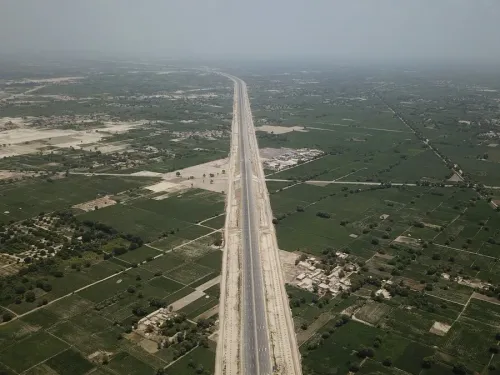
The China-Pakistan Economic Corridor (CPEC) offered another potential turning point. While the initiative helped address chronic energy shortfalls and improved infrastructure, the report notes it did not generate the export growth required to reduce external vulnerabilities. Rising imports pushed the current account deficit higher again by 2018, continuing the familiar pattern.
Pakistan had earlier recorded a record current account deficit in 2008, triggering a major economic crisis. Subsequent administrations managed to narrow the deficit at various points, but pandemic-era stimulus measures caused import surges to resume, compounded by global commodity price shocks and prolonged political uncertainty.
IMF and Gulf Deposits Prop Up Reserves
Pakistan's reserve position is increasingly underpinned by IMF programmes and deposits from countries including Saudi Arabia and China, the Dawn report stated. Critically, these funds do not directly generate economic activity or export earnings, and remain vulnerable to shifts in political and financial conditions.
The report draws a sharp distinction between earlier forms of development-oriented assistance and the current dependence on costly loans and short-term deposits — a qualitative deterioration in the nature of external support. Critics argue that this shift reflects a deeper structural failure: without credible export growth, stabilisation efforts risk morphing into prolonged stagnation.
The Road Ahead
The report warns that without meaningful reform to Pakistan's export base, the country faces a difficult choice between slow growth and the persistent threat of another foreign exchange crisis. The pattern of crisis, bailout, and repeat has, according to analysts, become entrenched enough to qualify as a structural feature rather than a cyclical aberration.
Whether the current administration can break this cycle — by attracting productive investment and growing exports rather than relying on geopolitically motivated deposits — remains the central question for Pakistan's economic trajectory in the near term.
Point of View
And that distinction matters. Repeated IMF bailouts have provided breathing room without resolving the underlying diagnosis: an economy that consumes more than it exports and borrows to cover the gap. CPEC was widely projected as the circuit-breaker, but infrastructure investment without export diversification merely shifted the import composition. The deeper problem is that geopolitical rents — post-9/11 aid, Gulf deposits, Chinese loans — have consistently allowed Pakistani policymakers to defer hard structural choices. So long as the country retains strategic value to external actors, the bailout option remains on the table, removing the urgency to reform. That is precisely what makes the current trajectory so concerning: the safety net itself is the obstacle to change.
NationPress
2 Oct 2026
Frequently Asked Questions
Why is Pakistan so dependent on IMF loans?
Pakistan has repeatedly turned to the IMF because its export base is too narrow to generate sufficient foreign exchange to cover import bills and debt repayments. Successive governments have relied on geopolitically motivated external support rather than building a self-sustaining export economy, according to the Dawn report.
What role do Saudi Arabia and China play in Pakistan's reserves?
Saudi Arabia and China provide deposits that help support Pakistan's foreign exchange reserves during periods of stress. However, the Dawn report notes these deposits do not generate economic activity or export earnings and are vulnerable to changing political and financial conditions.
Did CPEC help Pakistan's economy?
CPEC helped address energy shortages and improved infrastructure, but the report states it did not produce the export growth needed to reduce Pakistan's external vulnerabilities. Rising imports pushed the current account deficit higher again by 2018, continuing the pre-existing pattern.
What is the risk if Pakistan does not reform its export sector?
The Dawn report warns that without meaningful export growth, Pakistan's stabilisation efforts risk turning into prolonged stagnation, leaving the country trapped between slow growth and the recurring threat of a foreign exchange crisis.
When did Pakistan's current account deficit reach a record high?
Pakistan recorded a record current account deficit in 2008, which triggered a major economic crisis. The deficit rose again by 2018 following CPEC-related imports, and surged once more after pandemic-era stimulus measures combined with global commodity price shocks.