Pakistan's fiscal crisis: IMF acts as sole brake on runaway spending
Synopsis
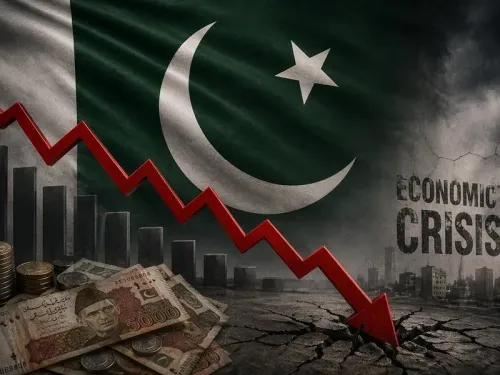
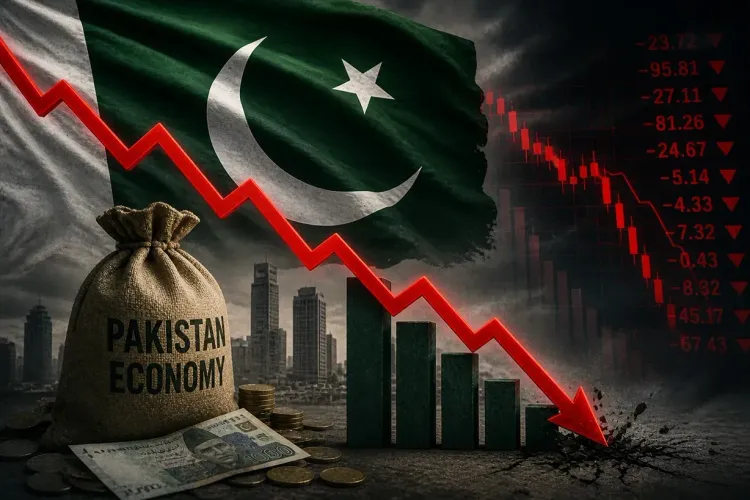
A report in The Express Tribune lays bare what many economists have long argued: Pakistan's fiscal system is structurally captured by elite interests, with the IMF acting as the only real brake on runaway spending. SOE losses alone hit Rs 833 billion annually — and promised reforms on privatisation, downsizing, and ministry consolidation have largely not materialised.
Key Takeaways
A report in The Express Tribune identifies deep structural weaknesses in Pakistan's fiscal system, driven by elite-led policymaking and political spending incentives.
State-owned enterprises (SOEs) collectively posted losses of Rs 833 billion (Pakistani rupee) annually, described as a major drag on public finances.
The IMF is identified as one of the few external constraints preventing significantly more expansionary government spending.
Promised administrative reforms — including government downsizing and ministry consolidation — have largely failed to materialise in meaningful terms.
Fiscal pressures are being passed on to taxpayers via rising taxes and constrained public services, while structural inefficiencies remain unaddressed.
Pakistan's fiscal architecture continues to expose deep structural fault lines, with the International Monetary Fund (IMF) serving as one of the few effective external checks on unchecked government expenditure, according to a report published in The Express Tribune. The analysis, released in June 2025, paints a stark picture of a budgetary system shaped more by elite interests and short-term political calculus than by sound economic governance.
Structural Weaknesses in Pakistan's Budget Cycle
The report identifies a recurring pattern in Pakistan's annual budget cycles: fiscal indiscipline, inefficient resource allocation, and a near-total dependence on external oversight to preserve macroeconomic stability. Successive governments, it notes, have consistently failed to contain expenditure pressures, with spending decisions frequently driven by political incentives, patronage networks, and subsidy-led voter outreach.
Rather than pursuing structural reforms, Pakistan's fiscal managers have defaulted to incremental adjustments — changes that preserve the underlying architecture favouring politically connected groups and large business conglomerates, the report argues.
The SOE Burden: Rs 833 Billion in Annual Losses
Among the most damaging drains on public finances are Pakistan's state-owned enterprises (SOEs), which the report describes as a persistent fiscal liability. Cumulative SOE losses run into hundreds of billions of Pakistani rupees annually.
'The monstrous white elephants known as the State-Owned Enterprises (SOEs) have together incurred a loss of Rs 833 billion (Pakistani rupee). That is Rs 8,300 crore,' the report stated. These losses, it adds, reflect the near-total absence of meaningful progress on privatisation or institutional restructuring, despite years of policy discussion on both fronts.
Promised Reforms That Did Not Materialise
Administrative overhauls — including government downsizing and ministry consolidation — have largely remained on paper, according to the report. The consequence is predictable: fiscal pressures are passed down to ordinary taxpayers through rising tax burdens and squeezed public services, while structural inefficiencies persist largely unaddressed.
Notably, this is not a new critique. Pakistan has entered and exited multiple IMF programmes over the past three decades, with each cycle typically followed by a reversion to expansionary spending once external pressure eases.
IMF as Fiscal Backstop — and What That Reveals
The report's most pointed observation is that IMF-backed fiscal frameworks have, in effect, substituted for domestic reform momentum. Without such external guardrails, government spending could have become significantly more expansionary, driving wider deficits and deeper macroeconomic instability, the analysis suggests.
While the IMF's role has imposed a degree of discipline, critics argue it also exposes a structural dependency — one that leaves Pakistan's budgetary framework perpetually vulnerable to recurring stress cycles whenever programme conditions lapse. The absence of sustained domestic reform ownership, the report concludes, remains the central unresolved challenge for Pakistan's fiscal future.
Point of View
The spending impulse returns. What the analysis underplays is the political economy reason this persists: the elite capture it describes is not a bug but a feature, one that successive civilian and military governments have had little incentive to dismantle. Until Pakistan's tax base is broadened and SOE accountability is tied to consequences rather than committee reports, the IMF dependency will outlast every programme it signs.
NationPress
19 Sept 2026
Frequently Asked Questions
What does the report say about Pakistan's fiscal discipline?
The report, published in The Express Tribune, concludes that Pakistan's fiscal system is marked by chronic indiscipline, inefficient resource allocation, and elite-driven spending patterns. It finds that the IMF remains one of the few external forces preventing significantly more expansionary and destabilising government expenditure.
How large are Pakistan's state-owned enterprise losses?
According to the report, Pakistan's state-owned enterprises (SOEs) have collectively incurred annual losses of Rs 833 billion (Pakistani rupee), equivalent to approximately Rs 8,300 crore. The report attributes these losses to stalled privatisation and a lack of meaningful restructuring.
Why is Pakistan so dependent on the IMF?
The report argues that in the absence of sustained domestic reform momentum, Pakistan has defaulted to relying on IMF-backed fiscal frameworks to maintain macroeconomic stability. Without such external oversight, government spending would likely have been far more expansionary, leading to wider deficits.
Have Pakistan's promised administrative reforms been implemented?
According to the report, promised reforms — including government downsizing and consolidation of ministries — have largely failed to materialise in any meaningful way. Structural inefficiencies remain intact, and fiscal pressures continue to be absorbed by ordinary taxpayers through higher taxes.
What is the broader risk for Pakistan's fiscal outlook?
The report warns that Pakistan's budgetary framework remains vulnerable to recurring cycles of stress, primarily because IMF oversight has not been matched by domestic reform ownership. Once external programme conditions ease, the structural incentives for expansionary and politically motivated spending tend to reassert themselves.