Pakistan budget 2025: Fiscal imbalances, low tax base signal low-growth trap
Synopsis
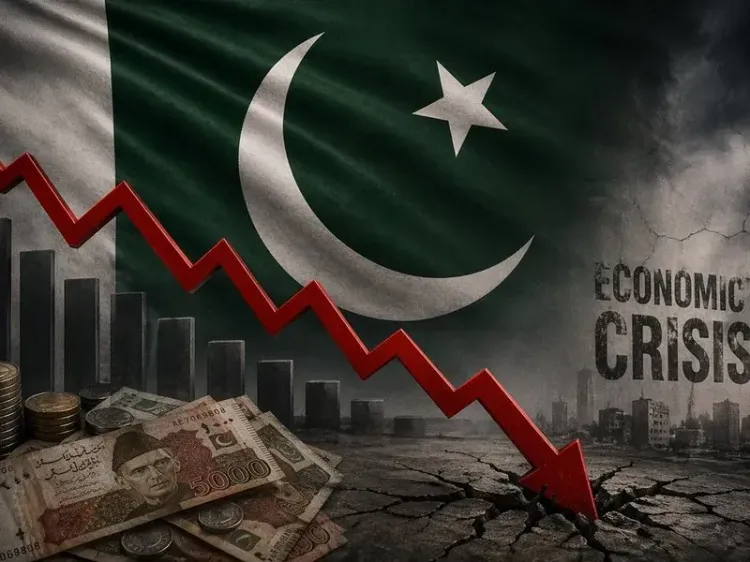
A new economic analysis warns Pakistan's upcoming federal budget reflects a deepening structural crisis: a tax-to-GDP ratio stuck at 10–11%, a rupee that has lost two-thirds of its value since 2017, and a petroleum levy that bypasses provincial revenue-sharing. Without bold recalibration, the report says, Pakistan risks locking itself into a low-growth trap with no easy exit.
Key Takeaways
Pakistan's tax-to-GDP ratio stands at just 10–11% , among the lowest for comparable emerging economies, according to the analysis by Sakib Berjees .
The Pakistani rupee has depreciated from near Rs 100/dollar in 2017 to approximately Rs 300/dollar , sharply eroding middle-class purchasing power.
The annual tax exemption threshold should be revised to around Rs 1.2 million to reflect current inflation, the report recommends.
The petroleum levy has risen to approximately Rs 117 per litre and sits outside the NFC divisible pool, raising fiscal federalism concerns.
The analysis warns Pakistan risks a low-growth equilibrium without major structural recalibration beyond IMF-driven stabilisation.
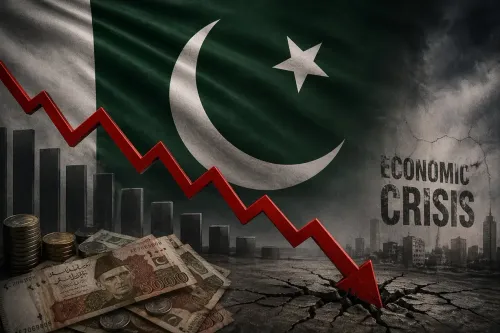
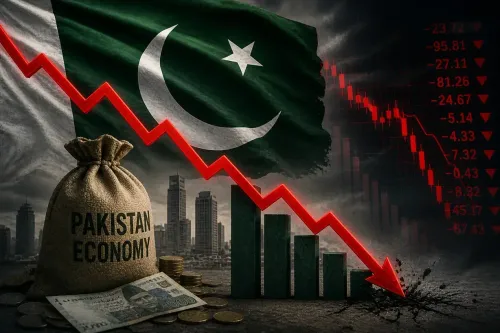
Pakistan's upcoming federal budget is set to lay bare an economy trapped by prolonged stabilisation policies, chronically weak revenue generation, and deepening dependence on externally driven reforms, according to a recent economic analysis by Sakib Berjees. The report warns that without major structural recalibration, Pakistan risks settling into a low-growth equilibrium with little prospect of near-term reversal.
Stabilisation Over Transformation
The analysis argues that Pakistan's economic model has become almost entirely centred on managing constraints rather than engineering long-term growth. Annual budgets, it contends, have ceased to function as instruments of transformation and instead operate as exercises in damage limitation — a pattern that has persisted across multiple administrations and IMF programme cycles.
This comes amid Pakistan's ongoing engagement with the International Monetary Fund (IMF), which has conditioned successive tranches of support on fiscal consolidation measures. Critics argue that while stabilisation has kept a balance-of-payments crisis at bay, it has also suppressed domestic demand and delayed structural reform.
The Tax-to-GDP Problem
A central concern in the analysis is Pakistan's persistently low tax-to-GDP ratio, which hovers at around 10–11 per cent — among the weakest for comparable emerging economies. The report argues this structural shortfall has forced the government to lean disproportionately on salaried individuals and formal-sector businesses for revenue, placing an outsized burden on documented, productive segments of the economy while leaving broader pools of wealth effectively under-taxed.
The erosion of middle-class purchasing power compounds the problem. According to the analysis, a monthly income of around Rs 100,000 — considered solidly middle class in 2017 when the Pakistani rupee traded near Rs 100 to the US dollar — now buys significantly less, with the currency close to Rs 300 per dollar and living costs sharply higher. Despite this shift, tax exemption thresholds have not kept pace with inflation, resulting in what the report describes as structural over-taxation of fixed-income earners.
The analysis recommends revising the annual tax exemption threshold to approximately Rs 1.2 million to better reflect current economic realities. Notably, it argues such an adjustment need not reduce overall revenues if the government simultaneously redistributes the tax burden through calibrated indirect taxation in sectors capable of generating compensatory revenues without disproportionately hurting households.
Petroleum Levy and Fiscal Federalism
The petroleum levy — which has risen to approximately Rs 117 per litre, well above earlier IMF-associated benchmarks — emerges as another flashpoint. Because the levy falls outside the National Finance Commission's (NFC) divisible pool, it creates a parallel stream of federal revenue that bypasses provincial revenue-sharing arrangements.
The analysis argues this structure raises serious questions about fiscal transparency and the integrity of Pakistan's federal compact. Increasing reliance on such centrally retained levies, it warns, weakens the constitutional relationship between taxation and representation. The report calls for greater parliamentary scrutiny and the integration of such levies into a more transparent federal revenue-sharing framework.
What the Budget Must Address
Taken together, the analysis paints a picture of a fiscal architecture that is increasingly misaligned with economic realities on the ground. The upcoming budget, according to the report, faces a narrow path: it must manage IMF conditionalities, prevent further erosion of middle-class incomes, broaden the tax base, and restore credibility to federal revenue-sharing — all simultaneously.
Whether Islamabad's policymakers can thread that needle will determine whether Pakistan's next budget marks a genuine inflection point or another round of managed decline.
Point of View
Successive IMF programmes will stabilise without transforming.
NationPress
24 Sept 2026
Frequently Asked Questions
What are the main concerns about Pakistan's upcoming federal budget?
The budget is expected to reflect an economy constrained by prolonged stabilisation policies, a chronically low tax-to-GDP ratio of 10–11%, and growing dependence on externally driven reforms. An economic analysis by Sakib Berjees warns that without structural recalibration, Pakistan risks settling into a low-growth equilibrium.
Why is Pakistan's low tax-to-GDP ratio a problem?
At 10–11%, Pakistan's tax-to-GDP ratio is among the weakest for comparable emerging economies, forcing the government to rely heavily on salaried workers and formal businesses for revenue. This leaves broader pools of wealth under-taxed and places an outsized burden on documented, productive segments of the economy.
How has rupee depreciation affected Pakistani taxpayers?
The Pakistani rupee has fallen from near Rs 100 per US dollar in 2017 to approximately Rs 300 per dollar, sharply eroding middle-class purchasing power. Because tax exemption thresholds have not been adjusted adequately for inflation, fixed-income earners are effectively over-taxed relative to their real incomes.
What is the concern about Pakistan's petroleum levy?
The petroleum levy has risen to approximately Rs 117 per litre and falls outside the National Finance Commission's divisible pool, meaning provinces do not share in this revenue. The analysis argues this weakens fiscal federalism and calls for greater parliamentary oversight and integration into a transparent revenue-sharing framework.
What structural reforms does the analysis recommend for Pakistan?
The report recommends raising the annual tax exemption threshold to approximately Rs 1.2 million to reflect current inflation, redistributing the tax burden through calibrated indirect taxation on under-taxed sectors, and bringing the petroleum levy under the NFC framework for greater fiscal transparency.