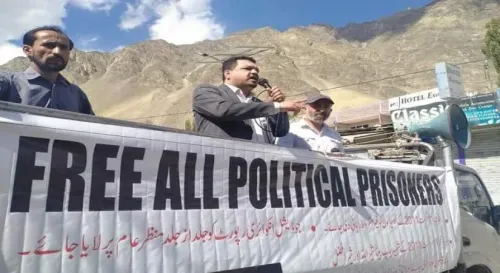
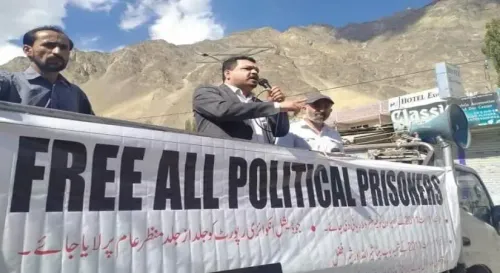
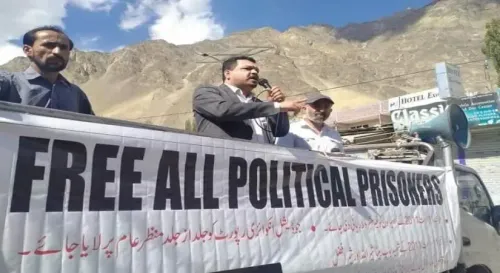
Pakistan's atrocities on Shia youths in Gilgit-Baltistan demand independent probe
Synopsis
An Athens-based think tank has documented what it calls a systematic pattern of coercive detention, secret confinement, and torture of Shia youths in Pakistan-occupied Gilgit-Baltistan — and is calling for an independent international investigation. With named detainees charged under counterterrorism law and families left without information, the report argues Pakistan is manufacturing political silence through fear, not governance.
Key Takeaways
Athens-based Directus report, published 19 October 2026 , demands Pakistan disclose grounds for detaining Shia youths in Pakistan-occupied Gilgit-Baltistan (PoGB) .
Touseef Haider , Manzoor Hussain , Qasid , and Faisal Abbas were reportedly charged under counterterrorism and explosive substances laws after alleged links to the Zainabiyoun Brigade .
Between 2018 and 2022 , youths were allegedly taken from homes under pretext of brief questioning, with accounts of secret transfers, prolonged confinement, and torture.
The report warns that uncertainty about the scale of detentions — reportedly involving thousands — does not reduce the gravity of alleged concealed detention.
Families of detainees reportedly face disruption to education, livelihoods and emotional well-being due to withheld information.
The report calls for an independent investigation, framing disclosure, legal access, and court production as fundamental legal obligations, not discretionary acts.
Pakistani authorities must disclose the grounds for detaining young Shia activists in Pakistan-occupied Gilgit-Baltistan (PoGB), ensure access to legal counsel, produce detainees before courts, and investigate allegations of torture and enforced disappearance, according to a report by Athens-based Directus. The findings, published on 19 October 2026, warn that Islamabad's failure to uphold these obligations reinforces concerns that the establishment prioritises control over justice.
Key Allegations Against Pakistani Authorities
The Directus report argues that Pakistan's treatment of Shia youths in PoGB exposes a direct contradiction between its national security claims and its legal responsibility to protect those living under its administration. It states that the deployment of stringent counterterrorism legislation against young activists has fuelled fears that security powers are being used to suppress legitimate grievances rather than address underlying concerns about marginalisation and economic deprivation.
'The detention of young activists, allegations of concealed confinement and the deployment of stringent counterterrorism legislation have fuelled fears that security powers are being used to suppress legitimate grievances. Rather than addressing concerns about marginalisation and economic deprivation, the establishment appears increasingly inclined to view dissent through the prism of militancy,' the report stated.
Four Shia Youths at the Centre of the Case
The report specifically highlights the cases of Touseef Haider, Manzoor Hussain, Qasid, and Faisal Abbas as illustrative of what it describes as a coercive pattern. According to the report, Pakistani security forces reportedly accused the four Shia youths of association with the Zainabiyoun Brigade, an Iran-affiliated militia. Faisal Abbas and Touseef Haider reportedly faced charges under the Anti Terrorism Act of 1997 and the Pakistan Penal Code, while Manzoor Hussain was charged under the Explosive Substances Act alongside terrorism legislation.
The report noted that the gravity of these legal provisions makes transparent judicial proceedings particularly necessary, yet the controversy surrounding the arrests suggests that official accusations have not adequately addressed fundamental questions about evidence and due process.
Pattern of Disappearances Between 2018 and 2022
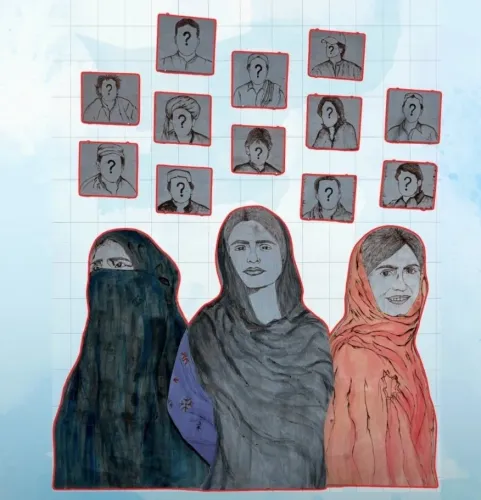
Beyond the four named individuals, the report documents a broader pattern of alleged atrocities. It states that between 2018 and 2022, some Shia youths were reportedly taken from their homes under the pretext of brief questioning about travel records. Accounts of secret transfers, prolonged confinement, and torture, according to the report, warrant an independent investigation.
The report acknowledged that claims involving thousands of detainees require independent verification, but cautioned that 'uncertainty about the scale does not diminish the seriousness of concealed detention.' It further stated that if authorities refuse to disclose the whereabouts of detainees or produce them before courts, they undermine the legal protections that distinguish legitimate investigation from unchecked state coercion.
Impact on Families and Communities
The Directus report underscores the devastating toll these alleged practices take on families left searching for loved ones while institutions reportedly withhold even the most basic information. Prolonged uncertainty, it notes, disrupts education, livelihoods and emotional well-being — not only for detainees but for entire households.
At the community level, recurring allegations of arbitrary arrests are said to have created a climate of fear, discouraging young people from voicing grievances or participating in public affairs. The report warned that Pakistan's establishment consequently 'risks producing political silence through fear rather than consent through responsive governance,' adding that such silence cannot be mistaken for social stability or genuine acceptance of state authority.
Call for Accountability and Independent Investigation
The report's central demand is for an independent, transparent investigation into detention conditions and allegations of torture in PoGB. It frames disclosure of detention grounds, access to legal counsel, and timely production before courts as fundamental legal obligations — not discretionary acts. This comes amid a broader international spotlight on human rights conditions in Pakistan-administered territories, where civil society groups have repeatedly flagged accountability deficits. How Islamabad responds to this documented pressure will be closely watched by international human rights observers in the weeks ahead.
Point of View
Institution-backed voice to what have until now largely been civil society allegations — and that shift in framing matters. Pakistan's pattern of invoking counterterrorism law against minority community activists in PoGB fits a template seen elsewhere in its western periphery: heavy legal instruments, opaque proceedings, and no independent oversight. The specific invocation of the Zainabiyoun Brigade allegation is significant — it allows Islamabad to internationalise a domestic crackdown as a counterterrorism necessity, deflecting scrutiny. But as this report notes, the gap between accusation and due process is precisely where accountability breaks down. India's longstanding position on PoGB as illegally occupied territory gives New Delhi a geopolitical interest in how this story develops internationally — and whether multilateral human rights forums take up the findings.
NationPress
19 Oct 2026
Frequently Asked Questions
What does the Directus report allege about Pakistan's actions in Gilgit-Baltistan?
The Athens-based Directus report alleges that Pakistani authorities have detained young Shia activists in Pakistan-occupied Gilgit-Baltistan without transparent legal process, with accounts of secret transfers, prolonged confinement, and torture between 2018 and 2022. It calls for an independent investigation and demands that detainees be produced before courts with access to legal counsel.
Who are the Shia youths named in the Directus report?
The report names Touseef Haider, Manzoor Hussain, Qasid, and Faisal Abbas as central cases. Pakistani security forces reportedly accused them of links to the Zainabiyoun Brigade, an Iran-affiliated militia, and charged them under the Anti Terrorism Act of 1997, the Pakistan Penal Code, and the Explosive Substances Act.
What is the Zainabiyoun Brigade and why is it relevant?
The Zainabiyoun Brigade is reportedly an Iran-affiliated militia that Pakistani authorities have cited as justification for charging the detained Shia youths under counterterrorism law. The Directus report argues that invoking this connection without transparent evidence raises serious due process concerns.
What is Pakistan-occupied Gilgit-Baltistan (PoGB)?
Pakistan-occupied Gilgit-Baltistan is a territory administered by Pakistan that India considers part of its sovereign territory illegally occupied by Islamabad. The region has seen recurring allegations of human rights violations, with civil society groups citing suppression of political dissent and minority community activism.
What action is the Directus report calling for?
The report calls for Pakistan to disclose detention grounds, ensure legal counsel access, produce detainees before courts, and subject allegations of torture and enforced disappearance to independent investigation. It frames these as non-discretionary legal obligations whose violation constitutes institutional abuse.