Pakistan-occupied Gilgit-Baltistan: Flawed governance and the political charade that never ends
Synopsis
Elections in Pakistan-occupied Gilgit-Baltistan change governments but never the power structure — a former Sindh IGP writing in Dawn calls it a 'ritualistic transfer of authority' that leaves constitutional status, rights, and accountability permanently unresolved. Meanwhile, Amnesty International reports that a 70-year-old AAC leader was denied hospital care until he lost consciousness in custody. A new generation in PoGB is watching, and it is not impressed.
Key Takeaways
PoGB elections are held every five years under a constitutionally undefined framework that rotates governments without changing the actual structure of power, according to a Dawn analysis.
Former Sindh IGP Afzal Ali Shigri , a PoGB native, describes the process as a 'ritualistic transfer of authority' that entrenches elite capture and patronage.
PML-N , PPP , and PTI have each failed to fulfil promises of autonomy or provincial status for PoGB when in federal power.
Amnesty International reported in April 2026 that seven AAC activists were detained for over 45 days under anti-terrorism law for peaceful assembly.
AAC chairperson Ehsan Ali , 70 , was denied adequate medical care and lost consciousness in custody before being transferred to District Headquarters Hospital, Gilgit .
A politically conscious younger generation in PoGB is increasingly unwilling to accept symbolic representation, posing a long-term challenge to the status quo.
Pakistan-occupied Gilgit-Baltistan (PoGB) is trapped in a cycle of flawed governance and institutionalised political theatre, according to a detailed analysis published in the Pakistani daily Dawn. Every five years, elections are held under a constitutionally undefined framework that rotates governments without altering the underlying power structure — a ritual that critics argue serves Islamabad's interests far more than those of PoGB's own citizens.
A System Built on Ambiguity
Afzal Ali Shigri, a former Inspector General of Police of Sindh province and a native of PoGB, wrote that the electoral process is 'at its core a ritualistic transfer of authority among federally controlled political actors while fundamental questions of constitutional status, political rights, institutional accountability, etc, remain unresolved.' This ambiguity, he argued, facilitates elite capture by enabling control over local resources without meaningful accountability.
Public funds, Shigri noted, continue to be absorbed by expanding bureaucratic structures, patronage networks, and non-development expenditure. Critical decisions — including appointments to senior judicial and institutional positions — are made through opaque processes, effectively guaranteeing immunity for unaccountable decision-makers while ordinary citizens bear the burden of weak institutions, unemployment, and political uncertainty.
Mainland Parties, Local Costs
Governance in PoGB has long been dominated by the Pakistan Muslim League-Nawaz (PML-N), the Pakistan Peoples Party (PPP), and Pakistan Tehreek-e-Insaf (PTI) — parties that, critics argue, view the region through the lens of national power politics, strategic utility, and patronage rather than genuine political empowerment.
Two structural failures stand out. First, none of these parties has fulfilled promises of autonomy, reform, or provisional provincial status once in federal power — promises routinely made during election season and just as routinely abandoned. Second, the importation of confrontational mainland political culture into a geographically isolated and socially sensitive region has weakened local institutions and prevented the emergence of an independent political consensus. Local leadership in PoGB, the analysis notes, typically arises not from grassroots legitimacy but from patronage networks and loyalty to party headquarters in Islamabad.
A Rising Generation Pushing Back
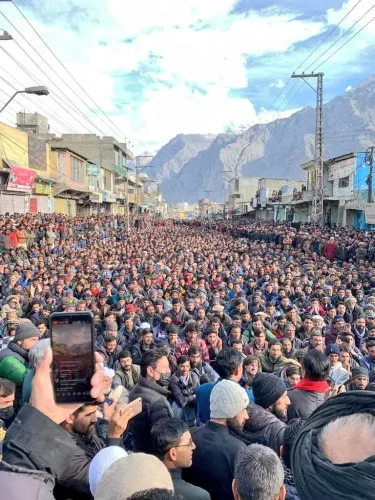
A new, educated, and politically conscious generation is emerging in PoGB — one that is technologically connected and, according to the Dawn report, unwilling to accept symbolic representation in place of genuine rights. This rising cohort may increasingly challenge the cycle of constitutional ambiguity and political misgovernance. As Shigri's analysis concludes, no political structure built on perpetual ambiguity, exclusion, and managed dependency can sustain itself indefinitely.
Amnesty International Raises Alarm Over Detained Activists
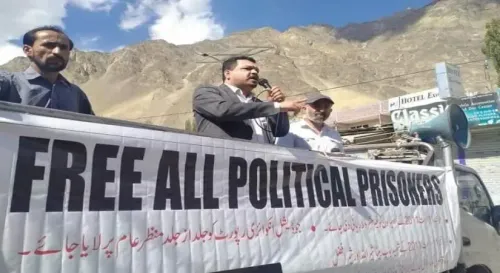
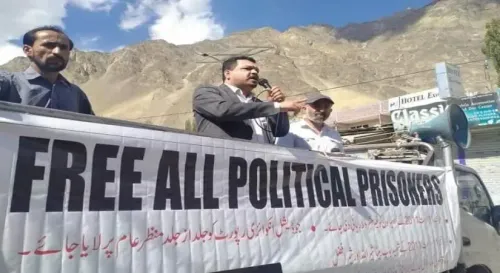
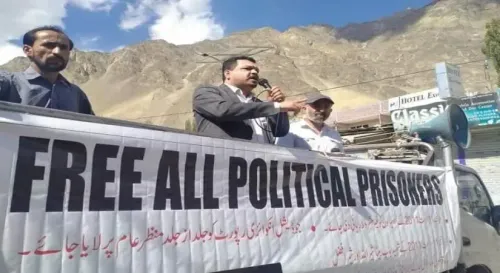
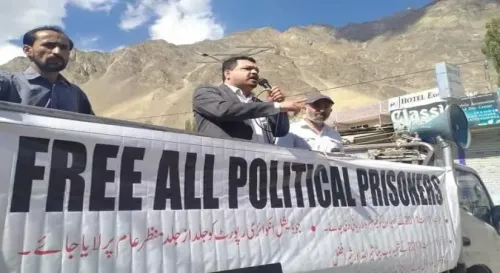
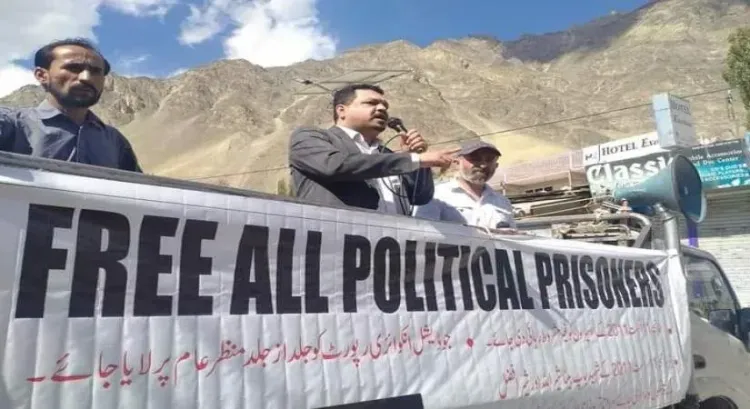
The governance crisis has a human rights dimension as well. In April 2026, Amnesty International called on Pakistani authorities to immediately release all detained activists of the Awami Action Committee (AAC) from PoGB and drop all charges linked to what the rights body described as 'peaceful activism.'
Seven AAC members had been arbitrarily detained for over 45 days under Pakistan's anti-terrorism law, according to Amnesty International, solely for peacefully exercising their rights to assembly and expression. The charges stem from allegations that 13 AAC members made 'anti-state' speeches at an Iftar dinner on 8 March and discussed plans for a protest — activities the rights body said are protected under international human rights law.
Among those detained is Ehsan Ali, a 70-year-old lawyer and AAC chairperson. Despite applications filed by his lawyers requesting hospitalisation, Ali was reportedly denied adequate medical care until his condition deteriorated severely. He was transferred to hospital only after developing pneumonia and losing consciousness while in police custody. Amnesty International stated that Ali has been under police guard at District Headquarters Hospital, Gilgit, alongside two other AAC activists, Ibrar Bahoro and Hasnain Ramal. His lawyers have raised concerns that, given his underlying heart condition, the care being provided at the current facility remains inadequate.
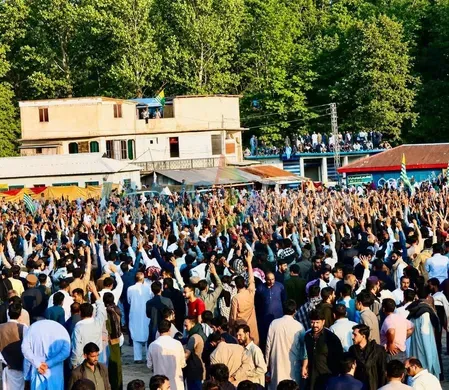
Other AAC activists named in the case have reportedly been forced to curtail their freedom of movement, association, and expression out of fear of arrest — leaving them unable to campaign ahead of the PoGB elections scheduled for 7 June 2026. Amnesty International urged Pakistani authorities to ensure immediate access to adequate healthcare for all detainees pending their release.
With elections now held and the constitutional status of PoGB still unresolved, the region's political future remains as uncertain as ever — and a new generation appears increasingly unwilling to accept that as the norm.
Point of View
Which is not an oversight but a structural preference: ambiguity is a tool of control. The detention of a 70-year-old lawyer under anti-terrorism law for an Iftar speech is not an aberration in this system — it is the system working as designed. The more significant variable is the emerging generation in PoGB, educated and networked enough to name what earlier generations could not. Whether that translates into organised pressure or is absorbed by the same patronage machinery remains the central question.
NationPress
24 Oct 2026
Frequently Asked Questions
What is the governance problem in Pakistan-occupied Gilgit-Baltistan?
PoGB operates under a constitutionally undefined framework in which elections rotate political parties without resolving fundamental questions of constitutional status, political rights, or institutional accountability. Critics, including former Sindh IGP Afzal Ali Shigri, describe the process as a ritualistic transfer of authority that entrenches federal control and elite capture rather than genuine local empowerment.
Why have PoGB elections been called an 'exercise in futility'?
Shigri argues that critical decisions in PoGB — including senior judicial appointments — are made through opaque processes that guarantee immunity for unaccountable decision-makers. Since no major party has fulfilled promises of autonomy or provincial status once in federal power, successive elections change governments without changing the power structure.
Who are the Awami Action Committee activists detained in PoGB?
Seven members of the Awami Action Committee (AAC) were detained for over 45 days under Pakistan's anti-terrorism law, according to Amnesty International. The charges relate to allegedly 'anti-state' speeches at an Iftar dinner on 8 March and plans for a protest. Among the detained is 70-year-old AAC chairperson Ehsan Ali, who was hospitalised after losing consciousness in custody.
What did Amnesty International say about the PoGB detentions?
Amnesty International called the detentions arbitrary and urged Pakistani authorities to immediately release all AAC activists and drop charges. The rights body stated that the activities in question — peaceful assembly and expression — are protected under international human rights law, and raised serious concerns about Ehsan Ali's access to adequate medical care.
What role does the younger generation play in PoGB's political future?
A new, educated, and technologically connected generation in PoGB is reportedly unwilling to accept symbolic representation in place of genuine rights. Analysts cited in the Dawn report suggest this cohort could challenge the cycle of constitutional ambiguity and misgovernance, though whether it can overcome entrenched patronage networks remains uncertain.