PoJK is not East Pakistan: Why Pakistan's media playbook is failing
Synopsis
Pakistan's media is now blaming the PoJK diaspora for crimes in Europe — but critics say this is the same ethnic-demonisation script used against Bengalis before 1971. With 20-hour power cuts in Gilgit Baltistan, a GDP lower than Uttar Pradesh, and dozens of protesters reportedly killed, the occupied region's patience is running out.
Key Takeaways
Pakistani media has begun linking the PoJK diaspora in Europe to crimes, framing it through ethnicity and culture — a shift analysts compare to pre- 1971 anti-Bengali propaganda.
Gilgit Baltistan residents face an average 20-hour daily power outage, while India's Ladakh reportedly has uninterrupted electricity.
Pakistan's national GDP, after 78 years , reportedly remains lower than that of the Indian state of Uttar Pradesh , with per capita income declining since 2025 .
The Pakistani army has reportedly killed dozens of protesters and abducted hundreds in PoJK , according to Senge Sering of the Institute for Gilgit Baltistan Studies .
PoJK provides Pakistan with its only free transit route to China and supplies the majority of Pakistan's water through dams built in the region.
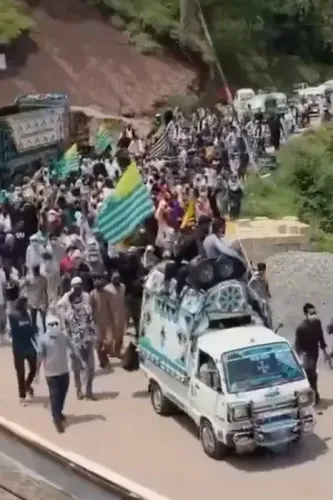
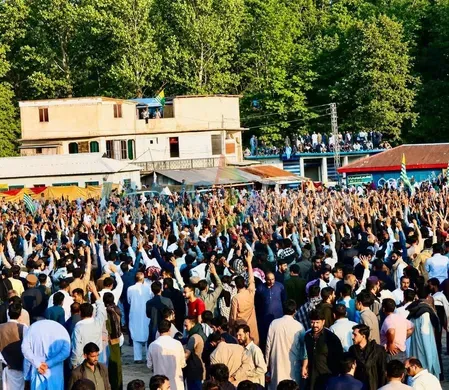
Locals are demanding constitutional rights, citizenship protections, and full withdrawal of Pakistani authority, according to reports.
Pakistani media has launched a fresh campaign targeting the Pakistan-occupied Jammu and Kashmir (PoJK) diaspora, blaming them for crimes in Europe and linking alleged criminal behaviour to ethnicity, language, and cultural practices — a narrative shift that analysts argue mirrors the propaganda tactics Islamabad once deployed against East Pakistan before the 1971 war. The sudden change in tone, according to observers, is a response to growing unrest inside PoJK itself, not a genuine reckoning with facts.
Pakistan's Colonial Hold on PoJK
Pakistan has long treated the people of PoJK — including Gilgit Baltistan — as colonial subjects, according to critics and regional analysts. Residents are reportedly denied basic constitutional rights, kept dependent on limited state handouts, and afforded minimal legislative authority. This stands in stark contrast to the region's resource wealth: PoJK is said to supply Pakistan with forests, precious stones, heavy metals, gold, copper, and uranium, and provides the majority of water through multiple dams built to serve Pakistani energy needs.
The region also functions as Pakistan's sole free transit corridor to China, its most strategically important partner. For decades, critics argue, the Pakistani military has leveraged PoJK's territory and population as strategic assets against both India and Afghanistan, with senior generals reportedly profiting substantially from the arrangement.
Growing Frustration as Indian J&K Develops
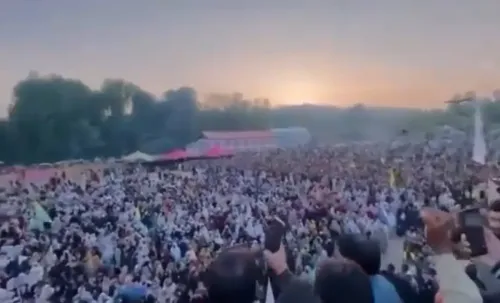
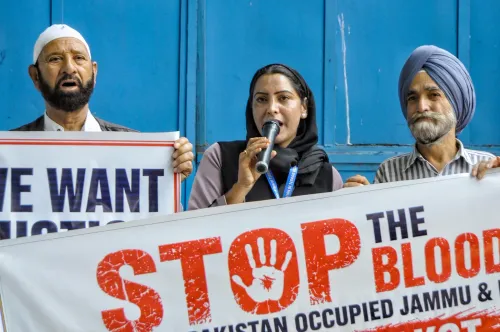
The discontent in PoJK has intensified as the economic and political situation in Indian Jammu and Kashmir and Ladakh has improved, according to regional observers. Many PoJK residents reportedly believe that India has delivered significantly more development to its side of the divide than Pakistan has to the occupied region under its control. Protests have erupted with locals demanding constitutional rights, citizenship protections, and meaningful internal autonomy.
Pakistan's capacity to respond is severely constrained. After 78 years, Pakistan's national GDP reportedly remains lower than that of the Indian state of Uttar Pradesh. Per capita income has declined since 2025, and education and health budgets have been cut amid a funding crisis. In Gilgit Baltistan, residents endure an average of 20 hours of power outages daily, while the population of India's Ladakh reportedly has uninterrupted electricity. Pakistan has also imposed what critics describe as one of Asia's highest fuel taxes on inhabitants to cover state expenses — a move that has deepened public anger toward both the government and the military.
The East Pakistan Playbook, Repeated
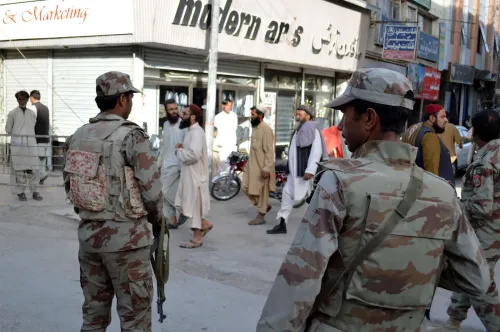
According to Senge Sering, founder of the Washington-based Institute for Gilgit Baltistan Studies, the Pakistani army is now deploying in PoJK the same crowd-management tactics it once used in East Pakistan (Bangladesh) and Balochistan. On one front, security forces have reportedly killed dozens of local protesters and abducted hundreds. On another, state-aligned media is being used to portray PoJK residents as criminals and traitors — a strategy designed, critics say, to legitimise what Sering calls 'bare brutality and unlawful hegemony.'
The parallel with East Pakistan is pointed. When Bengalis took to the streets for basic rights in the late 1960s and early 1970s, Pakistani media characterised them as uncivilised, ungrateful, and as instruments of Indian interference — a narrative that preceded the military crackdown of 1971. Today, a similar framing is reportedly being applied to PoJK, with media outlets suggesting that military action is necessitated by the locals' own conduct rather than by state repression.
Why PoJK Residents Are Rejecting the Narrative
Sering argues that PoJK residents have studied the outcomes in East Pakistan, Pashtunistan, Afghanistan, and Balochistan and understand how Islamabad uses ethnicity and religion as tools to deny rights and perpetuate occupation. As a result, he contends, locals are increasingly rejecting both the rulers and their tactics, and are demanding a full withdrawal of Pakistani authority. The views expressed by Sering are personal and represent his analysis as a researcher at the Institute for Gilgit Baltistan Studies in Washington.
Whether Pakistan's establishment recalibrates its approach or doubles down on suppression will likely determine the trajectory of unrest in the region in the months ahead.
Point of View
Catastrophically, in East Pakistan in 1971; it has not resolved Balochistan in five decades. The deeper contradiction is economic: Pakistan cannot offer PoJK what India is visibly delivering on the other side of the Line of Control, and no media campaign changes that arithmetic. What mainstream coverage underplays is the strategic dimension — PoJK is China's corridor and Pakistan's water tower, which means Islamabad has structural reasons to hold the territory regardless of the human cost. The question is whether international scrutiny, particularly from Europe where the diaspora controversy is now playing out, creates any accountability pressure that domestic politics cannot.
NationPress
3 Oct 2026
Frequently Asked Questions
Why is Pakistani media suddenly targeting the PoJK diaspora?
Critics argue the shift is a deflection strategy, timed to growing unrest inside PoJK over power outages, fuel taxes, and the denial of constitutional rights. By framing PoJK residents as criminals or troublemakers, analysts say the Pakistani establishment seeks to delegitimise protests and justify security crackdowns, echoing tactics used against East Pakistanis before 1971.
What resources does PoJK provide to Pakistan?
PoJK reportedly supplies Pakistan with forests, precious stones, heavy metals, gold, copper, and uranium, and provides the majority of Pakistan's water through multiple dams built in the region. It also serves as Pakistan's only free transit route to China, its most important strategic partner.
How does living standards in PoJK compare to Indian Jammu and Kashmir?
Residents of Gilgit Baltistan reportedly endure an average 20-hour daily power outage, while the population of India's Ladakh has uninterrupted electricity, according to Senge Sering of the Institute for Gilgit Baltistan Studies. Pakistan's per capita income has declined since 2025 and social sector budgets have been cut, widening the perceived development gap.
Who is Senge Sering and what is the Institute for Gilgit Baltistan Studies?
Senge Sering is the founder of the Institute for Gilgit Baltistan Studies, a Washington-based research organisation focused on the PoJK region. The views cited in this analysis are his personal opinions and do not represent any government position.
How does the situation in PoJK compare to East Pakistan before 1971?
According to Sering, the Pakistani military is deploying similar crowd-management tactics in PoJK to those used in East Pakistan — combining security crackdowns with media campaigns that portray local populations as uncivilised or criminal. In 1971, that playbook preceded a military crackdown that ultimately led to the creation of Bangladesh. PoJK residents, Sering argues, are aware of this history and are actively rejecting the narrative.