Pakistan minister calls PoJK protesters 'enemies', crackdown feared
Synopsis
Pakistan's Defence Minister has publicly branded PoJK protesters 'enemies like India' — a framing analysts say is a deliberate precursor to a full-scale military crackdown. With at least 21 already dead in Rawalakot, a communications blackout in place, and protests spreading to Muzaffarabad and Mirpur, the occupied territory is at a dangerous inflection point.
Key Takeaways
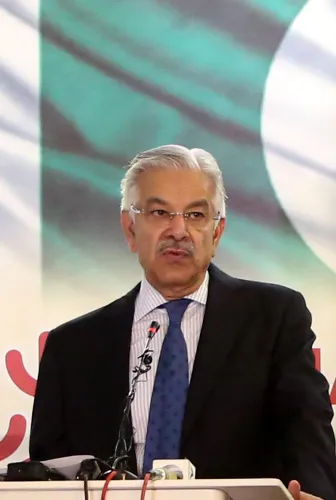
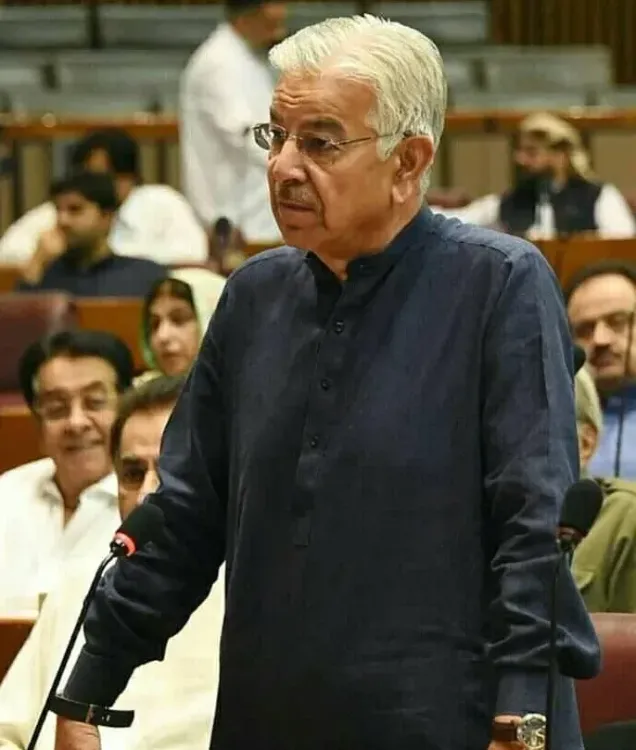
Pakistan's Defence Minister Khawaja Asif called PoJK protesters 'enemies like India' in a video that has circulated widely on social media.
At least 21 protesters were killed and dozens injured when Pakistani security forces opened fire in Rawalakot on 27 July .
Pakistan imposed a communications blackout in PoJK following the crackdown, making casualty verification difficult.
The JAAC , formed in 2023 , has demanded abolition of refugee seats — 12 of 53 assembly seats reserved for non-resident migrants — among other reforms.
Protests have spread from Rawalakot to Muzaffarabad , Mirpur , and other districts, with analysts warning of further escalation.
Pakistan's Defence Minister Khawaja Asif has equated protesters in Pakistan-occupied Jammu and Kashmir (PoJK) with India, calling them 'enemies' — a statement analysts say signals an imminent hardline crackdown on the restive territory. The remarks, captured in a video circulating widely on social media, have drawn sharp condemnation and raised alarm over Islamabad's intentions toward the civilian-led protest movement.
The Minister's Remarks
'I put them (protesters) in the same category as India and consider them also as enemies like India,' Asif said in the video. Analyst Sudha Ramachandran, writing in The Diplomat, argued that framing protesters as 'enemies' is a deliberate precursor to a full-scale security response. 'His comment does not bode well for the people of PoJK. By portraying the protesters as enemies, Asif is preparing to deploy the iron fist on PoJK,' Ramachandran wrote.
The Crackdown So Far
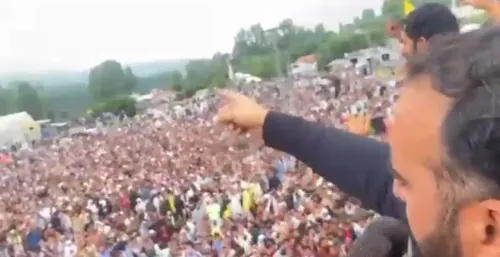
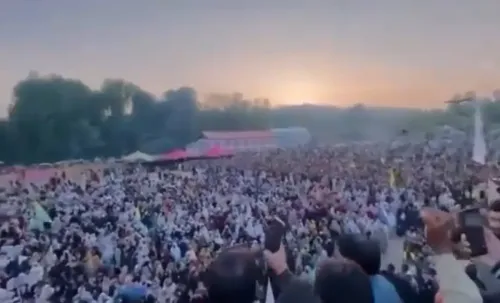
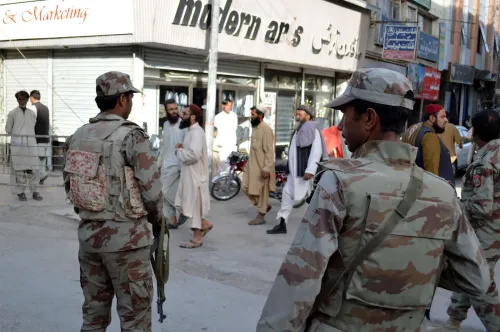
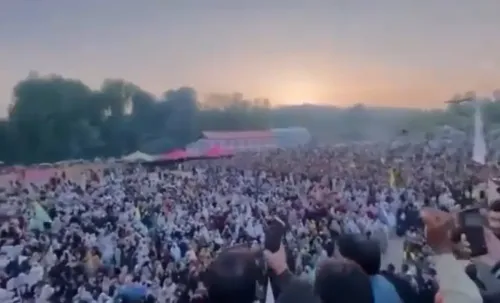
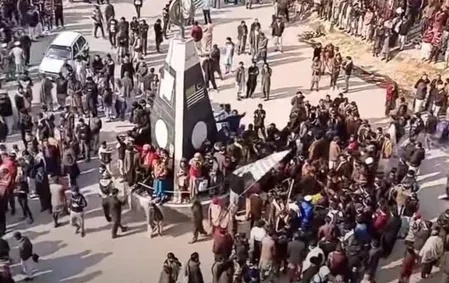
At least 21 protesters were killed and dozens more injured on 27 July when Pakistani security forces opened fire on demonstrators in Rawalakot. The protesters, led by the Joint Awami Action Committee (JAAC) — a coalition of traders, students, and civil society groups — had begun marching toward Muzaffarabad when forces launched the crackdown. Videos showing Pakistani security personnel firing on civilians in Rawalakot and other areas have since gone viral. Casualty figures remain difficult to independently verify, as Pakistani authorities imposed a communications blackout across PoJK following the violence.
Who Is the JAAC and What Do They Want
The JAAC, formed in 2023, initially mobilised around grievances over rising wheat prices and electricity tariffs. By 2025, its demands had broadened to include governance and electoral reforms — most notably, the abolition of 'refugee seats' in the PoJK legislative assembly. Of the assembly's 53 seats, 12 are reserved for refugees who migrated from India's Kashmir after 1947, the majority of whom no longer reside in PoJK. An additional 8 seats are reserved for women, ulema (Islamic scholars), and technocrats — leaving only 33 seats open to direct public polling. According to the analysis in The Diplomat, all major political parties in PoJK have historically exploited the refugee seat mechanism to consolidate power.
The Broader Context
Pakistan has long presented PoJK as a self-governing territory, but in practice, key decisions are made in Islamabad. The protests, which had their epicentre in Rawalakot, have now spread to Muzaffarabad, Mirpur, and several other districts. 'The protests in PoJK have grown in magnitude over the past two months and their geographic spread has expanded as well,' Ramachandran noted. She added that the Pakistani state's response has grown increasingly lethal as the movement has widened.
What Analysts Warn Could Come Next
'The mounting casualties could transform the mass protests into a political movement. Of course, the Pakistani government can be expected to unleash the full force of their iron fist before the movement morphs into something bigger. Brute force has always been the response of Pakistan's establishment to protests and resistance,' Ramachandran wrote in The Diplomat. With Asif's rhetoric now openly casting protesters as national enemies, observers warn that a sharper escalation may be imminent.
Point of View
And PoJK's structural democratic deficit — with two-thirds of assembly seats insulated from direct polling — has made this moment predictable. What is less predictable is whether the scale of civilian casualties and the communications blackout will attract enough international scrutiny to constrain Islamabad. So far, it has not.
NationPress
19 Sept 2026
Frequently Asked Questions
What did Pakistan's Defence Minister Khawaja Asif say about PoJK protesters?
Khawaja Asif publicly equated PoJK protesters with India, stating he considers them 'enemies like India.' The remarks, captured in a widely circulated video, have been interpreted by analysts as a signal that Islamabad is preparing a forceful crackdown on the protest movement.
How many people have been killed in the PoJK protests?
At least 21 protesters were killed on 27 July when Pakistani security forces opened fire on demonstrators in Rawalakot. Dozens more were injured, and casualty figures are difficult to independently confirm due to a communications blackout imposed by Pakistani authorities.
Who is the Joint Awami Action Committee (JAAC)?
The JAAC is a coalition of traders, students, and civil society organisations formed in 2023. It initially mobilised over wheat prices and electricity tariffs, and by 2025 had expanded its demands to include electoral reforms — particularly the abolition of refugee seats in the PoJK legislative assembly.
What are the refugee seats in the PoJK assembly and why are they controversial?
Of the PoJK assembly's 53 seats, 12 are reserved for people who migrated from India's Kashmir after 1947, most of whom no longer live in PoJK. Critics argue that all major parties have exploited these seats to form governments, effectively limiting democratic representation for actual residents.
How have the PoJK protests evolved?
The protests began in Rawalakot over economic grievances but have since spread to Muzaffarabad, Mirpur, and other districts. Analysts warn the mounting casualties and widening geographic spread could transform the movement into a broader political challenge to Pakistani authority over the territory.