Pakistan's double standard: Peace broker abroad, crackdown at home in PoJK
Synopsis
Pakistan's Army Chief Asim Munir won global praise for brokering US-Iran talks — in the same quarter his forces reportedly killed over 50 civilians in PoJK and branded lawyers and traders 'terrorists.' A European Times report lays bare how Pakistan's peace diplomacy abroad is running parallel to an iron-fisted crackdown at home, and argues the contradiction cannot hold indefinitely.
Key Takeaways
Over 50 civilians have reportedly been killed and hundreds injured in a Pakistani security forces crackdown in Pakistan Occupied Jammu and Kashmir (PoJK) .
Field Marshal Syed Asim Munir presided over 21 hours of US-Iran talks in April 2026 and hosted a 14-point Islamabad memorandum in June 2026 , earning praise from President Donald Trump .
Pakistani Defence Minister Khawaja Asif reportedly called PoJK protesters 'enemies of the state' and placed them in the 'same category' as India, rejecting dialogue.
The Joint Awami Action Committee (JAAC) , PoJK's largest civic movement, has been banned under anti-terrorism laws amid a communications blackout.
A report in the European Times argues Munir's diplomatic role has 'purchased protection from international scrutiny' for his domestic actions.
The crackdown draws comparisons to live-fire violence against PTI protesters in November 2024 .
Pakistan is simultaneously projecting itself as a global peacemaker while unleashing what observers describe as a brutal crackdown on civilians in Pakistan Occupied Jammu and Kashmir (PoJK) — a contradiction that a report in the European Times says reflects a single policy designed for two separate audiences. The report, published amid escalating unrest in the region, argues that Pakistani Army Chief Field Marshal Syed Asim Munir has built international credibility through mediation while authorising violence against his own civilian population.
The Crackdown in PoJK
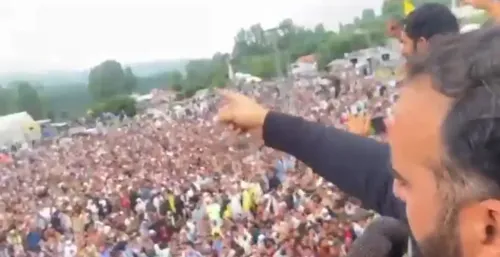
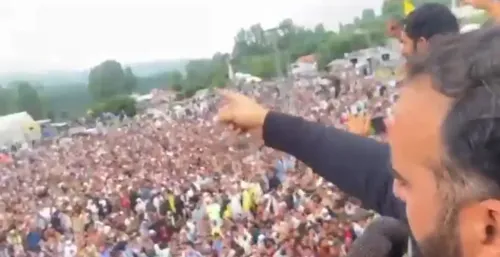
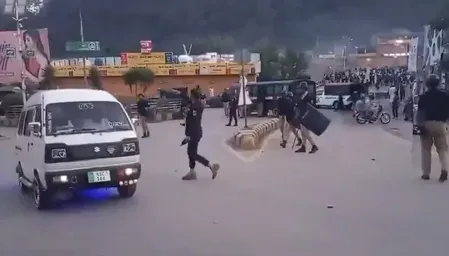
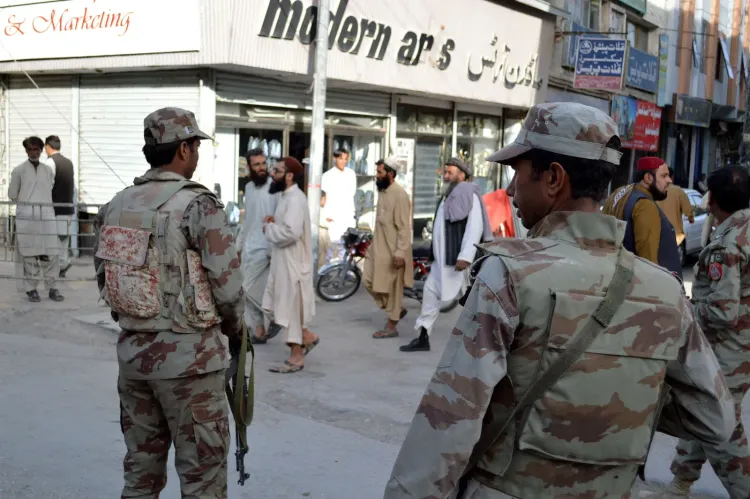
Over 50 civilians have reportedly been killed and hundreds more injured in a crackdown by Pakistani security forces in PoJK over recent days, according to reports. The unrest follows a pattern eerily similar to the violence witnessed during Pakistan Tehreek-e-Insaf (PTI) protests in November 2024, when security forces allegedly used live ammunition against demonstrators.
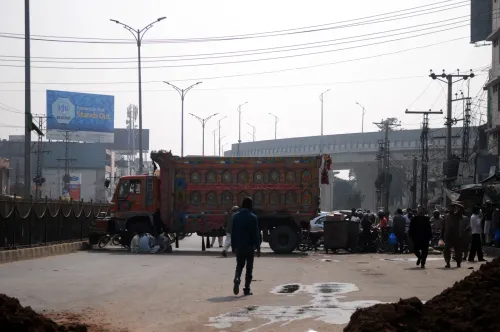
The region's largest civic movement, the Joint Awami Action Committee (JAAC), has been banned under anti-terrorism laws, and a near-total communications blackout has been imposed. Critics argue that elections held under such conditions carry no democratic legitimacy. Traders and lawyers participating in civic protests have reportedly been branded 'terrorists' by Pakistani authorities.
What Pakistani Officials Said
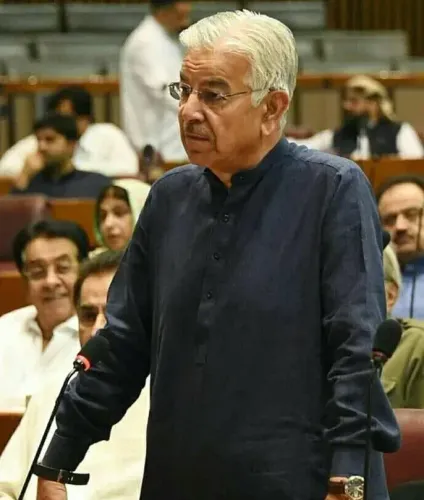
Pakistani Defence Minister Khawaja Asif drew sharp criticism after he reportedly told a television channel that he places the protesters in the 'same category' as India, describing them as 'enemies of the state' and rejecting any possibility of dialogue. The remarks were made as the civilian death toll in PoJK continued to rise, according to reports.
The European Times report noted that the contrast between Asif's stance and Pakistan's external diplomatic posture is 'impossible to miss.'
Munir's Diplomatic Record and the Contradiction
The same period that saw violence in PoJK also saw Field Marshal Munir flying to Tehran at what the report describes as 'the most dangerous point of the crisis,' presiding over 21 hours of American and Iranian talks in April, and hosting a 14-point Islamabad memorandum in June 2026. US President Donald Trump publicly praised Munir's efforts to pull the two sides back from the brink.
'The military institution selling restraint abroad authorised live fire at home in the same quarter,' the European Times report stated. Critics argue that Munir's diplomatic capital has effectively shielded the military establishment from international scrutiny over its domestic conduct.
A Pattern of Repression
According to the report, the domestic audience in Pakistan is structurally marginalised — anyone who questions what it calls the 'rigged' system faces violence at the hands of the military establishment. The communications blackout in PoJK, the banning of civic organisations under anti-terrorism statutes, and the use of live fire against protesters are cited as evidence of a systemic pattern rather than isolated incidents.
'Batons and bullets may clear a street, but they cannot extinguish public grievances in Pakistan,' the report observed, warning that the 'hypocrisy of being a peacemaker outside and brazen dictatorship at home won't last long for the military establishment.'
What Comes Next
With the JAAC banned and communications restricted, independent verification of casualty figures from PoJK remains difficult. International human rights organisations have yet to issue formal findings. Analysts watching the region say the scale of the reported crackdown — if confirmed — could test the diplomatic goodwill Munir has accumulated, particularly among Western governments that publicly credited his mediation role.
Point of View
Which raises the cost of criticising his conduct in PoJK. The branding of civic protesters as 'enemies of the state' by a cabinet minister is not a slip — it signals that the military establishment sees no political cost in the move. The real question is whether the reported death toll in PoJK reaches a threshold that forces Pakistan's diplomatic partners to separate the mediator from the enforcer.
NationPress
16 Sept 2026
Frequently Asked Questions
What is happening in Pakistan Occupied Jammu and Kashmir (PoJK)?
Over 50 civilians have reportedly been killed and hundreds injured in a crackdown by Pakistani security forces in PoJK. The unrest follows protests by civic groups, including the Joint Awami Action Committee (JAAC), which has since been banned under anti-terrorism laws and the region placed under a communications blackout.
What role has Asim Munir played internationally?
Pakistani Army Chief Field Marshal Syed Asim Munir reportedly flew to Tehran during a critical phase of US-Iran tensions, presided over 21 hours of talks in April 2026, and hosted a 14-point Islamabad memorandum in June 2026. US President Donald Trump publicly praised his mediation efforts.
What did Pakistan's Defence Minister say about the PoJK protesters?
Defence Minister Khawaja Asif reportedly told a television channel that he places the PoJK protesters in the 'same category' as India and described them as 'enemies of the state,' ruling out any dialogue. His remarks drew criticism given the reported civilian casualties in the region.
Why does the European Times report say Pakistan's hypocrisy 'won't last long'?
The report argues that Pakistan cannot indefinitely sustain the image of a global peacemaker while using live fire against civilians at home. It contends that Munir's diplomatic standing has so far shielded the military from international scrutiny, but that the scale of reported violence makes that protection increasingly fragile.
How does the PoJK crackdown compare to past incidents in Pakistan?
Reports describe the violence as eerily similar to the live-fire response to Pakistan Tehreek-e-Insaf (PTI) protests in November 2024. Both incidents involved security forces using force against civilian demonstrators, with communications restricted to limit independent reporting.