Pakistan Defence Minister calls PoK protesters 'enemies like India' after 40+ killed
Synopsis
Pakistan's Defence Minister Khawaja Asif has compared PoK protesters to India — a foreign adversary — as videos of security forces firing on civilians in Mirpur and Rawalakot spread on X. With over 40 reportedly dead and communications partially blacked out, the crackdown on the JAAC Long March marks one of the bloodiest episodes of civil unrest in Pakistan-occupied Kashmir in recent memory.
Key Takeaways
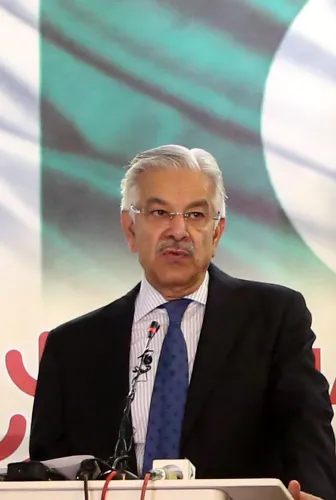
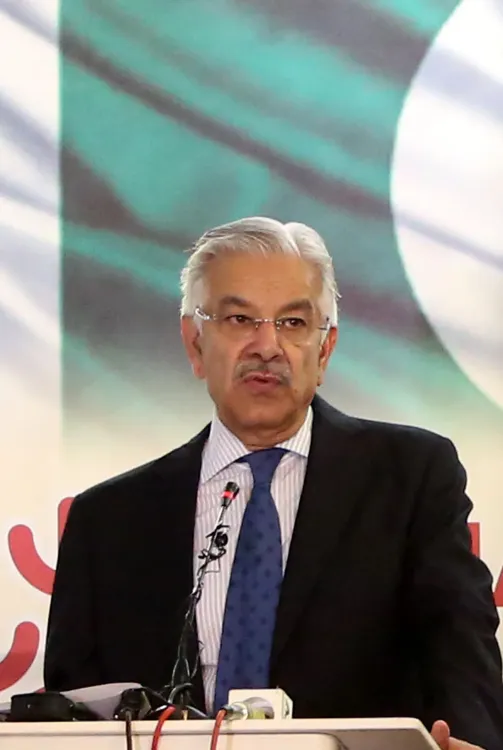
Pakistan Defence Minister Khawaja Asif publicly equated PoK protesters with India, calling them 'enemies like India' in a video posted on X .
More than 40 people were reportedly killed and hundreds critically injured during the JAAC Long March in Pakistan-occupied Kashmir .
Violence was reported in Mirpur and Rawalakot , with videos showing security forces firing on civilians.
The Joint Awami Action Committee (JAAC) confirmed at least 20 identifiable deaths , with further casualties pending communications restoration.
The march was called after talks between JAAC and Pakistani authorities reportedly collapsed without agreement.
Pakistani police were accused of specifically targeting young members of the Mirpur Awami Action Committee .
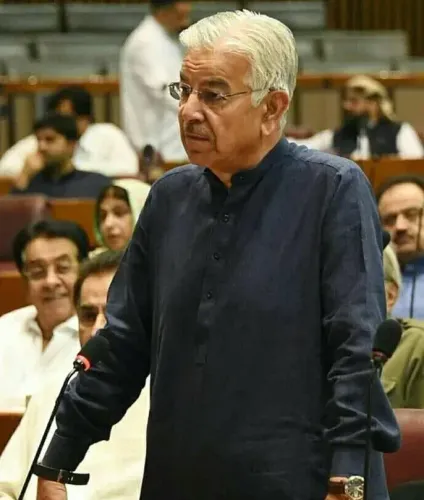
Pakistan's Defence Minister Khawaja Asif has publicly defended the government's crackdown on protesters in Pakistan-occupied Kashmir (PoK), drawing sharp condemnation after reportedly equating the demonstrators with India. Speaking in a video that surfaced on social media platform X, Asif said he places the protesters 'in the same category as India' and considers them 'enemies like India' — remarks that have intensified outrage over a crackdown that has, according to reports, claimed the lives of more than 40 people.
What Happened on the Ground
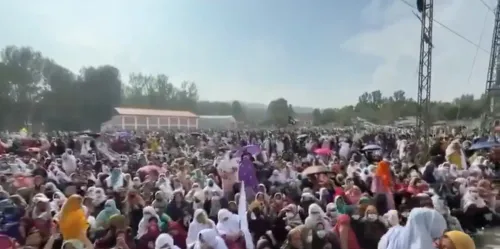
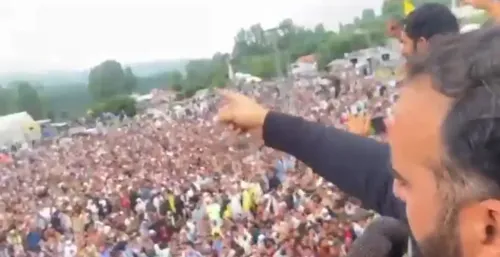
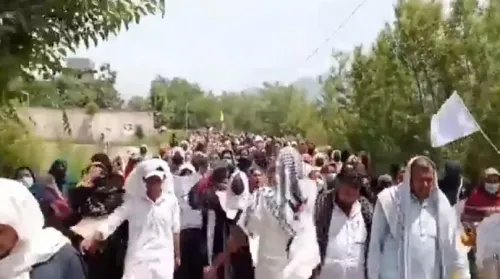
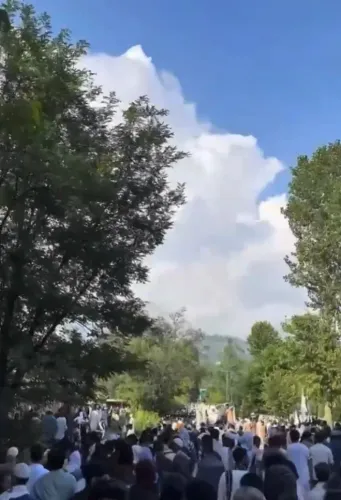
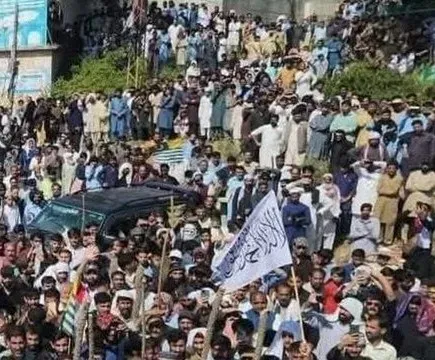
The violence erupted during a Long March organised by the Joint Awami Action Committee (JAAC), a civilian coalition that had been pressing Pakistani authorities over human rights conditions in the region. Talks between JAAC and Pakistani officials reportedly broke down without a mutually acceptable outcome, prompting the renewed public mobilisation.
Multiple videos shared on X — including from the JAAC's own verified handles — showed Pakistani security personnel firing on civilians in Mirpur and Rawalakot. Footage depicted bodies on roads and overturned motorbikes, with locals fleeing the scene. Pakistani police authorities were separately accused of specifically targeting young members of the Mirpur Awami Action Committee.
The Death Toll and Injuries
According to reports, at least 40 people were killed and hundreds critically injured. In a post on X, JAAC stated that the identities of 19 deceased individuals had been confirmed, with one additional fatality — a person with a bullet wound to the head and no identification documents — whose body was taken to Palandri Hospital, bringing the confirmed total to at least 20 at the time of that update. The organisation noted that further details were contingent on daylight and the restoration of communications.
'In Mirpur, the public has martyred five more people on the streets; in Churhoi, the public is on the streets,' JAAC posted on X, adding that 'honourable people are on the streets bearing the pain of their brothers' across multiple areas.
JAAC's Account of the Crackdown
The JAAC directly accused Pakistani forces of shelling and firing on civilians in Rawalakot. 'Rawalakot situation tense once again. Forces shelling and firing on peaceful public,' the committee posted. In a separate post, it warned Pakistani authorities: 'The worst firing continues on the daily life caravan — We are picking up the bodies, but you will not be able to endure this hatred that you are sowing today.'
The committee's posts on X painted a picture of a region under communications blackout, with ground-level information trickling in slowly as security forces maintained a heavy presence.
Context and Wider Implications
The crackdown in PoK comes amid longstanding grievances over economic marginalisation and human rights conditions in the region. This is not the first time JAAC has led protests — the committee has previously organised demonstrations over subsidies and governance issues, but the scale of the current violence marks a significant escalation.
Defence Minister Asif's remarks, likening civilian protesters to a foreign adversary, have drawn attention both within Pakistan and internationally, with critics arguing the framing reflects an intent to justify the use of lethal force against unarmed citizens. As communications are gradually restored in the region, a fuller picture of the casualties and the extent of the crackdown is expected to emerge.
Point of View
And retrospectively justifies, the use of lethal force. What is striking is that this crackdown is directed at citizens of a territory Pakistan itself claims as its own, making the 'enemy' label legally and morally incoherent. The communications blackout in Mirpur and Rawalakot — a tactic typically deployed to suppress documentation — suggests the ground reality may be worse than confirmed figures indicate. International scrutiny of Pakistan's conduct in PoK has been muted for decades; the scale of this crackdown and the visibility of JAAC's X posts may make that silence harder to maintain.
NationPress
13 Sept 2026
Frequently Asked Questions
What did Pakistan's Defence Minister Khawaja Asif say about PoK protesters?
Khawaja Asif said he places the protesters 'in the same category as India' and considers them 'enemies like India,' in a video that surfaced on social media platform X. The remarks were made in the context of the government's crackdown on the JAAC Long March in Pakistan-occupied Kashmir.
How many people were killed in the PoK protests?
According to reports, more than 40 people were killed and hundreds critically injured during the Long March organised by the Joint Awami Action Committee. JAAC itself confirmed at least 20 identifiable deaths, with further casualties expected to be reported once communications were restored.
Who is the Joint Awami Action Committee (JAAC)?
The JAAC is a civilian coalition in Pakistan-occupied Kashmir that organised the Long March after talks with Pakistani authorities reportedly broke down. The committee has previously led protests over economic grievances and governance issues in the region.
Where did the violence take place?
The crackdown was reported primarily in Mirpur and Rawalakot in Pakistan-occupied Kashmir. Videos shared on X showed security forces firing on civilians in both locations, with bodies on roads and locals fleeing the scene.
Why did the JAAC organise the Long March?
The Long March was called after negotiations between JAAC and Pakistani authorities reportedly failed to produce a mutually acceptable outcome. The broader protest movement has been driven by longstanding grievances over human rights conditions and economic marginalisation in Pakistan-occupied Kashmir.