PoJK protests: Civilian killings expose China-Pakistan CPEC model's limits

Synopsis
The killing of civilian protesters in PoJK has done more than expose Islamabad's brutal playbook — it has cracked the foundation of the China-Pakistan CPEC model. Infrastructure without community consent or political legitimacy is not development; it is extraction. And no amount of Chinese investment can paper over a governance deficit that Pakistan refuses to address.
Key Takeaways
Civilian protesters were killed in Pakistan-occupied Jammu and Kashmir (PoJK) amid weeks of unrest over electricity tariffs, food prices, and political representation.
The Jammu Kashmir Joint Awami Action Committee (JKJAAC) — a coalition of transporters, traders, and civil society groups — is leading the protests.
Communication blackouts have prevented a full account of casualties, with conflicting reports emerging from the territory.
Pakistan has responded with coercive security measures rather than engaging with protesters' economic and political demands.
The unrest exposes a core contradiction in the CPEC model: infrastructure can raise a territory's strategic value without giving residents any say in how that value is used, according to the Asian Lite report.
China 's state-to-state development model depends on host-state legitimacy — which Islamabad is visibly struggling to maintain in PoJK.
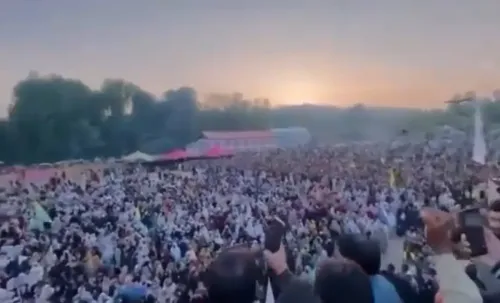
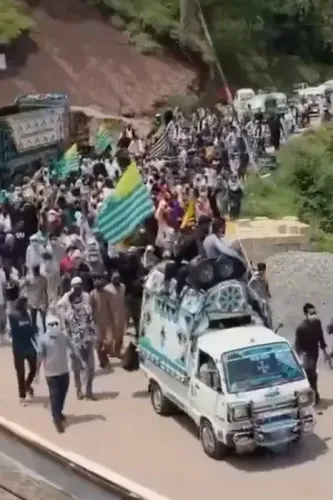
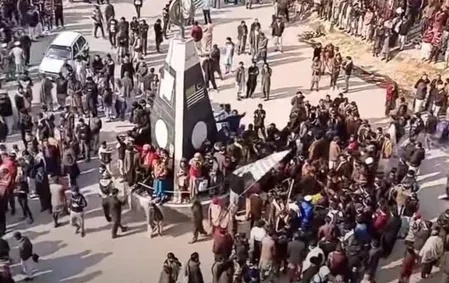
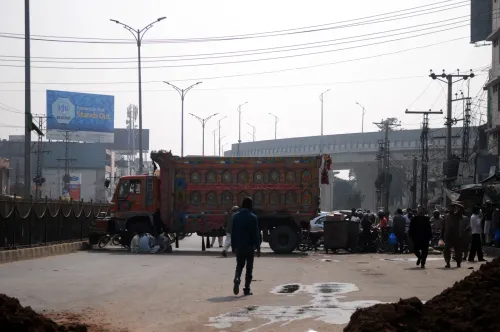
The killing of civilian protesters in Pakistan-occupied Jammu and Kashmir (PoJK) has laid bare the fundamental contradictions of the China-Pakistan development model, according to a report by UK-based publication Asian Lite. Weeks of sustained unrest, mass arrests, and communication blackouts have culminated in violent clashes between demonstrators and security forces, with casualties reported on both sides.
What Sparked the Unrest
The protests have been spearheaded by the Jammu Kashmir Joint Awami Action Committee (JKJAAC), a broad-based coalition of transporters, traders, and civil society organisations. Their demands span lower electricity tariffs, reduced food prices, equitable distribution of local resources, and meaningful political representation — grievances that have simmered in the region for several years.
The full scale of the violence remains unclear, as communication links to PoJK have been disrupted and conflicting accounts continue to emerge from the territory, according to the Asian Lite report.
Pakistan's Coercive Response
Rather than engaging with the protesters' economic and political demands, Islamabad has responded with coercive security measures, effectively pushing a civic dispute into the security domain. Critics argue that repeated mobilisations in PoJK over the past several years have repeatedly demonstrated that coercion does little to address the underlying causes of public discontent.
The Asian Lite report noted: 'Pakistan's reliance on coercion may suppress that tension temporarily, while Chinese investment can continue expanding the territory's infrastructure. Neither, however, resolves the underlying question of how communities participate in deciding how resources are developed and how their benefits are distributed.'
The CPEC Contradiction
PoJK is increasingly integrated into Islamabad's infrastructure ambitions and, through the China-Pakistan Economic Corridor (CPEC), into Beijing's expanding economic footprint in the region. China has promoted CPEC as a connectivity and development partnership, but the model relies entirely on the Pakistani state to negotiate projects, provide security, and supply the political legitimacy under which Chinese firms operate.
The report observed: 'The current unrest therefore exposes a broader contradiction: infrastructure can increase the economic and strategic value of a territory without necessarily giving its residents a greater role in determining how that value is used.'
Limits of the State-to-State Development Model
The unrest has exposed a structural weakness in China's state-to-state development approach. When the host state faces a legitimacy crisis — as Pakistan demonstrably does in PoJK — Chinese investment cannot substitute for genuine governance or community consent. The report concluded that the 'widening distance' between how PoJK is valued within larger strategic and economic plans and how governance is contested by its population remains unresolved.
As protests persist and Islamabad's coercive playbook shows diminishing returns, the future of CPEC-linked projects in the region will depend on whether either government can offer the people of PoJK a credible stake in the territory's development.
Point of View
Compliant Pakistani state; when that state shoots its own civilians to suppress economic grievances, the model's legitimacy collapses. What mainstream coverage often misses is that CPEC's deepest risk is not geopolitical rivalry with India but internal delegitimisation within the territories it traverses. Beijing has thus far been content to let Islamabad handle the politics — but a prolonged governance crisis in PoJK could threaten the security of CPEC assets themselves, a cost no Chinese firm's balance sheet can absorb quietly.
NationPress
18 Sept 2026
Frequently Asked Questions
Why are people protesting in Pakistan-occupied Jammu and Kashmir (PoJK)?
Protesters in PoJK are demanding lower electricity tariffs, reduced food prices, equitable distribution of local resources, and meaningful political representation. The movement is led by the Jammu Kashmir Joint Awami Action Committee (JKJAAC), a coalition of transporters, traders, and civil society groups whose grievances have built over several years.
What has Pakistan's response to the PoJK protests been?
Pakistan has responded with coercive security measures, including arrests and restrictions, pushing what began as civic and economic demands into the security domain. Violent clashes between protesters and security forces have resulted in casualties on both sides, according to reports.
How does the PoJK unrest expose the limits of the CPEC model?
The China-Pakistan Economic Corridor (CPEC) model relies on the Pakistani state to negotiate projects, provide security, and maintain political legitimacy for Chinese firms. When Islamabad resorts to coercion rather than governance to manage public discontent, it undermines the very legitimacy the model depends on — demonstrating that infrastructure investment alone cannot substitute for community consent or political participation.
What is the JKJAAC and what does it want?
The Jammu Kashmir Joint Awami Action Committee (JKJAAC) is a broad coalition of transporters, traders, and civil society organisations in PoJK. It has been leading protests demanding lower electricity and food prices, fairer distribution of local resources, government privileges, and political representation for the region's residents.
Why is information about the violence in PoJK limited?
Communication links to PoJK have been disrupted amid the crackdown, making it difficult to independently verify the full scale of casualties or events. Different and conflicting accounts have emerged from the territory, according to the Asian Lite report.