Did the Pakistani Military Request an End to Operation Sindoor?

Synopsis
In a significant turn of events, the Pakistani military allegedly requested an end to Operation Sindoor, prompting India to address the Security Council and emphasize its commitment to national security. This raises critical questions about the ongoing tensions between the two nations and the role of international bodies in mediating conflicts.
Key Takeaways
Pakistan's military pleaded for an end to fighting.
Operation Sindoor aimed at dismantling terrorist networks.
India emphasizes the importance of national security.
International forums should focus on accountability.
Kashmir remains a contentious issue between India and Pakistan.
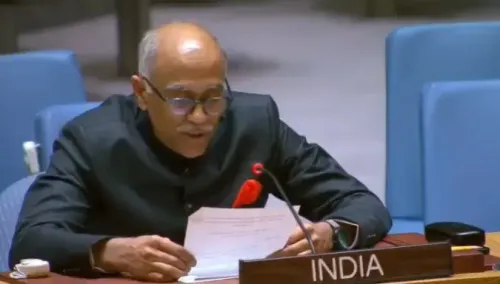
United Nations, Jan 27 (NationPress) The Pakistani military directly "pleaded" for the cessation of Operation Sindoor, as India reminded the Security Council, rejecting claims of external interference.
“We will undertake all necessary measures to safeguard and ensure the safety and security of our citizens,” India’s Permanent Representative P Harish cautioned on Monday.
“Let me emphasize once more that terrorism can never be accepted as normal, as Pakistan attempts to portray,” he asserted.
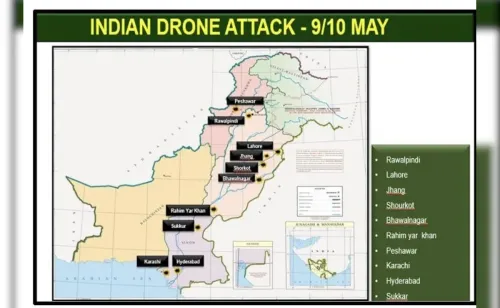
During his address, he highlighted that Operation Sindoor was aligned with the Council's stance against terrorism and recounted the events that led to the operation's conclusion, which significantly impacted Pakistan’s air force.
“Until May 9, Pakistan was threatening further attacks on India, but on May 10, the Pakistani military contacted our military directly and requested a halt to the conflict,” he explained.
“The devastation inflicted on several Pakistani air bases by the Indian operation, including visuals of devastated runways and scorched hangars, is publicly available,” he noted.
India's response to the assault by Pakistan-based terrorists on tourists in Pahalgam on April 22 last year was described as measured and responsible.
The Resistance Front, affiliated with the Lashkar-e-Taiba, designated as a terrorist organization by both the United States and India, claimed responsibility for the religion-based attack that claimed 26 lives.
In initiating Operation Sindoor, India was acting on the Council's directive to hold accountable those responsible for this abhorrent act of terrorism and ensure they face justice, Harish stated.
“India’s actions were considered, non-escalatory, responsible, and aimed at dismantling terrorist networks and curbing terrorism,” he added.
Harish refrained from naming US President Donald Trump, who has asserted that he resolved the conflict through diplomacy and threats of tariffs, even claiming a Nobel Peace Prize.
During the Council's open debate on “Reaffirming international rule of law,” Pakistan’s Permanent Representative Asim Iftikhar Ahmad raised Operation Sindoor, alleging it was an instance of “unprovoked military aggression.”
He continued to discuss the suspension of the Indus Waters Treaty and his interpretation of the situation in Kashmir.
Rejecting claims regarding Kashmir, Harish affirmed, “The Union Territory of Jammu and Kashmir has been, is, and will always remain an integral and inalienable part of India.”
Regarding the Indus Rivers Treaty, which Prime Minister Narendra Modi suspended following the Pahalgam attack, Harish elaborated, “India was forced to announce that the treaty would be held in abeyance until Pakistan, a global epicenter of terror, convincingly and permanently ceases its support for cross-border and all other forms of terror.”
On Pakistan's tendency to raise Kashmir and other “issues” at UN forums, regardless of the topic, Harish stated, “This esteemed chamber cannot become a platform for Pakistan to legitimize terrorism.”
As for Ahmad's remarks on the rule of law, Harish suggested some self-reflection.
Pakistan “might begin by questioning how it has allowed its armed forces to orchestrate a constitutional coup through the 27th Amendment, granting lifetime immunity to its chief of defense forces.”
The 27th Amendment to the Pakistan Constitution in November effectively established military supremacy.
Point of View
It is imperative that India remains steadfast in its stance against terrorism while ensuring the safety of its citizens. The dialogue at international forums must focus on accountability and the dismantling of terror networks, reinforcing India's commitment to justice and security.
NationPress
26 Sept 2026
Frequently Asked Questions
What was Operation Sindoor?
Operation Sindoor was a military operation conducted by India in response to terrorist threats and attacks originating from Pakistan, specifically targeting terrorist infrastructures.
Why did Pakistan request an end to the operation?
The Pakistani military reportedly requested a cessation of Operation Sindoor after facing significant losses and escalating tensions with India.
What is the significance of Kashmir in this context?
The region of Kashmir is a point of contention between India and Pakistan, with both nations claiming sovereignty over it, leading to heightened military confrontations.
How did India respond to the terrorist attack in Pahalgam?
India's response to the attack in Pahalgam was described as measured and responsible, aimed at dismantling the terrorist infrastructure.
What is the Indus Waters Treaty?
The Indus Waters Treaty is an agreement between India and Pakistan governing the use of river waters. India suspended it following the Pahalgam attack as a response to Pakistan's support for terrorism.