Is Pakistan’s Textile Sector Facing Total Collapse?
Synopsis
Pakistan's textile sector faces imminent collapse due to years of poor governance and structural inefficiencies. With declining exports and rising imports, urgent measures are needed to avert job losses and economic downturn. Can the industry be revived in time?
Key Takeaways
The textile sector is on the verge of collapse due to poor governance.
Exports have dropped significantly, while imports are rising.
Logistics costs are excessively high, impacting competitiveness.
Urgent reforms are needed to prevent job losses and economic downturn.
Pakistan's position in the global market is deteriorating compared to regional peers.
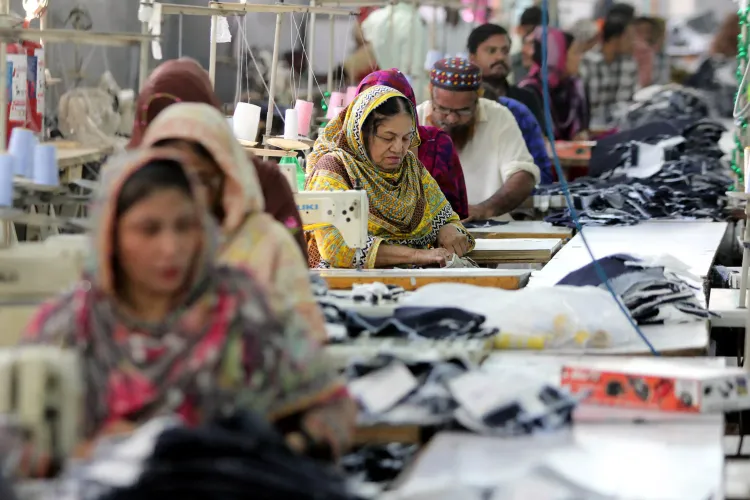
New Delhi, Nov 5 (NationPress) After years of ineffective governance, misguided subsidies, and persistent structural issues, the textile industry in Pakistan, recognized as the country’s largest export sector, is reportedly on the verge of collapse, as per a recent media report.
This sector, once considered the cornerstone of Pakistan’s economy and responsible for nearly 60% of total exports, has experienced a drastic downturn in recent times, with exports declining sharply and imports increasing, according to Maldives Insight.
Data from the Pakistan Textile Council (PTC) indicates that textile exports fell by 3.83% year-on-year in the first quarter of FY26, amounting to $7.61 billion, compared to $7.91 billion in the same timeframe last year.
In September of this year, the nation faced its fifth contraction in six months, witnessing a 11.71% plunge in exports to $2.51 billion, while imports surged by 13.49% to reach $16.97 billion.
Despite ongoing warnings from industry leaders regarding the dire situation, short-term solutions such as rebates, bailouts, and energy subsidies from successive governments have only provided temporary relief, failing to foster long-term competitiveness.
PTC Chairman Fawad Anwar emphasized that without immediate corrective actions, Pakistan risks further closure of export-oriented businesses and a decline in foreign investment, leading to job losses, industrial shutdowns, and a severe drop in foreign exchange earnings at a time when the country can ill afford such setbacks.
Moreover, the Federation of Pakistan Chambers of Commerce & Industry (FPCCI) has highlighted a costly and inefficient logistics system that consumes 15.6% of GDP, nearly double that of advanced economies.
The report states, "Before a single container of garments departs from the port, it is already burdened with costs that render Pakistani exports uncompetitive."
With the collapse of its logistics, Pakistan has completely fallen off the World Bank’s Logistics Performance Index, while regional competitors like India, Vietnam, and Bangladesh are making significant progress.
These countries benefit from efficient ports, modern rail networks, and integrated supply chains, giving their exporters a competitive advantage in meeting deadlines, reducing costs, and expanding market reach.
The report also points to the reliance on obsolete technology, ongoing energy crises, and unpredictable policies characterized by frequent shifts in tax regimes, export facilitation initiatives, and import restrictions.
While policymakers discuss “revival plans” and “energy relief packages,” the prevailing data, industrial closures, and layoffs all suggest a “collapsing” industry.
Point of View
I believe that Pakistan's textile sector must be prioritized with effective reforms and investments to restore its competitiveness. The government's role in creating a stable and conducive environment is crucial for the industry's survival and for safeguarding the livelihoods of millions.
NationPress
15 Oct 2026
Frequently Asked Questions
What is the current state of Pakistan's textile sector?
The textile sector is currently facing severe challenges, including declining exports and rising imports, pushing it to the brink of collapse.
How much do textile exports contribute to Pakistan's economy?
Textile exports account for nearly 60% of Pakistan's total exports, making it a crucial sector for the nation's economy.
What are the main issues affecting the textile industry?
Key issues include poor governance, structural inefficiencies, reliance on outdated technology, and high logistics costs.
What is the impact of logistics on textile exports?
Inefficient logistics inflate costs and burden Pakistani exports, making them less competitive in the global market.
What urgent actions are needed to save the textile sector?
Immediate reforms are necessary to enhance competitiveness, stabilize the market, and attract foreign investment.